


US military intercepts ballistic missile target during test

The U.S. Missile Defense Agency (MDA) and Navy have achieved a significant milestone by successfully executing Flight Test Other-23 (FTX-23), also known as Stellar Sisyphus.

According to a press release from MDA, this developmental test, conducted off the coast of the Pacific Missile Range Facility in Hawaii, comprised two crucial components aimed at enhancing sensor tracking and communications link capabilities.

During the first phase of the test, the Aegis Weapon System demonstrated its ability to track and discern a complex target scenario involving a Medium Range Ballistic Missile target equipped with countermeasures. This successful demonstration underscores the system’s advanced tracking capabilities in the face of evolving threats.

- ADVERTISEMENT - CONTINUE READING BELOW -

In the second phase, a Standard Missile – 3 Block IIA (SM-3 Blk IIA) was launched, intercepting the same Medium Range Ballistic Missile target and validating additional functionalities of the SM-3 Blk IIA. This successful interception further reinforces the effectiveness of the Aegis Weapon System in countering ballistic missile threats.
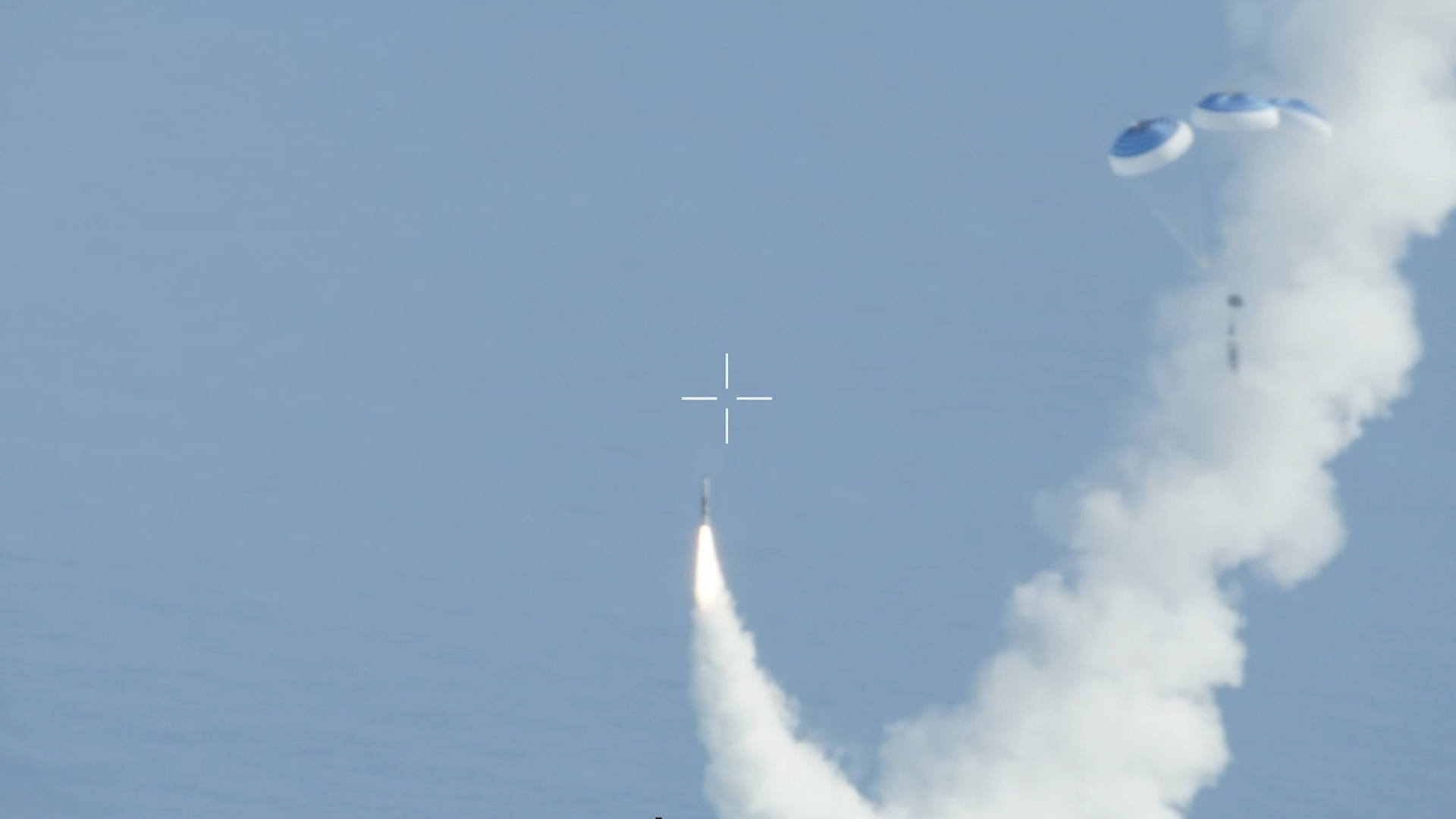
A Medium Range Ballistic Missile target with countermeasures is air launched from a US Air Force C-17 Globemaster III at Pacific Missile Range Facility in Hawaii during FTX-23 on Feb. 8.

Lt. Gen. Heath Collins, Director of the MDA, emphasized the collaborative effort between the MDA and the Navy to provide enhanced capabilities against evolving threats. He hailed the test as a significant achievement, highlighting the dedication of U.S. Navy sailors, the MDA team, and industry partners.

Participating assets included U.S. Navy Arleigh Burke-class guided missile destroyers USS McCampbell (DDG 85) and USS Jack H. Lucas (DDG 125), along with the Aegis Ashore Missile Defense Test Complex and Advanced Radar Development Evaluation Laboratory. These assets played a crucial role in collecting valuable tracking data on the target, contributing to future improvements in tracking and discrimination capabilities.

Readers who wish to follow our weekly coverage can subscribe to the Weekly Defense Roundup.

If you wish to report a grammatical or factual error in this article, please let us know by using the online form.

Executive Editor

Support The Defence Blog

Independent reporting takes resources. Join us on Patreon.

Become a patron

More Like This

Northrop Grumman’s Jackal missile passes key flight test

Northrop Grumman completed a successful flight test of its Jackal precision strike missile on June 1, demonstrating the core systems that will define how...

California firm rethinks missile defense without rocket motors

The U.S. military fired more than 1,000 Patriot interceptors during the Iran conflict but received only 172 new ones in return, according to a...

U.S. Navy buys Israeli anti-drone rifle scope

An Israeli fire control technology company has now secured contracts with all four major branches of the U.S. military, completing a sweep across the...

U.S. Special Forces wants to make its combat divers harder to detect

Somewhere underwater, a Navy SEAL is holding his breath, swimming toward an enemy ship in total darkness, counting on one thing to keep him...

U.S. Army’s top official tested laser-armed vehicle in New Mexico

The U.S. Army's top civilian official sat down at the operator's seat of a laser-armed pickup truck at White Sands Missile Range in New...

China claims its J-10 swept one of Europe’s best jets 9-0

Pakistan's Chinese-made J-10CE fighter jets went undefeated against Qatar's Eurofighter Typhoons in nine simulated air combat engagements during a joint exercise in 2024, with...