

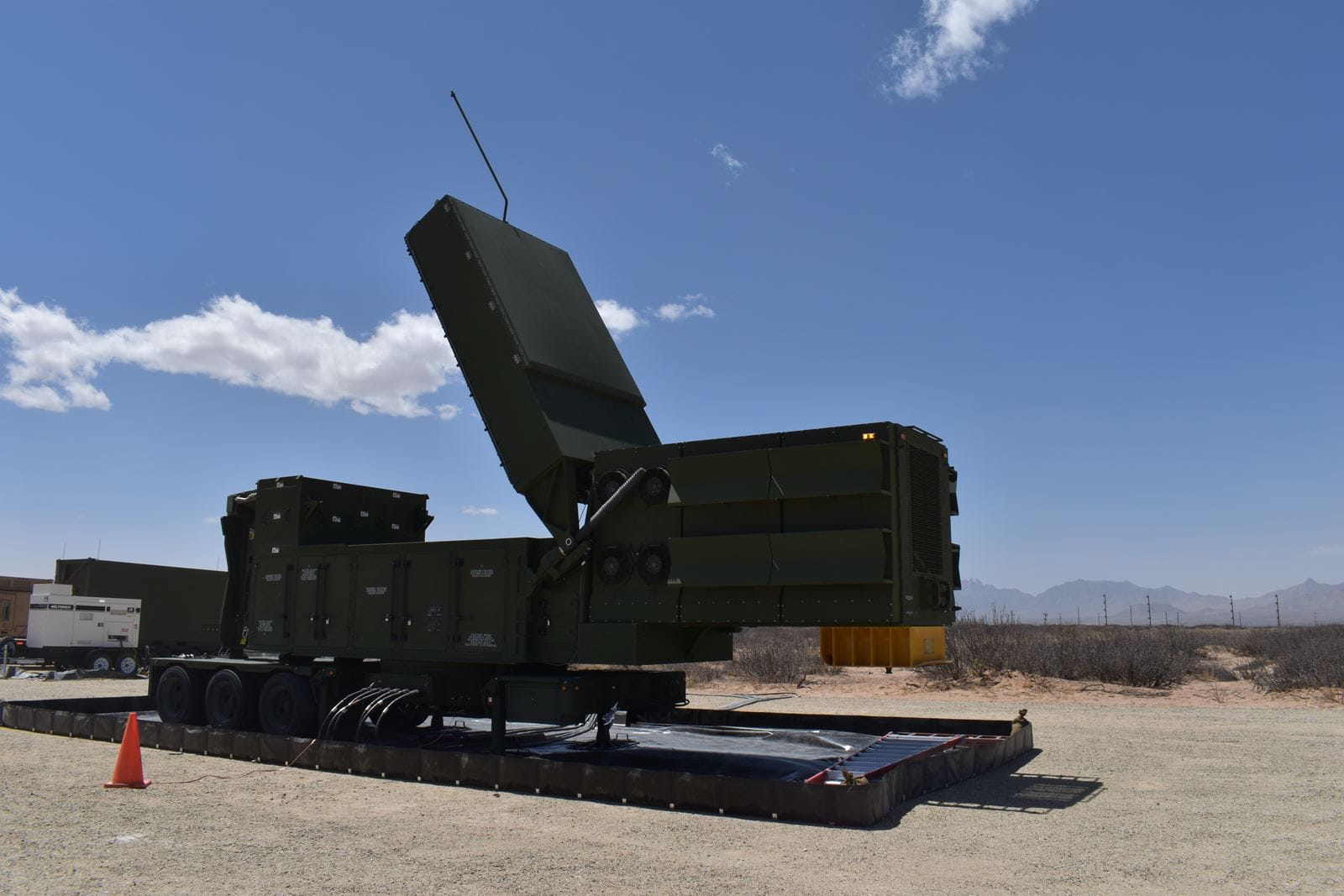
Raytheon, an RTX business, is celebrating a significant leap forward in the development of the Lower Tier Air and Missile Defense Sensor (LTAMDS).
The company stated in the latest press release that the system has achieved remarkable technical and performance milestones while completing Contractor Verification Testing at the U.S. Army’s White Sands Missile Range. These milestones represent a critical step towards the operational deployment of this cutting-edge radar system.
The LTAMDS is the next generation air and missile defense radar for the U.S. Army. It features a 360-degree, Active Electronically Scanned Array radar powered by Raytheon-manufactured Gallium Nitride. This advanced technology equips the LTAMDS with enhanced capabilities to detect and counter an extensive range of threats, from manned and unmanned aircraft to cruise missiles, ballistic missiles, and hypersonic projectiles.
Tom Laliberty, President of Land & Air Defense Systems at Raytheon, expressed his enthusiasm, stating, “The strong performance of LTAMDS at this stage of testing is a critical milestone on the path to achieving an operational capability level by the end of this year. The progress made to date is a testament to our collaborative partnership with the U.S. Army and our shared commitment to getting this exceptional capability to air defense forces around the globe as soon as possible.”
The successful verification tests at the White Sands Missile Range involved multiple radars and were executed in phased increments, increasing in complexity to thoroughly assess the LTAMDS’ advanced features and capabilities. Throughout the testing, LTAMDS was integrated with the Army’s Integrated Air and Missile Defense Battle Command System, IBCS.
The radar system demonstrated its effectiveness by completing 11 mission sets across a range of simulated operationally relevant environments. Notable achievements included the successful search and tracking of multiple targets, including drones, fixed-wing and rotary aircraft, cruise missiles, and tactical ballistic missile surrogates. Tracks were maintained throughout the duration of the test flights, culminating with a simulated engagement against a tactical ballistic missile.
All six radars under the October 2019 contract have completed production and are undergoing simultaneous testing at various government and Raytheon test sites. These activities include integration and testing processes conducted in parallel. Events will continue throughout 2023, encompassing user training and soldier-conducted operational assessments. The project aims to achieve Operational Capability readiness by the end of this year.
In 2024, rigorous testing will continue, including environmental and mobility qualification assessments and an expanded system of system testing. This progression is expected to lead up to full Operational Capability in the calendar year, marking a significant advancement in the U.S. Army’s air and missile defense capabilities.
Raytheon’s LTAMDS represents a substantial leap in radar technology, enhancing the nation’s defense capabilities and providing a robust response to emerging threats in modern warfare scenarios. Its successful verification testing sets the stage for an imminent operational deployment, reinforcing its importance in securing the skies and safeguarding national interests.