

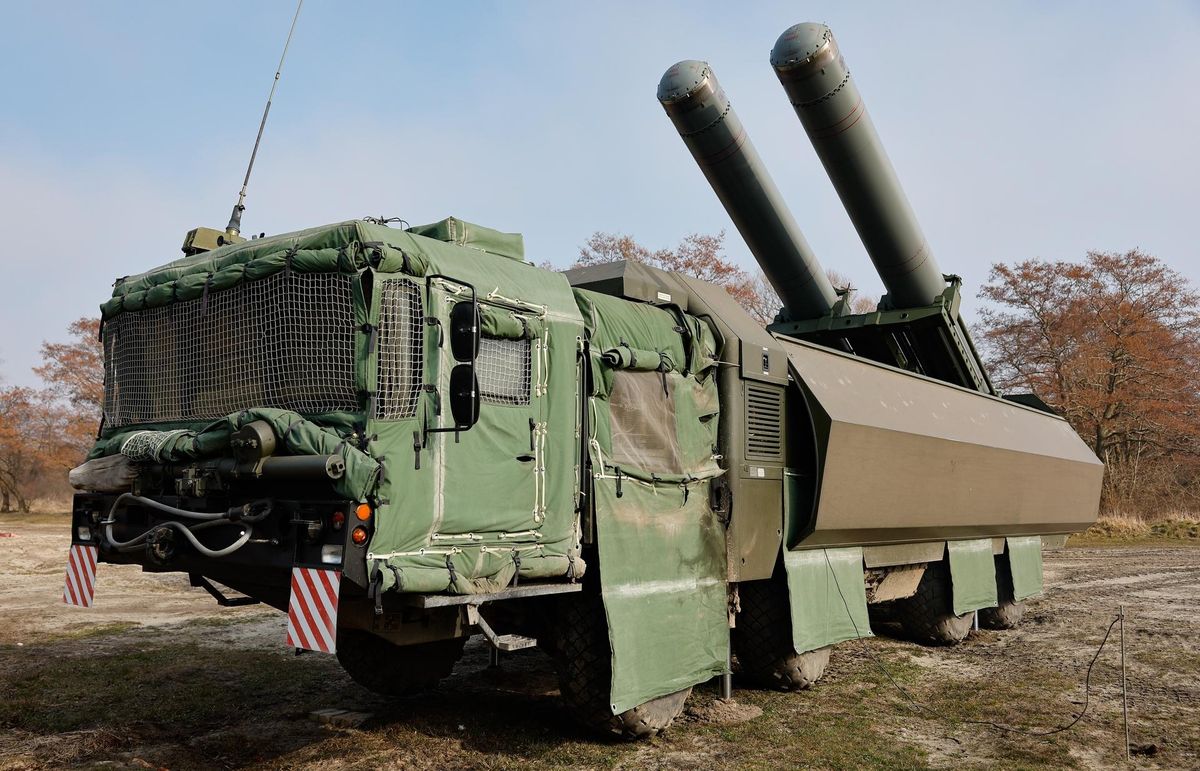
The latest Russian missile barrage against the southern Ukrainian port cities of Odesa and Mykolaiv has marked one of the largest such attacks in months.
The attacks came a day after Russia pulled out of the Black Sea grain deal, a move that upset agricultural markets and saw the price of wheat, corn and other food commodities spike.
Latest strikes differed from earlier attacks, though, by including a larger number of Oniks cruise missiles from Bastion-P coastal defense systems, according to Yuriy Ignat, the spokesman for the Ukrainian Air Force.
“Onyx missiles are designed to destroy boats and ships, and they fly at Mach 2.6. That’s over 3000 km per hour, so the speed is high. On the march, it can climb high to save fuel, and when it hits the target, it can actually fly 10-15 meters above the water to destroy the ship,” the spokesman said.
Russians are using their mobile coastal defense missile systems to strike cities along the Black Sea coast, allowing them to bypass Ukraine’s air defense.
Ignat noted that this makes it difficult for Ukrainian air defense forces to detect and shoot down these air targets.
“It is difficult to counter such missiles, but it is possible to influence them with some electronic warfare means. That is why we see that not all missiles hit their targets,” the spokesman noted.
According to him, it is hardly possible to shoot down Onyx missile at high speed and at low altitude with the available air defense systems in Ukraine.
The Bastion-P (NATO reporting name SS-C-5 Stooge) is a ground-based coastal defense system that can fire Oniks anti-ship cruise missiles, which also have secondary land-attack capabilities.
The main role of the Bastion-P is to engage surface ships including carrier battle groups, convoys, and landing craft. A typical battery is composed of 1-2 command and control vehicles based on the Kamaz 43101 6×6 truck, one support vehicle, four launcher vehicles based on the MZKT-7930 8×8 chassis each operated by a 3-man crew and holding two missiles.