


Russian officials confirmed Thursday that one of the Russian Navy’s most important warships has sunk in the Black Sea. It is the first Russian Navy loss of a flagship since the Russian-Japanese war of 1904-1905.
Russian state news agency TASS reported Thursday evening that the guided-missile cruiser Moskva had sunk, citing a statement from the Russian Ministry of Defense.
“During the towing of the cruiser Moskva to the port of destination, the ship lost its stability due to hull damage received during a fire from the detonation of ammunition. In the conditions of stormy seas, the ship sank,” the statement said, according to TASS.
Governor of the Russian-occupied city of Sevastopol Mikhail Razvozhayev said on Friday that the cruiser had been a genuine symbol.
The Moskva cruiser rose to prominence at the beginning of the war when a group of Ukrainian soldiers defending Snake Island told its operators to “go f— yourself” instead of surrendering, according to Reuters. Moscow is now saying the warship went down after a fire on board caused an explosion.
According to some reports, like one from CNN, a huge Soviet-era missile cruiser sunk after it was hit by two Ukrainian-made Neptune R-360 cruise missiles.
“In the Black Sea operational zone, Neptune anti-ship cruise missiles hit the cruiser Moskva, the flagship of the Russian Black Sea Fleet — it received significant damage,” Ukraine’s Operational Command South statement said. “A fire broke out. Other units of the ship’s group tried to help, but a storm and a powerful explosion of ammunition overturned the cruiser and it began to sink.”
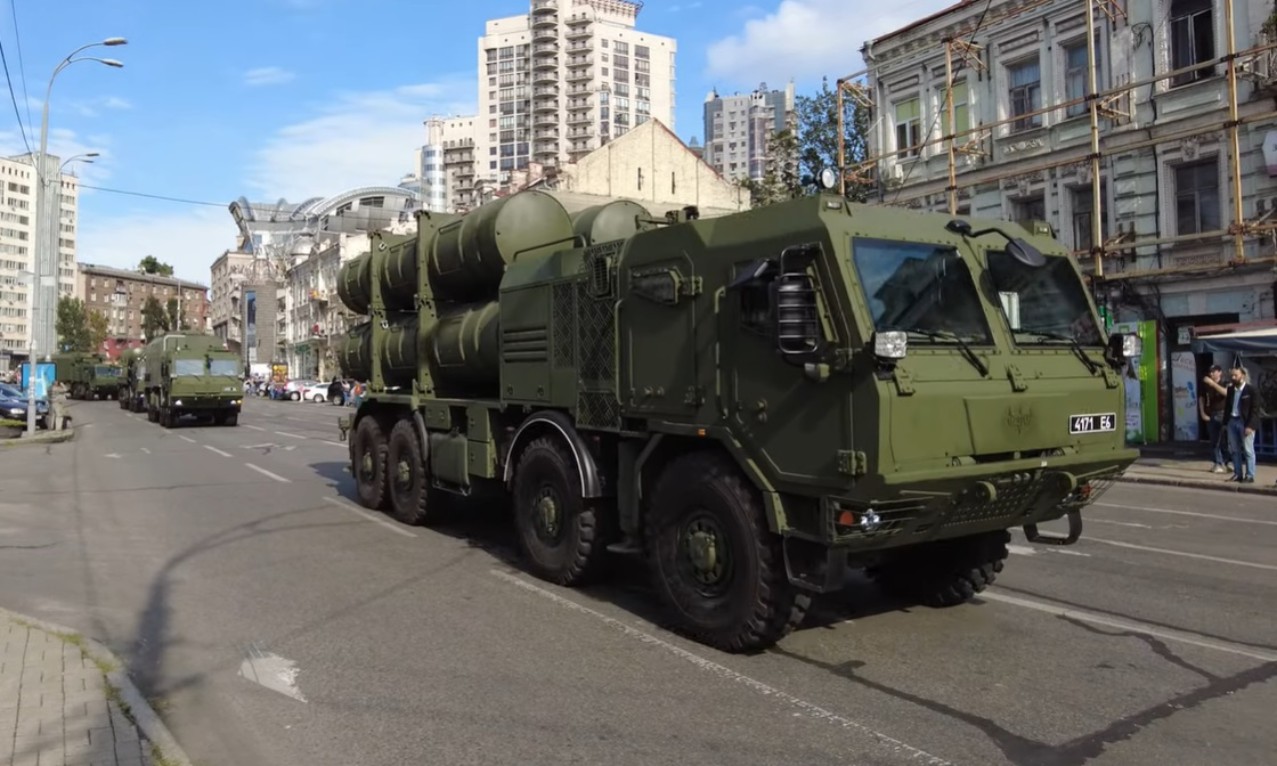
Ukrainian RK-360 Neptune coastal missile system includes six USPU-360 launchers with 24 R-360 cruise missiles. The R-360 missile weighs 870 kg; the weight of its warhead is 150 kg; its launch range is up to 280 km and its speed is about 900 km/h. It is able to get at a height of from 3 m to 10 m above the surface.
The complex can simultaneously launch up to 24 missiles, i.e. a full salvo of 6 launchers, with an interval of launches in a salvo being from 3 to 5 seconds.
Ukraine’s Neptun cruise missile can be located at a distance of up to 25 km from the coastline, and its deployment lasts up to 15 minutes.
Neptun R-360 missile is generally similar to the Kh-35, however, Ukrainian constructors substantially improved missile range and electronics. The new missile has a longer body with more fuel, a larger booster, and some other modifications.