

Aerospace giant BAE Systems announced Monday it has developed an advanced version of its combat-proven APKWS guidance kit that offers enhanced strike distance and precision strike lethality.
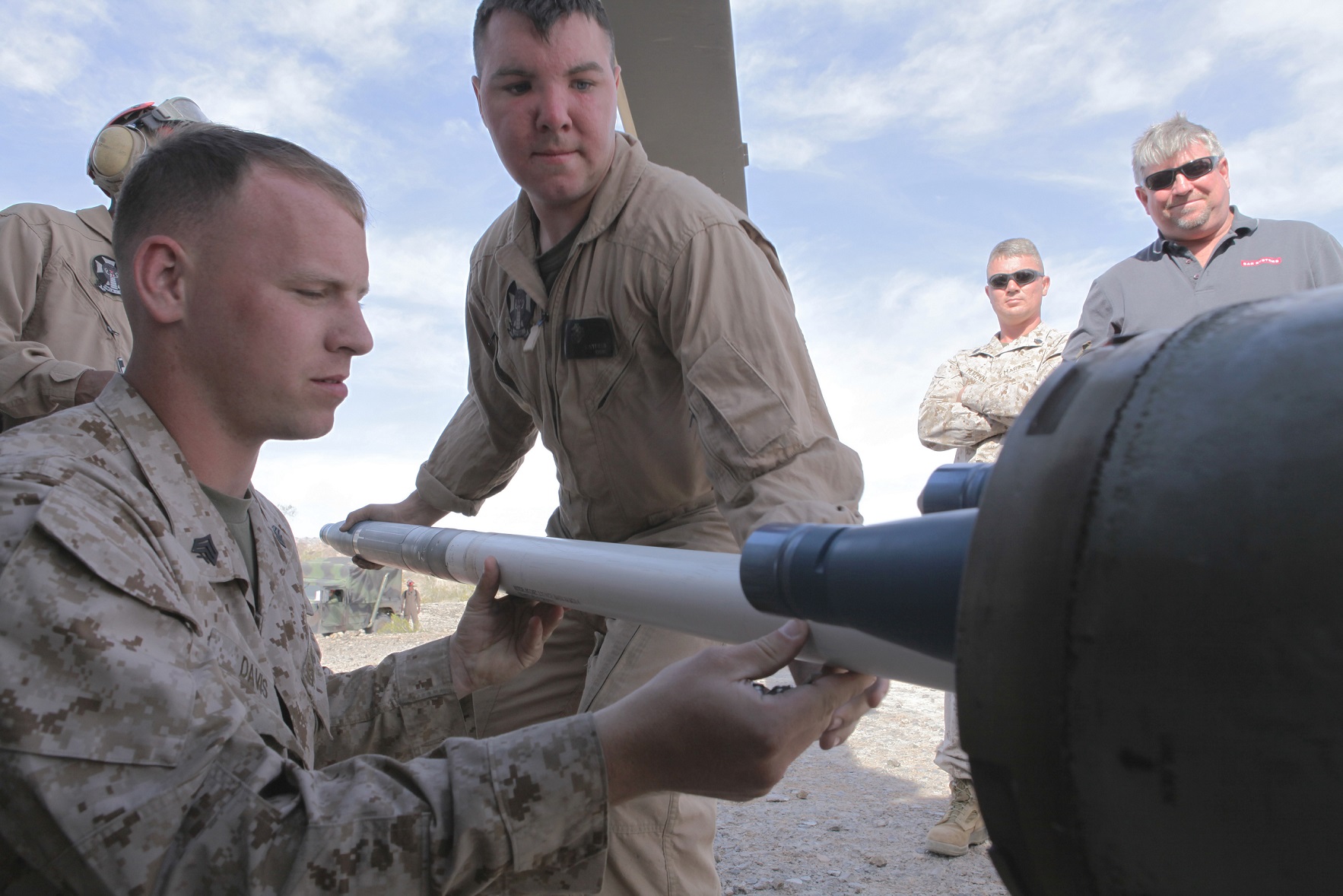
The Advanced Precision Kill Weapon System, best known as APKWS, is a special kit designed to convert an unguided rocket into a highly accurate Precision Guided Munition.
As noted by the company, the APKWS rocket bridges the gap between unguided rockets and anti-armor munitions, consistently delivering pinpoint accuracy to soft targets at a low cost, that no other system can match.
According to a company news release, the upgrade improves the effective range of APKWS guided rockets by up to 30%, allowing warfighters to engage targets from a greater standoff distance with improved survivability.
APKWS is the U.S. government’s only program of record for guiding 2.75-inch laser-guided rockets, providing an efficient, low-cost weapon in the U.S. arsenal of precision munitions. Initial production of APKWS block upgrade guidance kits will start in Q3 2021.
“Our customers’ precision strike needs are changing,” said John Watkins, vice president and general manager of Precision Strike & Sensing Solutions at BAE Systems. “We’re focused on evolving APKWS guidance kits to provide them with a more capable low-cost product that’s easy to use and known for its accuracy.”
APKWS block upgrade guidance kits create an optimized flight trajectory that enables the rocket to engage targets at a steeper angle of attack, providing improvements in range and lethality. The optimized attack trajectory improves first-shot success against stationary and moving targets.
The enhanced guidance kits also provide logistics and training benefits to customers. A single variant of the weapon is now qualified for rotary-wing and fixed-wing aircraft across the U.S. armed forces customers, easing stock management and reducing the cognitive load on pilots. An upgrade to the surface danger zone logic also provides better training range options in certain conditions, allowing crews to improve their proficiency at home stations.