

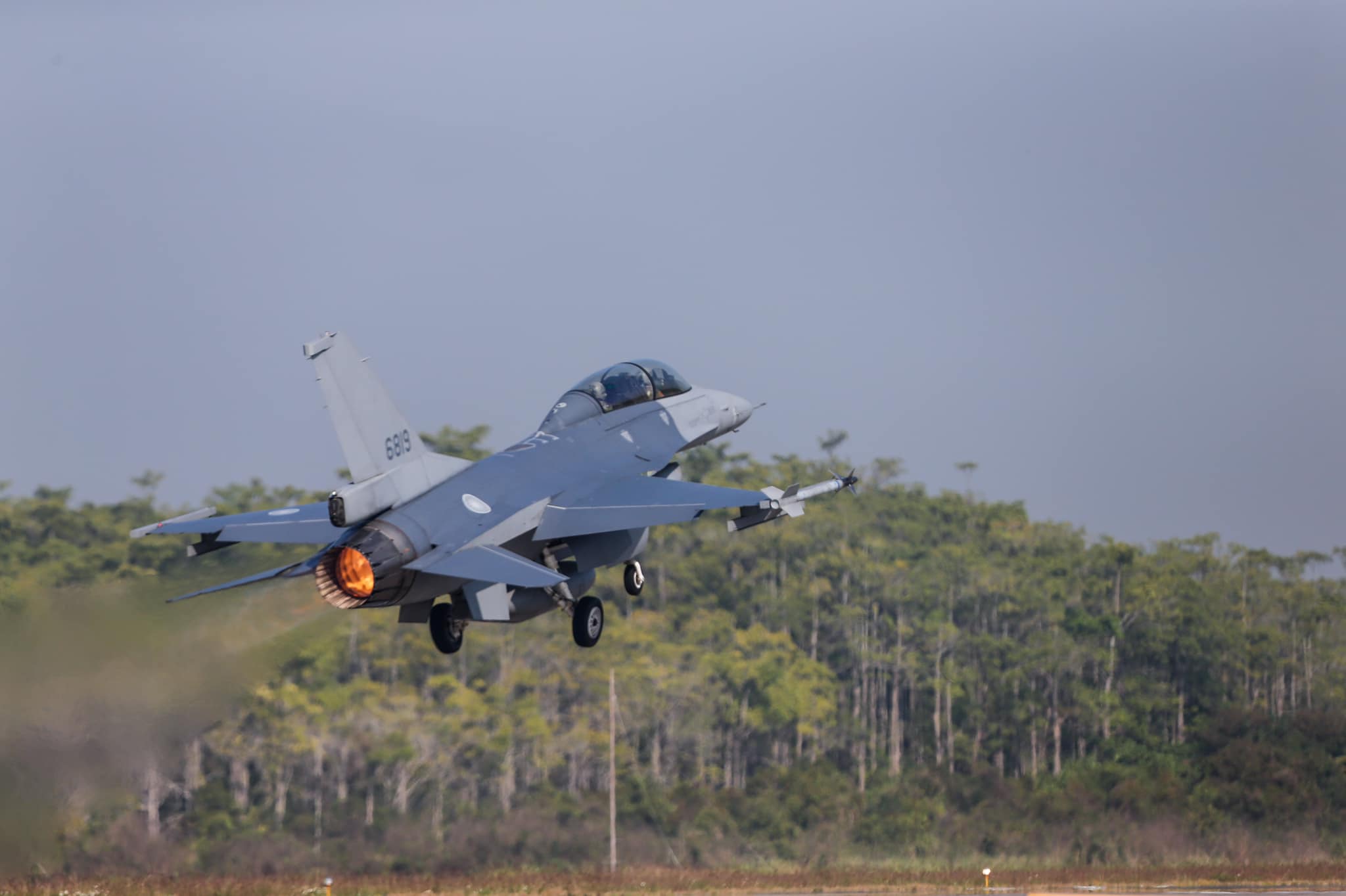
Beijing has reacted with anger to the news that the United States has formalized the sale of the latest model F-16 jets to Taiwan.
A U.S. Department of Defense announcement on Thursday said Pentagon’s No.1 weapons supplier Lockheed Martin Corp has been awarded a $62 billion, 10-year contract for the production of F-16s for Foreign Military Sale (FMS), and the initial delivery order is for 90 aircraft.
The DoD did not reveal the buyers of the fighter jets, but media outlets including Bloomberg and AFP reported on Friday that the deal includes Taiwan’s approved purchase of 66 F-16V fighters.
By announcing the F-16 deal has been finalized, the U.S. is attempting to show its tough stance, and the move could be considered as corresponding to the PLA drills, Ni Feng, director of the Institute of American Studies at the Chinese Academy of Social Sciences, told the Global Times on Saturday.
Under these circumstances, the US move is even more dangerous, as it steps on and even crosses the Chinese mainland’s red line on the Taiwan question, Ni said, noting that the risk of a confrontation continues to rise.
Chinese mainland military experts told the Global Times following the announcement of the PLA drills that the PLA has been enhancing and normalizing military drills around the island of Taiwan not only to deter secessionists on the island, but to train the troops and gain the capability of turning the exercises into real military actions if necessary.
The PLA will continue to develop advanced weapons and equipment to boost its overall capability and widen its already-huge gap with the military on the island, and future military drills could see warplanes fly through the airspace of the island if necessary, they said.
Chinese mainland experts said that while F-16V fighter jets could become threats to the PLA forces, the PLA’s J-10B and J-10C fighter jets can rival them, and they are no match for the heavier J-11, not to mention the much more advanced J-20.
But for Taiwan’s new fighters to have any impact at all, they must first make it off the ground—and that could become impossible due the 1,300 ballistic missiles and hundreds of air-, sea-, and ground-launched cruise missiles the People’s Liberation Army can array against the island, stressed The National Interest.