

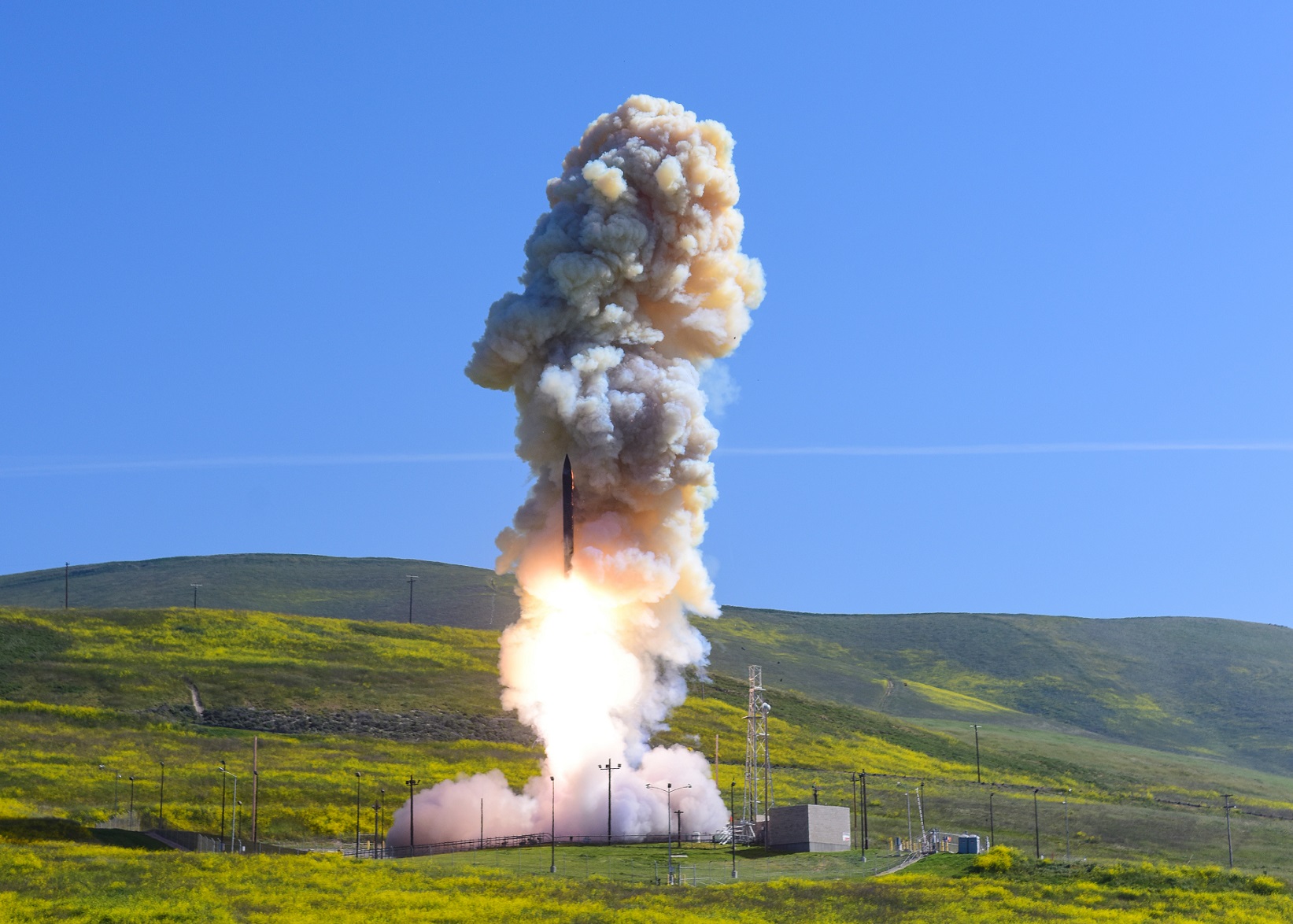
The U.S. Department of Defense and U.S. aerospace giant Boeing announced on Friday an agreement worth about $150 million for the nation’s Ground-based Midcourse Defense system.
Boeing was awarded a contract modification from the Missile Defense Agency, to previously awarded on the Ground-based Midcourse Defense development and sustainment contract (DSC). It has held a sole-source, $6.6 billion development and sustainment contract for the Ground-based Midcourse Defense (GMD) system since 2018, which expires in 2023.
The system consists of ground-based interceptor missiles and radar which would intercept incoming warheads in space. Boeing Defense, Space & Security is the prime contractor of the program, tasked to oversee and integrate systems from other major defense sub-contractors, such as Computer Sciences Corporation and Raytheon.
The GMD system got its start in the 1980s under President Ronald Reagan. At a time when “mutually assured destruction” was considered the only way to prevent an enemy’s nuclear attack, Reagan launched the Strategic Defense Initiative – better known as “Star Wars” – to create a new line of defense against nuclear missiles.
Technology at the time was not yet capable of striking a ballistic missile on the edge of outer space, however, and the program stalled. In the ’90s, the success of the Patriot missile program during the Gulf War proved that knocking a missile out of the sky was possible, and Reagan’s vision again gained momentum. Then, in 2002, President George W. Bush issued a directive to set up missile defense capabilities by 2004.
The Ballistic Missile Defense System was declared operational in September 2004, and it has been running round-the-clock ever since.
Currently, the system is deployed in military bases in the states of Alaska and California; in 2018 comprising 44 interceptors and spanning 15 time zones with sensors on land, at sea, and in orbit. In 2019, a missile defense review requested that 20 additional ground-based interceptors be based in Alaska.