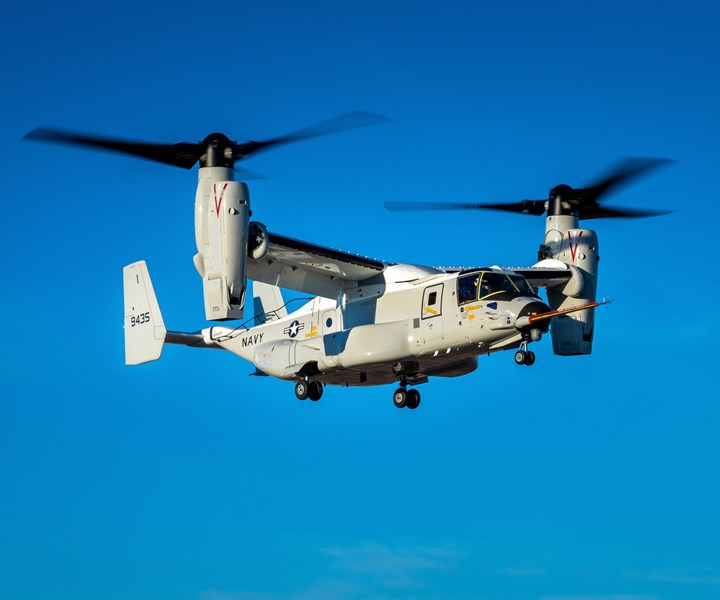
Boeing and Bell Textron Inc., a Textron Inc. unveiled the latest version of Osprey tiltrotor, that called CMV-22B.
The first CMV-22B Osprey completed first flight operations at Bell’s Amarillo Assembly Center. The CMV-22B is the latest variant of the tiltrotor fleet, joining the MV-22 and CV-22 used by the U.S. Marine Corps and U.S. Air Force.
The U.S. Navy will use the CMV-22B to replace the C-2A Greyhound for transporting personnel, mail, supplies and high-priority cargo from shore bases to aircraft carriers at sea. Bell Boeing designed the Navy variant specifically for carrier fleet operations by providing increased fuel capacity for the extended range requirement. The mission flexibility of the Osprey will increase operational capabilities and readiness, in addition to ferrying major components of the F-35 engine.
“The first flight of the Navy’s CMV-22B marks a significant milestone for the V-22 program and for Naval Aviation,” said Chris Gehler, Bell V-22 Vice President and Bell Boeing deputy program director. “The Osprey has always been a revolutionary aircraft, and we look forward to continuing to support the evolving needs of the Navy with advanced tiltrotor capabilities.”
Bell Boeing will deliver the first CMV-22B to Air Test and Evaluation Squadron (HX) 21 in early 2020 for developmental test.
The War Zone previously reported that despite the imminent delivery of the Navy’s first CMV-22B, the service still does not expect to put the first examples into action until 2021, coinciding with the first operational deployment of the F-35C Joint Strike Fighter on board the Nimitz class aircraft carrier USS Carl Vinson.
“We’re targeting the first quarter of ‘21 for when we’re going to be certified safe to operate where we can start flying our own aircraft and operate as a squadron,” U.S. Navy Commander Trevor Hermann, VRM-30’s commanding officer, told USNI News in an interview in June 2019.
The Navy has long insisted that it needs the CMV-22B to adequately support F-35C deployments onboard its carriers. The service’s contention has been that the C-2A cannot carry the Joint Strike Fighter’s F135 turbofan engine, a critical issue for sustained operations.