

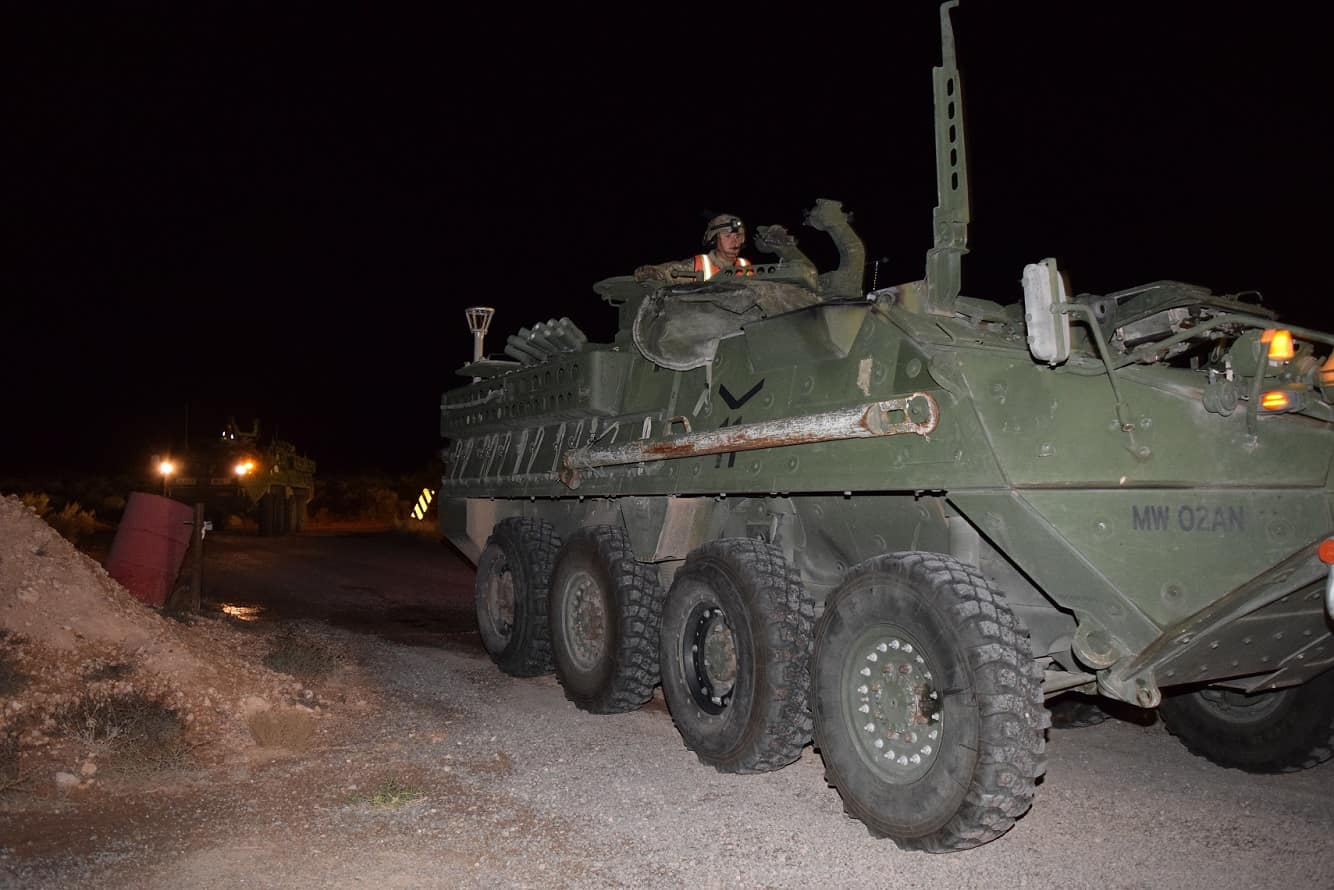
The U.S. Army is actively taking steps for exploring new capabilities and adopting new technologies for global positioning system (GPS) challenged environment.
According to recent reports of leading analysts and experts, a potential enemy could exploit the potential vulnerabilities of the global navigation system to gain an advantage on the battlefield. The so-called ‘GPS spoofing’ can generate position and timing inaccuracies on a battlefield, resulting in the potential lead to the uselessness of modern weapons systems.
This summer, the Assured Positioning, Navigation and Timing (APNT) Cross-Functional Team (CFT) hosted the first annual Positioning, Navigation and Timing Assessment Exercise (PNTAX) where Army Programs of Record (PoR), Science & Technology (S&T) labs, other government agencies, and industry partners joined together to conduct a live-virtual-constructive prototype demonstration, using mission threat scenarios to support system and capability analysis and requirement development.
“PNTAX provides the real-world environment for our partners to use,” said Mr. Willie Nelson, APNT CFT Director. “What makes PNTAX unique, is that anyone can participate. Military, other government agencies, industry, academia, it doesn’t matter. If you have a technology and you want to assess its ability to operate in a live-sky GPS challenged environment, come to PNTAX.”
Participants were allowed to collect their own data and make their own assessments. The information collected will help the CFT better understand not only how systems perform but also how they can impact future soldier operations in contested environments.
“Today’s soldiers are already operating in GPS challenged environments,” said Mr. Ben Pinx, APNT CFT Integration Branch Chief. “Army operations rely on the ability to shoot, move and communicate and when GPS is challenged so are these core functions. PNTAX is exploring what systems and technologies are out there to support Army operations regardless of their environment.”
During PNTAX, soldiers learned to prepare for GPS challenged operational environments.
“We’re getting exposed to stuff that we didn’t ever know existed,” said SSG Gregory Lowell, a Fire Support Non-Commissioned Officer from Joint Base Lewis-McChord in Washington. “It’s very cool to see the new threats that we may be experiencing in combat, while at the same time we can provide a lot of feedback to the engineers about details they might not have realized, having not used it in an operational environment.”
Soldier touchpoints play a critical role for the CFT, as their feedback will directly influence the capability requirements process for emerging technologies and equipment.
“The feedback we received back from the soldiers has been very valuable in helping shape where we want to go,” said Mr. Pinx, noting that soldier input will be included with the data and analysis gathered during the exercise.
Over the course of five weeks, PNTAX successfully assessed technologies and systems across APNT, Tactical Space and NAVWAR supporting munition, missile, ground, aviation and sensor-to-shooter (S2S) functions. This included the upward invitation testing for the Army PoR Product Manager for the Mounted APNT System (MAPS) GEN II, successful execution of nine S2S vignettes using forward observers and tactical space support, and soldier touchpoints providing real-time feedback to support new and current technology performance and mission effectiveness and efficiency for industry, the Army and other government agencies.
Following a comprehensive analysis, the CFT will consider system capabilities and functions for future APNT, Tactical Space and NAVWAR requirement development, nominate systems and technologies for participation in future Army Joint Warfighter and Forward Operational Assessments, and validate tactics, techniques and procedures for rapid incorporation to multi-domain task force units.
PNTAX will help the Army retain advantages over adversaries and accelerate investments for contested future capabilities in support of the Army Readiness and Modernization Strategies, ensuring overmatch for 2028 maneuvers and beyond. The next PNTAX event will take place in the summer or fall of 2020.