

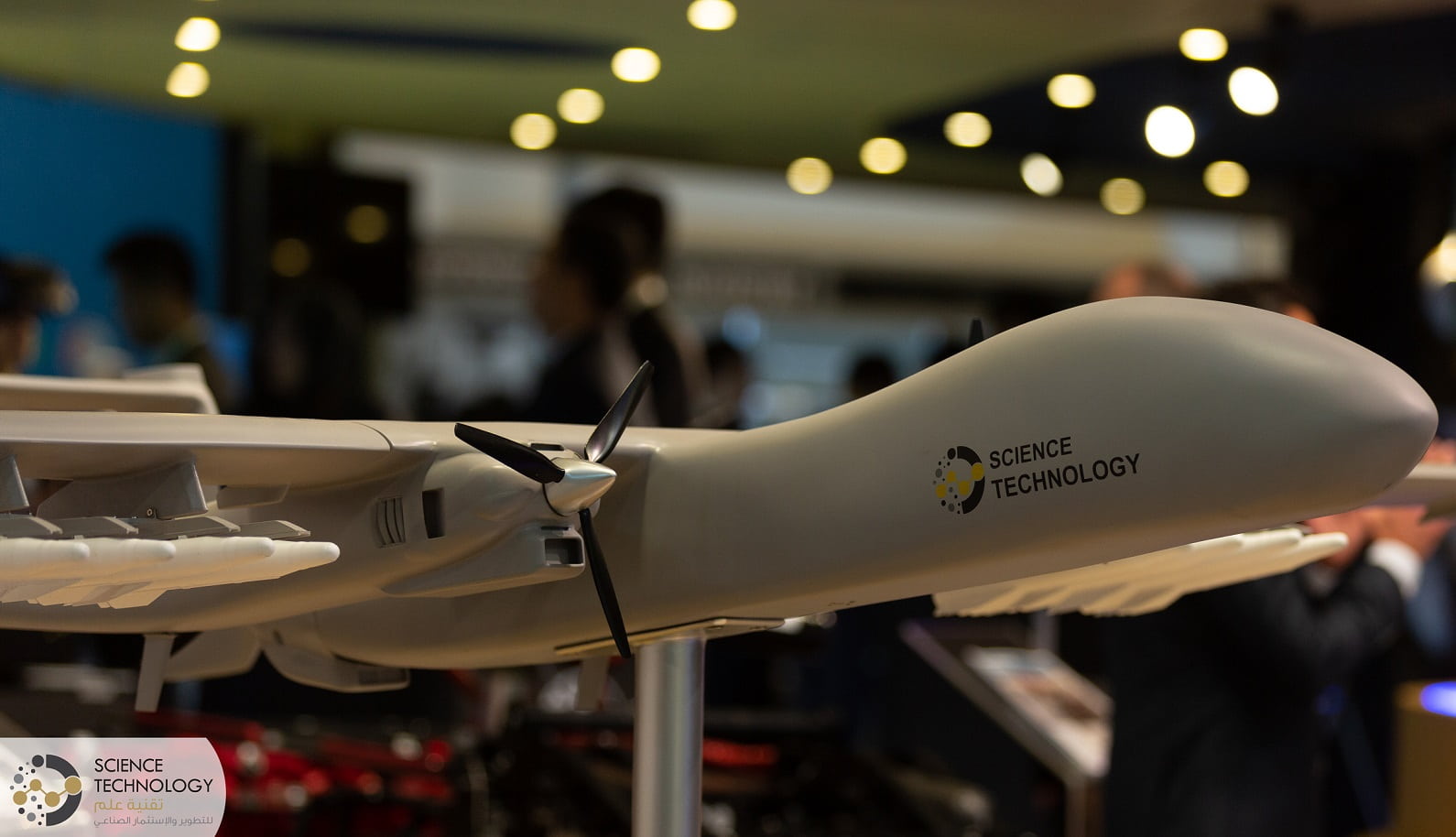
Science Technology-led defense industry team has revealed details of new long-range, heavy unmanned combat aerial vehicle (UCAV), also known as an unmanned bomber, during the IDEX 2019 exhibition held in Abu Dhabi on 17–21 February.
Science Technology company with partners from South Korea, USA, and Ukraine is launching the program that will use the latest technologies and combat experience to develop a new unmanned aerial platform that can carry up tons of weapons.
Representatives of the company said, “Ambitious project of new unmanned combat aerial vehicle is designing to support counterinsurgency (COIN) attack missions, reconnaissance, and search-and-rescue (SAR) operations, intelligence surveillance and reconnaissance (ISR), light precision attack, deep air support (DAS), maritime patrol, and internal defense missions.”
The key benefit of the new unmanned bomber by Science Technology-led team is using the latest advanced technology, relatively low cost and free market access.
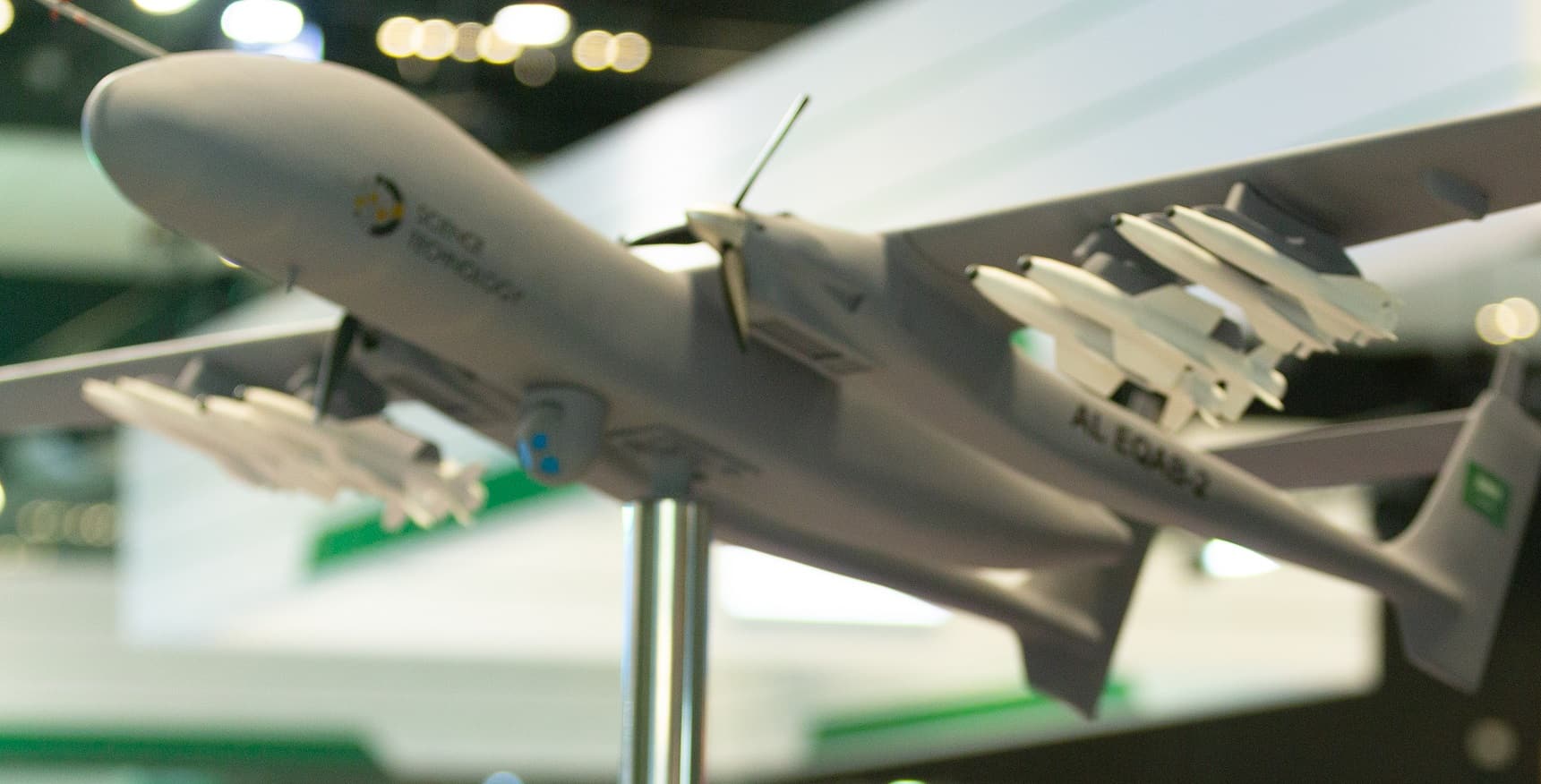
Сompany representatives have not released specification of the new unmanned bomber. However, it is expected that UCAV can carry multiple mission payloads to include: electro-optical/infrared units, multi-mode maritime surveillance radar, laser designators, and various weapons packages.
Combat air vehicle will be able to carry a range of anti-radiation, anti-ship, and precision air-to-ground missiles, and guided bombs. UCAV also will be equipped with onboard equipment to enable laser-guided missile, which possesses highly accurate.
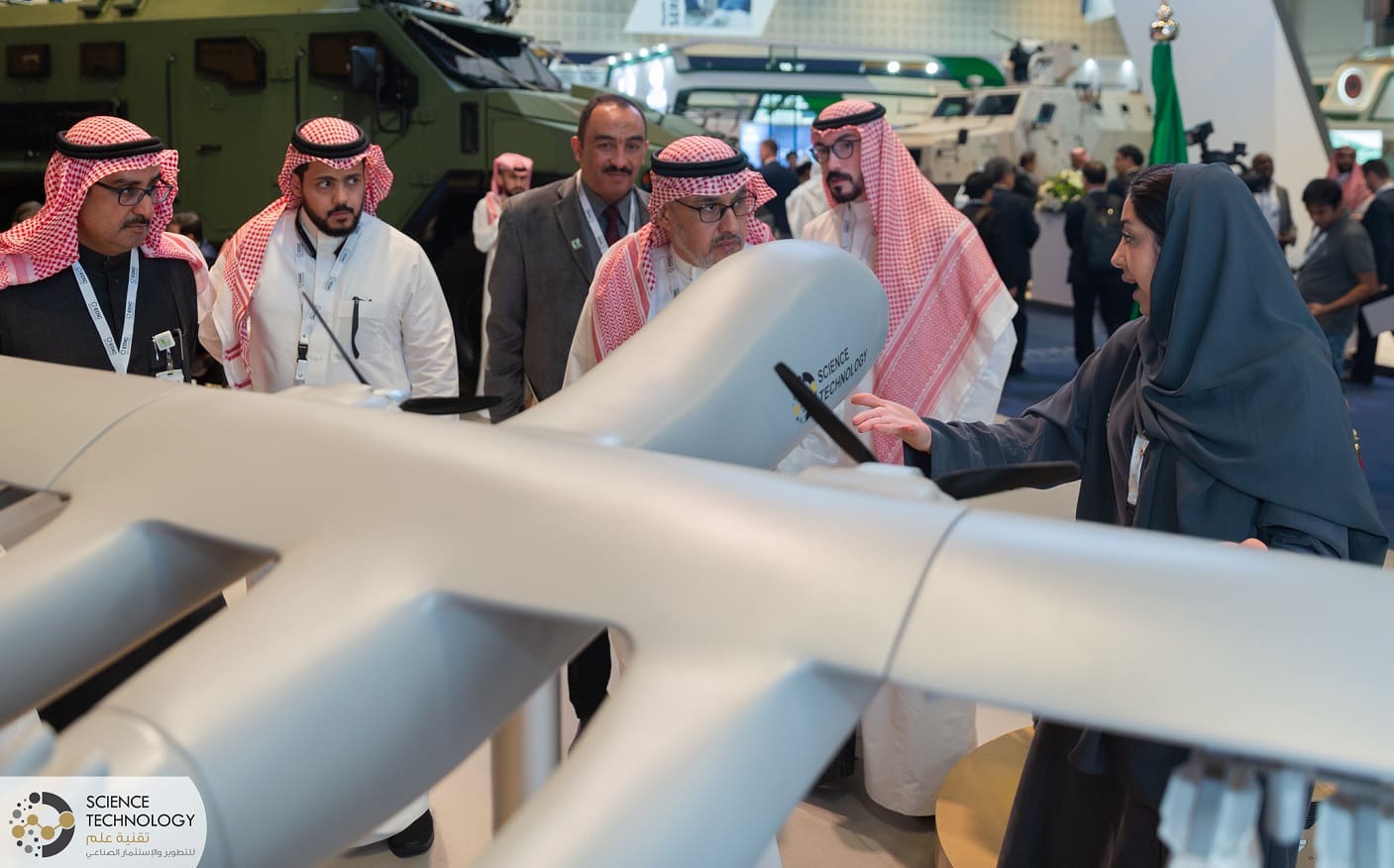
“The work on this project is a priority and received endorsed by number Armed Forces and potential customers in the MENA (Middle East & North Africa) region,” the company spokesperson said.
MENA defense spending is expected to rise in the next few years and this to open market for new heavy unmanned aerial systems carrying lethal payloads. The UCAV fleet in the region is forecast to increase from dozens of aircraft in 2018 up to 700 combat drones in 2028 driven by the growing number and intensity of local conflicts.
Science Technology is a Saudi Arabian corporation that was established to facilitate the development, production and export of high-tech industrial products designed for civilian and military applications. Science Technology is an established player in the Saudi defense market with a proven track record of sales collaboration with all major KSA military and homeland security government agencies.
أبرز أحداث #تقنية_علم بيومها الرابع في معرض #ايدكس_٢٠١٩. #الجناح_السعودي_ايدكس pic.twitter.com/1gNoS6qxaP
— Science Technology تقنية علم (@Stii_saudi) 21 February 2019