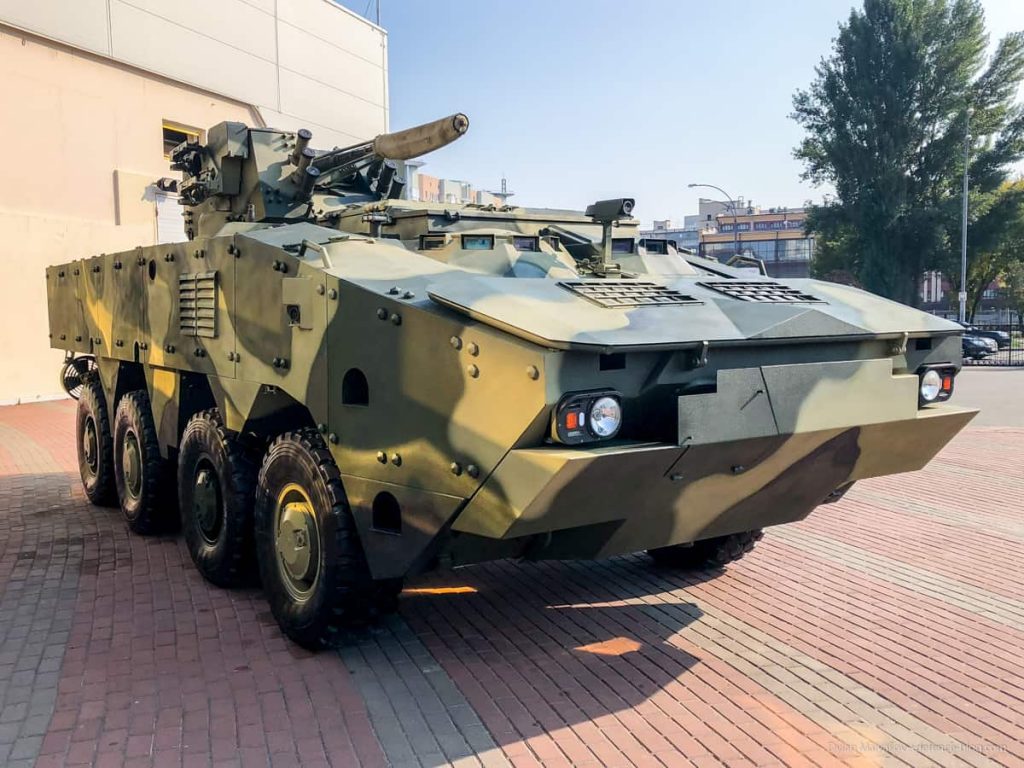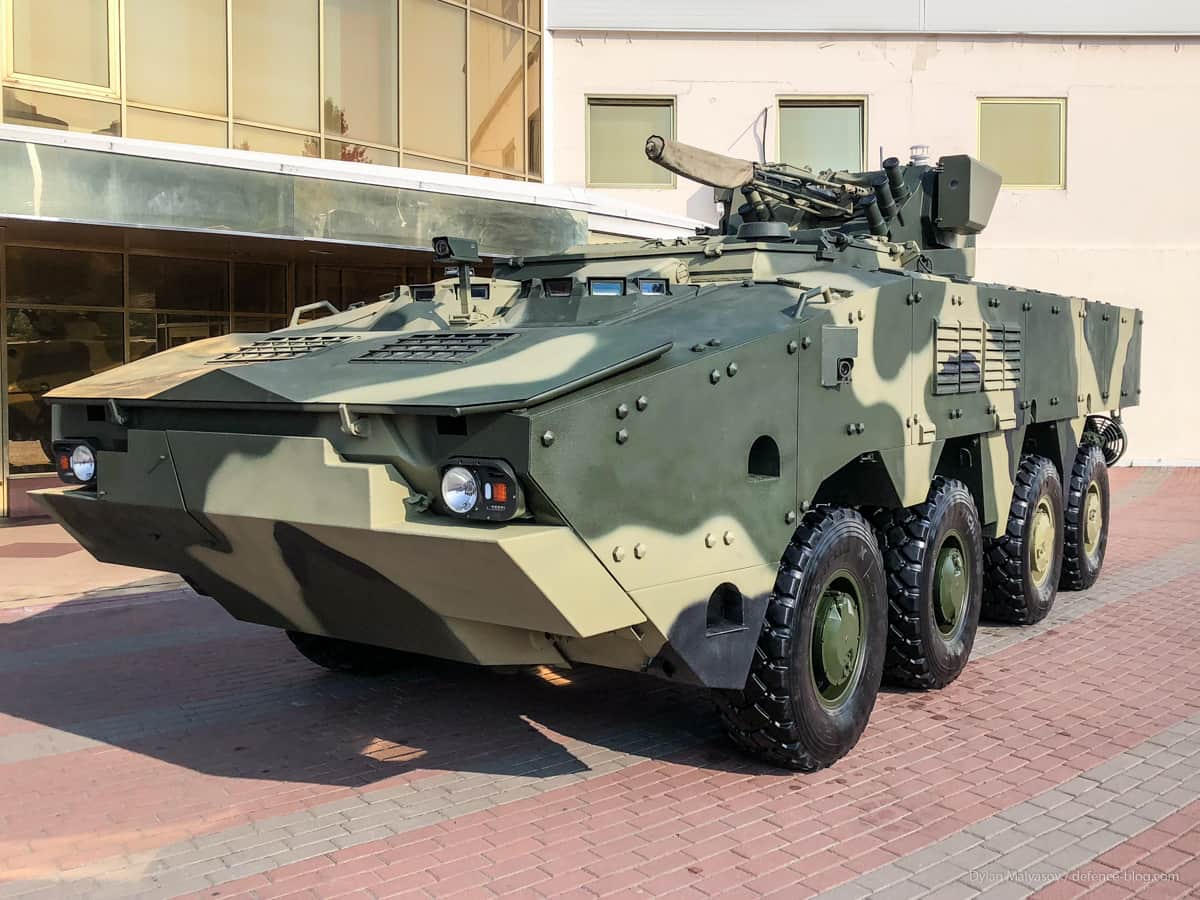
Thailand has shown interest in acquiring the BTR-4MV1 armoured personnel carrier.
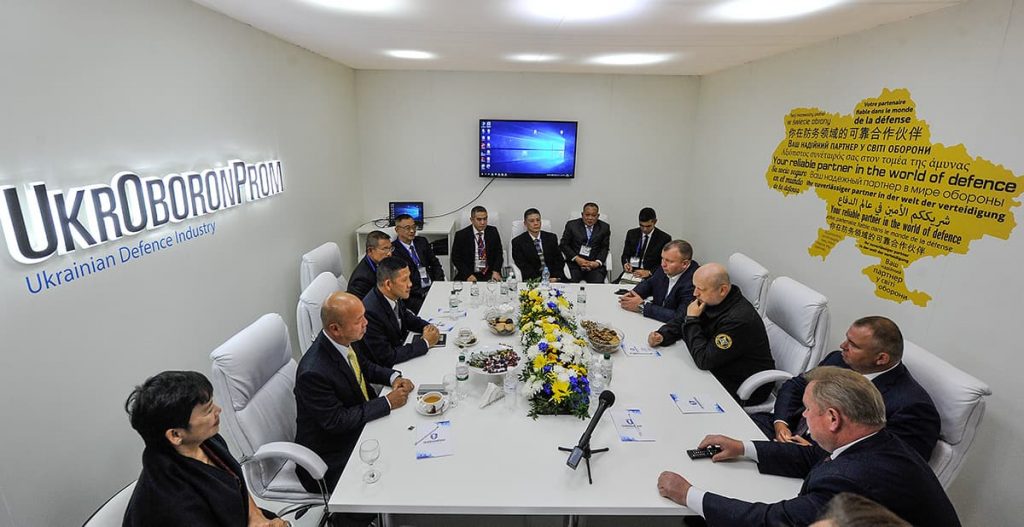
Secretary of the National Security and Defense Council of Ukraine Oleksandr Turchynov, within the framework of the Arms and Security exhibition, discussed the issues of defense and security cooperation with the heads of delegations from Poland, Kazakhstan, Saudi Arabia, the Czech Republic, Turkey, and Thailand.
The negotiations with Royal Thai Marine Corps Vice Admiral Sangkorn Pongsiri covered the issues of expanding bilateral military-technical cooperation.
The Thai military officers expressed their interest in the new Ukrainian BTR-4MV1, which, according to them, “could become the main fighting vehicles of the Kingdom Marine Corps”. According to Thai high officials, the military equipment and weapons acquired from Ukraine, in particular tanks and armored personnel carriers, “successfully passed all tests and were taken on armament”.
BTR-4MV1, developed by specialists of t UOP SE “Kharkiv Morozov Machine-Building Design Bureau” in accordance with NATO standards.
Thanks to changes in the front of the armored vehicle, as well as its technological solution, in accordance with the latest NATO armament trends, specialists managed to achieve a fundamentally new level of BTR-4 protection.
When creating BTR-4MV1, developers used a modular approach to building armor protection, using the spaced armor. Such a modular approach allows to quickly replace the elements of the outer layer of the armor in field conditions.
This allowed to enhance BTR-4MV1 protection, significantly exceeding any sample of an APC that Ukrainian defenders are currently operating.
Technological solutions – adopted by Kharkiv Morozov Machine-Building Design Bureau specialists – allowed to increase BTR-4MV1 weight by only 24-25 tons, which is 2-3 tons more than BTR-4.
The running gear – the 8×8 wheel formula in conjunction with the German Deutz engine and the American Alisson transmission – remained unchanged: top speed is 110 km / h. In addition, the BTR-4MV1 retained the possibility of forcing water obstacles by swimming, at speeds up to 10 km / h.