

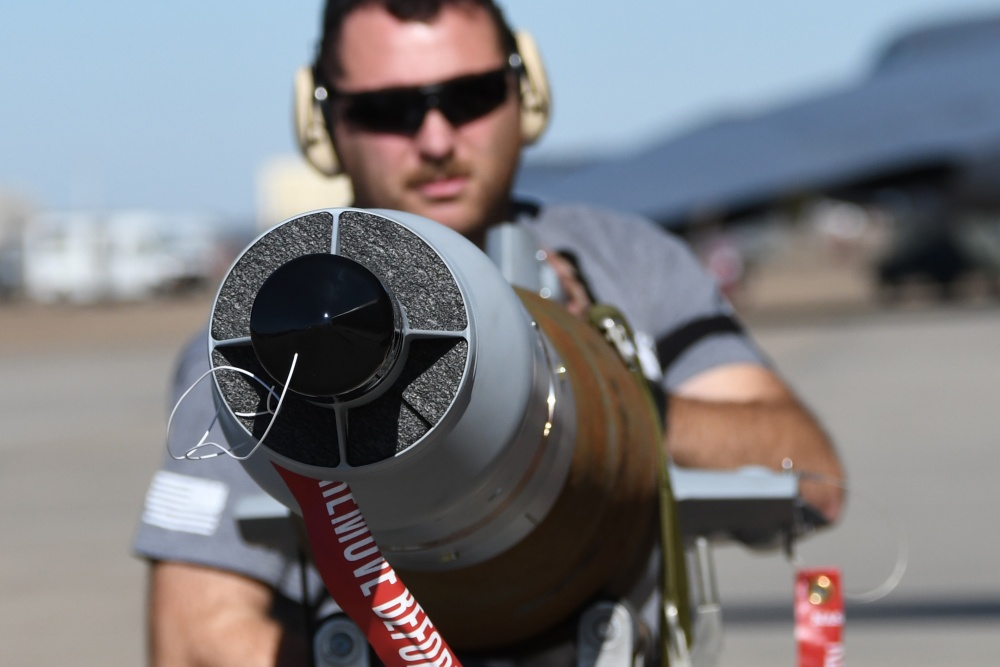
The NATO Support and Procurement Agency (NSPA) received the first lot of Precision Guided Munitions, acquired through a NATO project involving 11 Allies and one NATO partner, according to a report issued on 22 August.
The Precision Guided Munitions (PGMs), produced in the United States, will be delivered to their final recipients, Belgium and Denmark, in the coming weeks. The value of this initial acquisition is around 20 million US dollars.
The delivery is part of a cooperation effort, launched in 2014 at the NATO Summit in Wales, which offers Allies a framework to acquire air-to-ground PGMs in a cost-effective and flexible way. Working through this NATO initiative, rather than individually, allows Allies to draw upon each other’s PGM stocks in case of need: during air operations or in a possible crisis. This will also help NATO and Allies to reduce dependence on the US for air missions.
“This initiative seeks to address a problem that NATO first encountered during the Libya Operation: when some Allies ran out of their stockpiles of munitions, they found it incredibly difficult to use those of other air forces. We realized that we needed a new, flexible approach to the provision of air-to-ground precision-guided munitions. I am happy that this approach is now delivering its first results,” said Rose Gottemoeller, NATO Deputy Secretary General.
The project is managed by the NSPA on behalf of the Allies. So far, 11 NATO members have joined this effort: Belgium, the Czech Republic, Denmark, Greece, Hungary, the Netherlands, Norway, Poland, Portugal, Spain, and the United Kingdom . NATO partner Finland is also a participant.
Following the first delivery today, the second and third rounds of acquisition for PGMs are already underway. While continuing to expand this cooperation in the air domain, NATO has started to build similar frameworks for the acquisition of land and maritime munitions. This is part of NATO’s effort to increase joint investments in the critical capabilities that the Alliance needs.