


The U.S. Army has deployed its solar-powered K1000 unmanned aircraft system to support ongoing exercises in the Philippines, expanding the platform’s operational footprint across the Indo-Pacific region.
The drone, developed by Kraus Hamdani Aerospace, was used by the 1st Multi-Domain Task Force during Exercise Salaknib 25 at Fort Magsaysay on May 29, 2025.
The K1000 aircraft, equipped with solar panels integrated into its wings, conducted real-time surveillance and reconnaissance missions using Full Motion Video (FMV) and ISR payloads. The U.S. Army Pacific (USARPAC) confirmed the drone’s role in providing persistent situational awareness as part of its multi-domain operations during the bilateral training event with Philippine forces.
This follows the platform’s earlier deployment during Static Focus 3, the Army’s first battalion-level All-Domain Home-Station Training (HST) exercise at Yakima Training Center, Washington, in March 2025. During that event, the K1000 supported ISR, communications relay, and electronic warfare tasks, showcasing its ability to operate across diverse mission sets.
According to Kraus Hamdani Aerospace, the K1000ULE variant is the longest-endurance, fully electric, zero-emissions autonomous aircraft in its class. Weighing between 21 and 55 pounds, the system has demonstrated flight durations exceeding 76 hours, setting a performance benchmark in the UAS category 2 range.
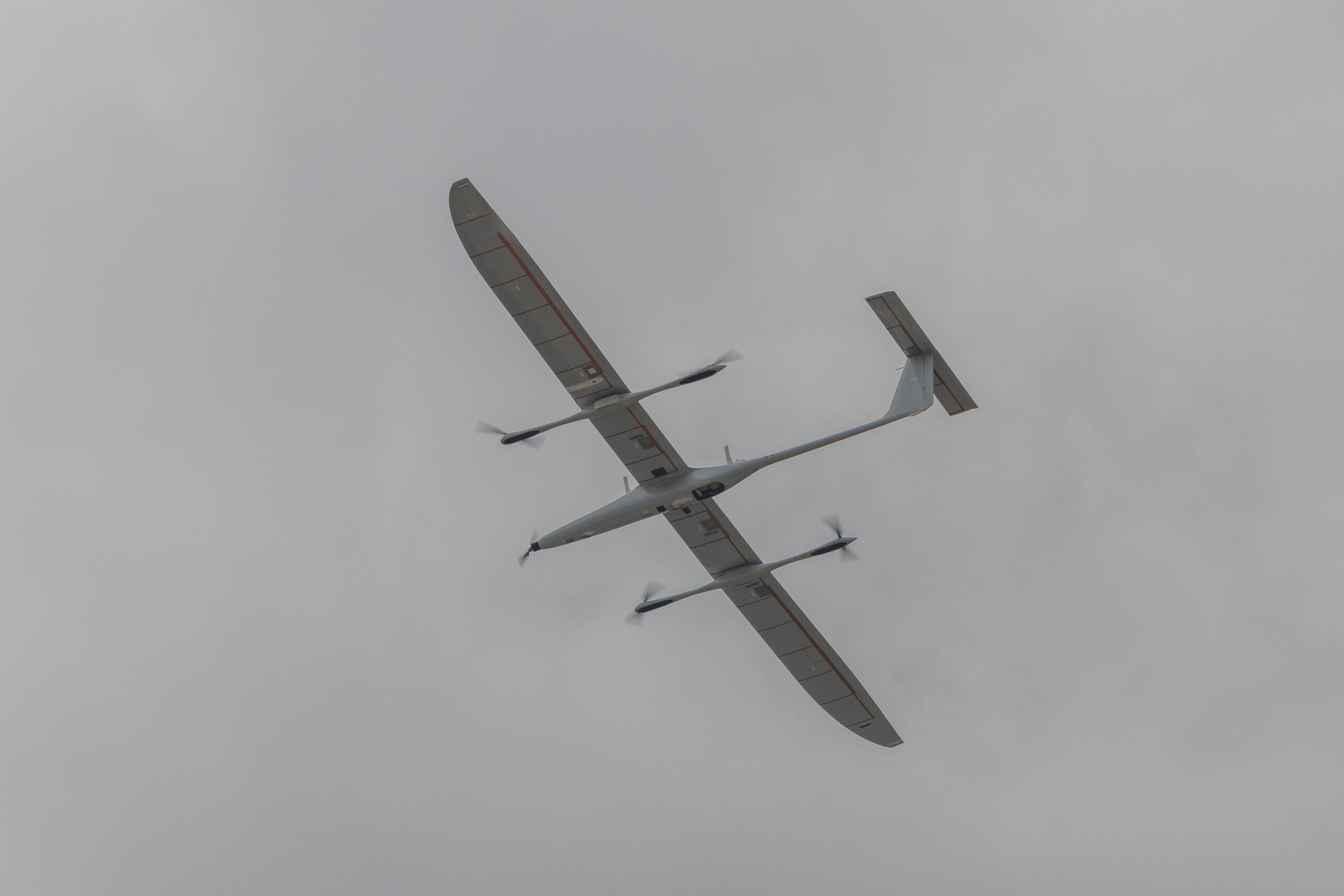
The aircraft’s ultra-light construction, combined with energy-harvesting capabilities, allows it to remain airborne well beyond conventional electric platforms. Its endurance and low signature profile make it well-suited for extended ISR missions over wide operational areas.
As part of its integration into Pacific operations, the K1000 is being evaluated for long-duration surveillance and relay roles that support distributed forces across archipelagic terrain. Its deployment in the Philippines highlights the Army’s intent to adapt advanced drone capabilities to forward-positioned exercises and real-world scenarios.