

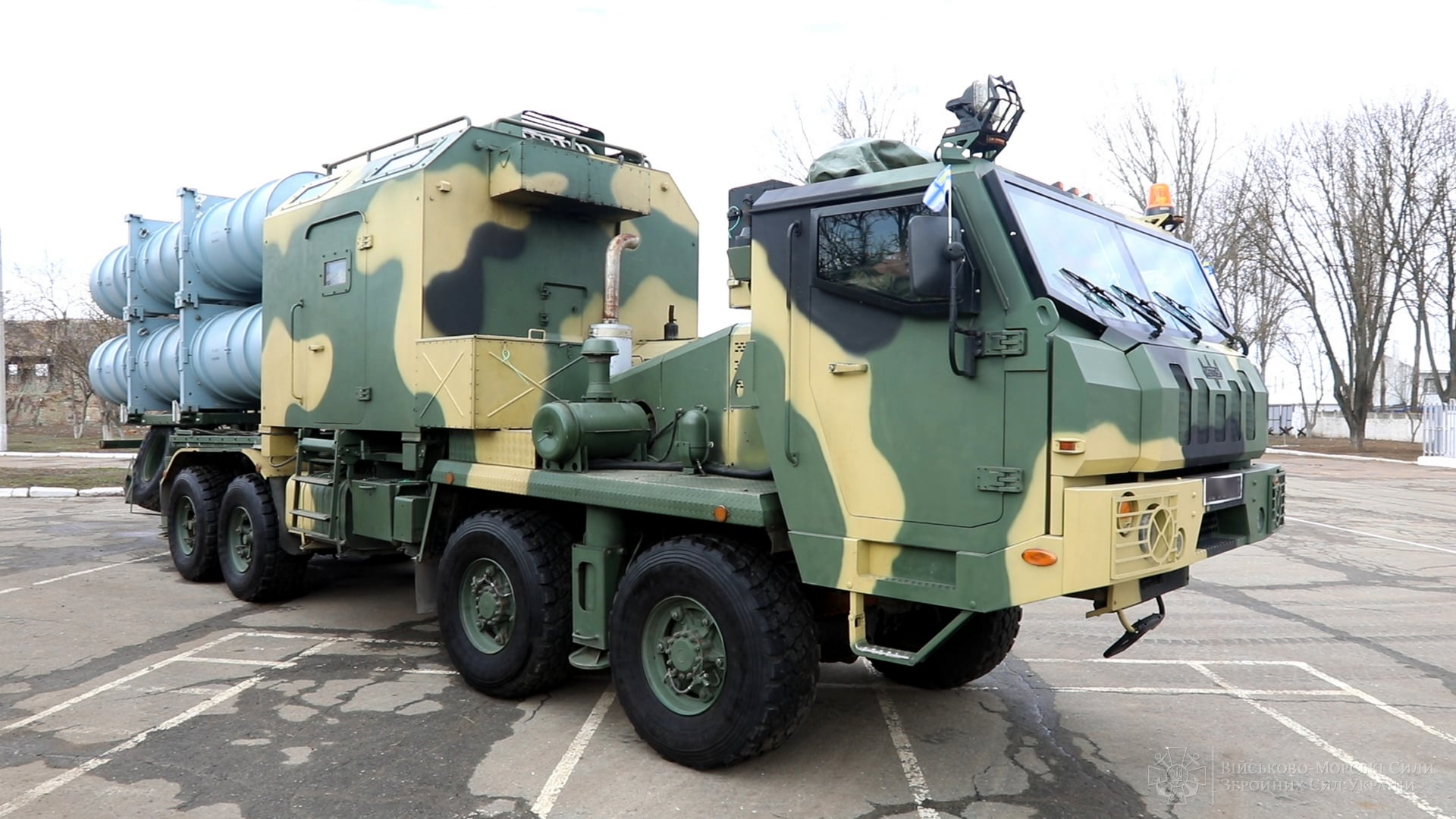
The Ukrainian Navy accepted its first RK-360 Neptune coastal defense system, paving the way for the reliable defense of the Black Sea and Azov coast.
After more than a decade years of development, the Ukrainian Navy took hold of its first subsonic anti-ship cruise missile system with a reported maximum range between 280 and 300 kilometers.
The Neptune is a coastal missile system designed to engage enemy surface fighting ships and auxiliaries vessels both single and belonging to Task Forces.
The Neptune’s unit includes six USPU-360 launchers with 24 R-360 cruise missiles. The R-360 missile weighs 870 kg; the weight of its warhead is 150 kg; its launch range is up to 280 km and speed is about 900 km/h. It is able to get at a height of from 3 m to 10 m above the surface. The complex can simultaneously launch up to 24 missiles, i.e. a full salvo of 6 launchers, with an interval of launches in a salvo being from 3 to 5 seconds.
Ukraine’s Neptun cruise missile can be located at a distance of up to 25 km from the coastline, and its deployment lasts up to 15 minutes.
The system can be closely integrated and adapted to a country’s adjacent weapons and command and control systems. This expands the defended area and enhances the total fighting capability of the force.
In the 2000s, Kyiv-based state design bureau Luch began to develop a new missile system based on a design of the Soviet anti-ship missile Kh-35. But later the project was frozen until 2014 years old, and after the annexation of the Crimean peninsula by Russia, it was re-launched.
Neptun R-360 missile is generally similar to the Kh-35, however, Ukrainian constructors substantially improved missile range and electronics. The new missile has a longer body with more fuel, a larger booster, and some other modifications.