

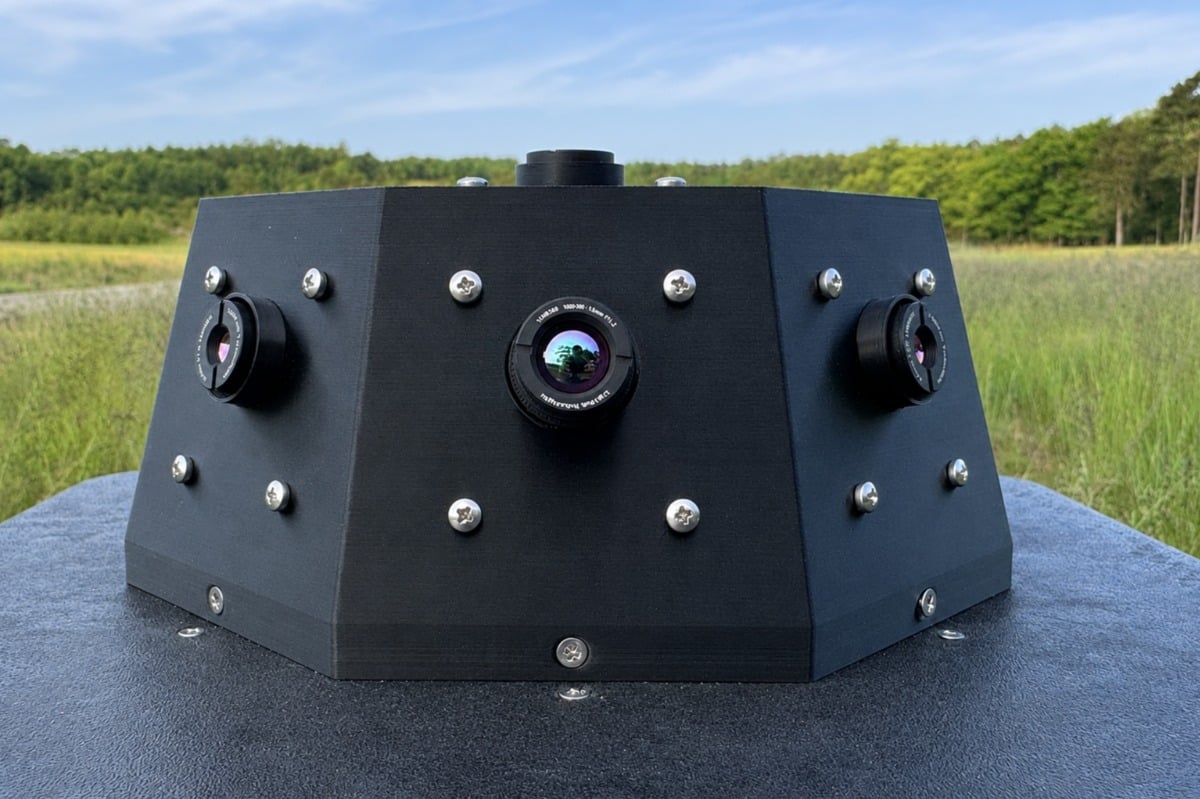
- LightPath Technologies and Picket Defense Systems signed an MOU to integrate LightPath's 360-degree passive hemispheric infrared sensing into Picket's Inferno RTC counter-drone platform.
- The CST Solo-based system uses multiple focal plane arrays and a proprietary shutterless algorithm for continuous passive infrared awareness against FPV and AI-enabled drone threats.
Two American defense technology companies have partnered to integrate a 360-degree passive infrared sensing system into a close-in counter-drone platform, combining LightPath Technologies’ all-around optical awareness capability with Picket Defense Systems’ Inferno RTC to create a more persistent detection solution against the first-person-view and AI-enabled drones that have become the defining aerial threat of modern warfare.
The partnership, announced through a memorandum of understanding between the two companies, centers on embedding LightPath’s CST Solo-based passive hemispheric infrared sensing technology into Picket Defense Systems’ Inferno RTC platform, a counter-unmanned systems solution designed for close-in protection against drone threats.
LightPath Technologies, a Florida-based optical and infrared technology company, describes the sensing solution as built around multiple focal plane arrays consolidated into a single video engine, combined with a proprietary shutterless algorithm that allows the system to maintain continuous passive infrared awareness without the mechanical shuttering cycle that conventional infrared cameras require for calibration. That shutterless design matters operationally because a conventional infrared camera briefly interrupts its image feed every time it recalibrates, creating momentary blind spots that a fast-moving FPV drone could exploit during a close-range engagement.
Passive infrared sensing, as opposed to active radar or radio-frequency detection, works by detecting the heat signatures that objects naturally emit rather than by transmitting an energy signal and waiting for a return. That distinction has significant tactical implications in the current threat environment. Many modern FPV drones and AI-enabled attack platforms are being designed specifically to operate in radio-frequency-denied or electronically jammed environments, or to minimize their radar cross-section to avoid detection by conventional radar-based counter-drone systems. A passive infrared sensor that requires no transmission and detects thermal emissions rather than reflected radar energy presents a fundamentally different detection challenge for drone designers to defeat, because suppressing a heat signature is considerably more difficult than minimizing a radar reflection or operating in a jammed frequency band.
The hemispheric coverage that LightPath’s sensing technology provides addresses one of the persistent tactical weaknesses of conventional directed counter-drone sensors, which typically cover a defined sector and require operators to know approximately where a threat is coming from before they can engage it effectively. A 360-degree passive infrared awareness system removes that assumption, allowing the Inferno RTC platform to detect threats arriving from any direction simultaneously without requiring prior cueing from a radar or other sensor. The system is built to MIL-STD requirements, meaning it meets the military standards for shock, vibration, temperature, and electromagnetic compatibility that are required for equipment intended for use in operational military environments, and is designed for high-G operating environments, reflecting the physical stresses that a system may experience when mounted on vehicles, deployed on rooftops, or integrated into mobile force protection configurations.

Picket Defense Systems, the American counter-unmanned systems company whose Inferno RTC platform forms the integration host for this partnership, describes itself as focused specifically on close-in protection against FPV and AI-enabled drone threats, the category of attack that has proven most difficult for traditional air defense architectures to address. FPV drones, the small camera-equipped one-way attack aircraft that have emerged as one of the most cost-effective and tactically flexible weapons in the current conflict environment, typically fly fast and low, use video links or increasingly fiber-optic tethers to resist jamming, and are cheap enough to be deployed in quantities that overwhelm detection and engagement capacity. The combination of their speed, small size, and low altitude makes them difficult targets for radar-based systems optimized for larger or higher-flying threats, and the shift toward AI-enabled guidance reduces their dependence on the radio-frequency links that electronic warfare systems target.
The integration of 360-degree passive infrared detection into the Inferno RTC platform positions the combined system to address these threats through a sensor modality that is difficult for drone developers to defeat through the electronic hardening approaches that have degraded the effectiveness of RF-based counter-drone systems. LightPath’s technology provides what both companies describe as always-on passive awareness, meaning the system continuously monitors all hemispheric quadrants without the polling cycles or directional scanning that leave gaps in coverage. For an operator defending a static position, a vehicle convoy, or a forward operating base against drone threats that may arrive simultaneously from multiple directions at unpredictable times, that continuous full-sphere awareness represents a meaningful operational improvement over sector-coverage systems that require prior warning or cueing.
The FPV drone threat that this partnership specifically addresses has evolved rapidly from its origins as a hobbyist technology into one of the most tactically significant weapons categories in contemporary warfare. In Ukraine, both Russian and Ukrainian forces have deployed FPV drones by the thousands to attack armored vehicles, artillery positions, infantry, and logistics assets, with individual drones that cost a few hundred dollars destroying equipment worth millions and forcing both sides to fundamentally reconsider how they protect vehicles and personnel in contested areas. The proliferation of commercial drone technology, combined with increasingly accessible AI guidance software that can enable drones to navigate and acquire targets autonomously without continuous operator control, has made the FPV and AI-enabled drone category a threat that defense establishments worldwide are investing urgently to counter.