


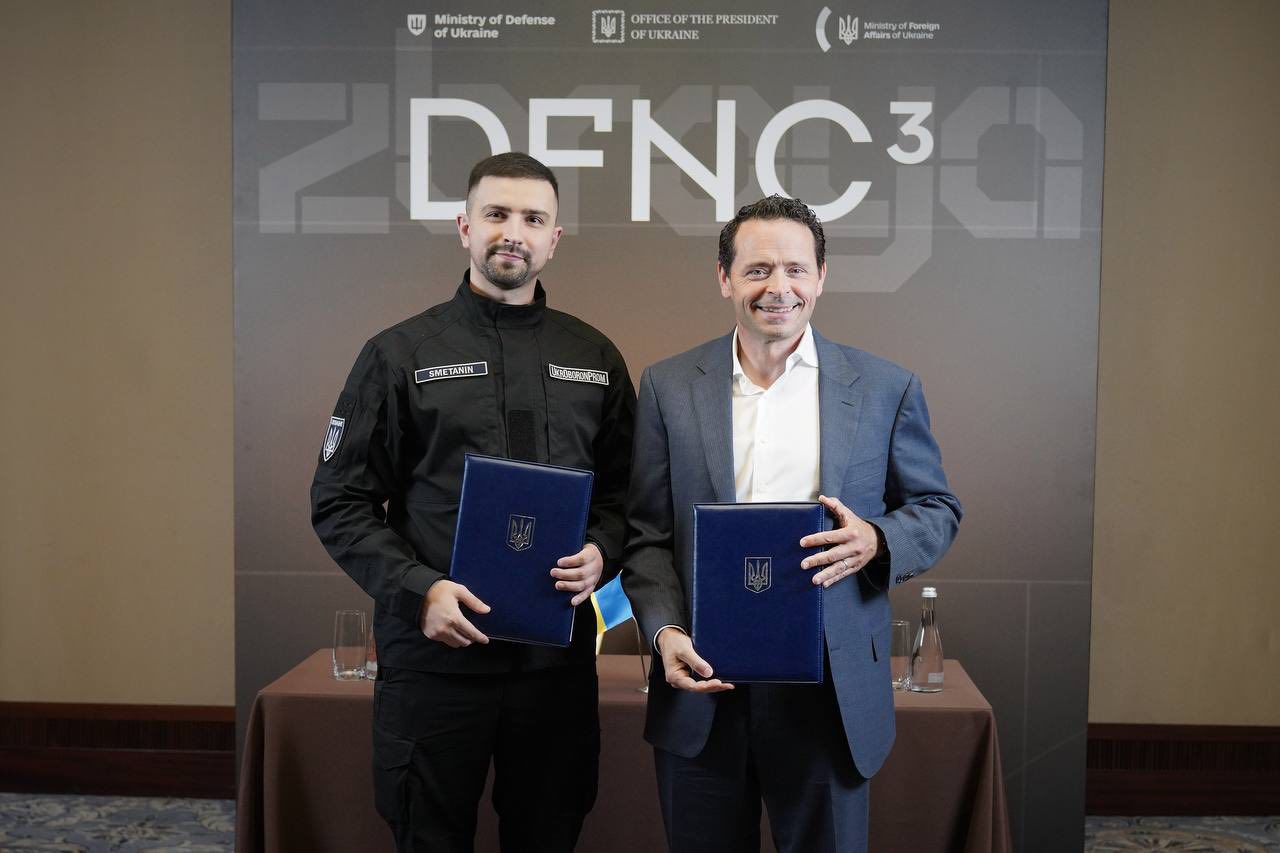
Ukraine’s state-owned defense conglomerate Ukroboronprom announced earlier this week that it has signed a new cooperation agreement with the U.S.-based company LeVanta Tech Inc.
The deal focuses on the joint development of “float-and-fly” systems — vehicles capable of operating both on water and in the air.
In a statement, Ukroboronprom CEO Herman Smetanin said, “LeVanta Tech Inc. has agreed to cooperate in the ‘float-and-fly’ concept. We also plan to jointly develop solutions to improve the speed and stability of our products. We are interested in expanding production in Ukraine and organizing training for our armorers.” The agreement was signed with LeVanta Tech CEO Kelly A. Echols.
LeVanta Tech specializes in the development of innovative drones based on the ground-effect concept. In aerodynamics, the ground effect occurs when a wing operates close to the surface of land or water, reducing aerodynamic drag and increasing lift efficiency. The company says this principle can reduce drag by up to 50 percent and improve lift-to-drag ratios to 20–30, compared with 15–20 for conventional aircraft.
According to Ukroboronprom, LeVanta’s portfolio includes the Halia family of drones — hybrid systems that combine features of fixed-wing aircraft and motorboats. These craft are designed to travel just above the surface, taking advantage of the ground effect to achieve greater speed and efficiency while reducing visibility to radar.
Defense Express analysts noted that such “ekranoplan”-type vehicles combine the advantages of both surface and airborne platforms. Operating at very low altitude above water not only enhances efficiency but also lowers radar visibility and complicates early detection. These characteristics make them suitable for reconnaissance, surveillance, and a range of special operations.
Analysts also suggested that in the future, drones with these capabilities could play an offensive role. “If Ukraine receives these drones and converts them into kamikaze platforms, they could theoretically reach and destroy all remaining ships of Russia’s Black Sea Fleet — even if those vessels are stationed in closed harbors,” experts said.
Ukroboronprom stated that the partnership aims to improve the speed, stability, and durability of these systems, while also preparing for possible production inside Ukraine. The company added that it plans to organize technical training programs for Ukrainian specialists involved in drone manufacturing.
The combination of LeVanta’s expertise in ground-effect aircraft and Ukraine’s growing unmanned systems sector could result in a new generation of maritime drones capable of operating flexibly across both air and sea environments.