

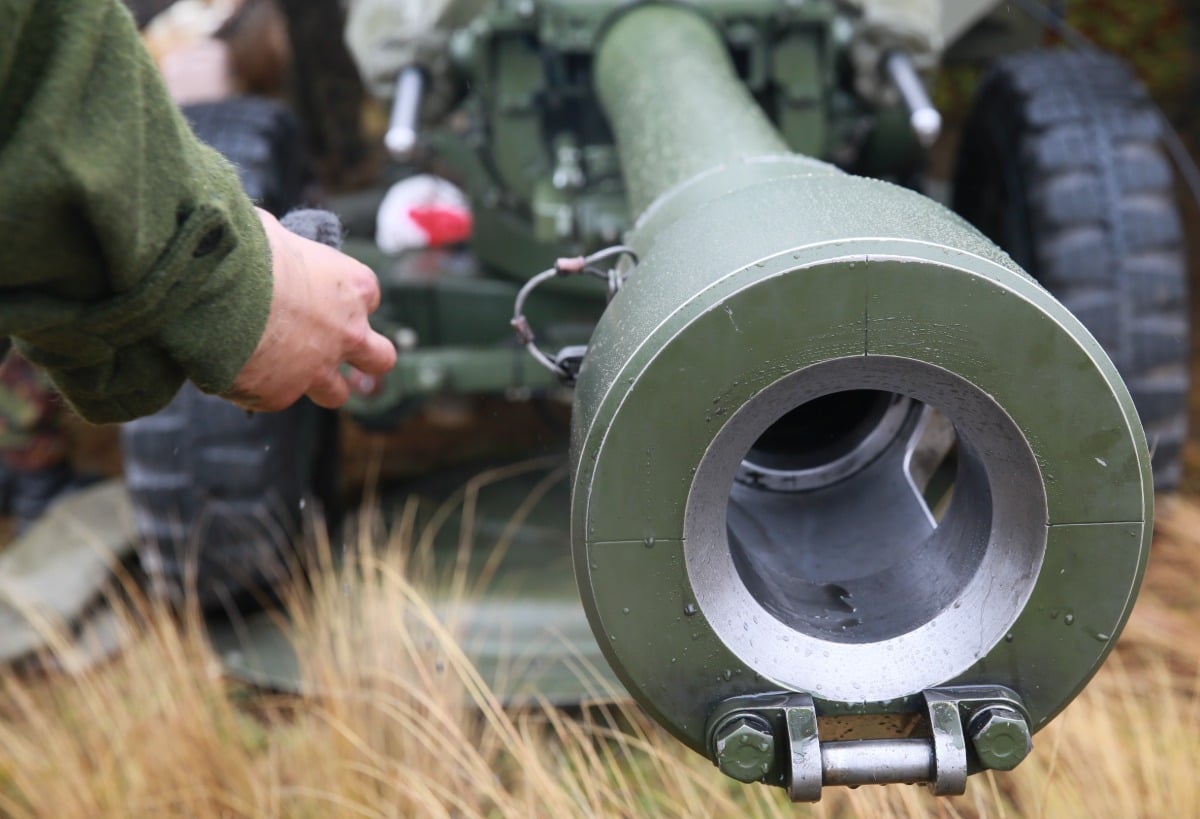
- BAE Systems signed a licensing agreement at the Farnborough International Airshow on July 21, 2026 to support local manufacture of its L119 Light Gun in Ukraine.
- The deal grants an unnamed Ukrainian strategic partner access to BAE's technical data needed to build an initial test gun, with no contract value or timeline disclosed.
BAE Systems announced at the Farnborough International Airshow that it has signed a licensing agreement with an unnamed strategic defense partner to support local manufacture of the Light Gun artillery system inside Ukraine, giving Kyiv’s defense industry direct access to the technical know-how behind a weapon British and Commonwealth forces have relied on for half a century.
The agreement covers the L119, a 105 mm towed howitzer variant of BAE’s Light Gun family, and grants the Ukrainian side access to BAE Systems’ technical information and support needed to manufacture an initial gun for testing, according to the company.
A howitzer fires shells on a curved trajectory to hit targets that direct-fire weapons can’t reach, and the Light Gun’s defining feature has always been how little it weighs for what it can do. At roughly 1,980 kg (4,370 lb), the L119 is light enough to be slung under a helicopter or towed behind a Land Rover, and it can be broken down and repositioned by a crew as small as three soldiers, though six is standard. That mobility made it the weapon of choice for British paratroopers and Royal Marines during the 1982 Falklands War, and it’s the same quality that makes it valuable on a modern battlefield saturated with reconnaissance drones, since a gun that can displace quickly after firing is far harder to hit with counter-battery fire than something bolted to a truck chassis.
More than 1,100 Light Guns have been built since production began in the 1970s, and versions of the system serve in the armed forces of roughly 20 countries, including the United States, which license-built its own variant as the M119. The L119 specifically uses standard U.S.-pattern 105 mm ammunition, giving it a maximum range of around 11.2 km (7 miles), a shorter reach than some modern 155 mm systems but one that comes paired with a rate of fire up to 12 rounds a minute in short bursts and a logistics footprint that’s far easier to sustain than a heavier, more complex gun.
The UK government has gifted Light Guns to Ukrainian forces since early in the full-scale war, and BAE Systems has run a maintenance and repair contract for the guns from facilities inside the country since 2024, so this new agreement builds on ground the company had already broken rather than starting from zero.
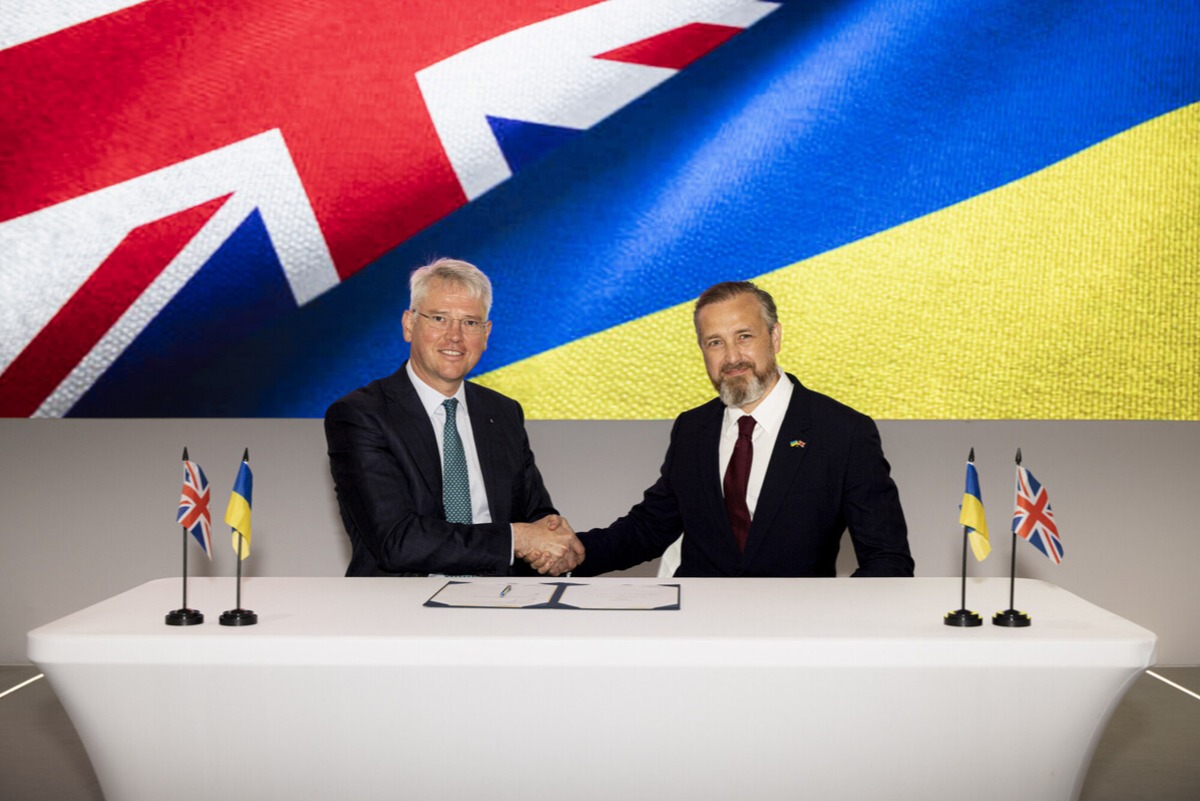
BAE Systems has described the arrangement as part of a broader strategy to strengthen what it calls Ukraine’s sovereign defense capability, a term that in practice means Kyiv’s ability to produce and sustain its own weapons rather than depending entirely on shipments from allies whose political will and production capacity can shift over time. That strategic logic has become more urgent as Western stockpiles have been drawn down by nearly four years of war and as Ukraine has pushed hard to expand its own arms industry, an effort that now extends well beyond drones into artillery, armored vehicles and munitions production.
“Strong defence capability depends on trusted industrial strategic partnerships,” said Giles Ambrose, engineering, technology and strategy director at BAE Systems Weapon Systems UK.
“This agreement brings together BAE Systems’ artillery expertise and our strategic defence partner’s knowledge of Ukraine’s operational requirements to support the development of sovereign capability where it’s needed most. Supporting Ukraine is not simply about supplying equipment. It is also about working together to build the industrial resilience, skills and capacity needed to sustain defence capability for the long term,” Ambrose said.
The Farnborough announcement lands alongside a wave of other Ukraine-focused deals signed at the same airshow this week, from a Ukrainian drone maker partnering with a U.S. Special Operations boatbuilder to a Czech engine manufacturer licensing jet engine production directly inside Ukraine, underscoring how the industrial side of this war has become as much a stage for deal-making as any defense conference on the calendar.
BAE Systems has also been rebuilding its own artillery production capacity in the UK in parallel with the Ukraine push, restoring domestic manufacturing lines and supplying British-made 105 mm and 155 mm artillery barrels from a facility in Sheffield, a city with a manufacturing pedigree in steel and armaments dating back more than a century. That UK-side investment matters because a licensing deal is only as good as the parent company’s ability to keep supplying technical support and components as the partnership matures, and BAE’s decision to expand its own barrel-making capacity suggests the company expects demand from Ukraine, and potentially other Light Gun operators rearming amid the same security anxieties, to keep climbing for years to come.