

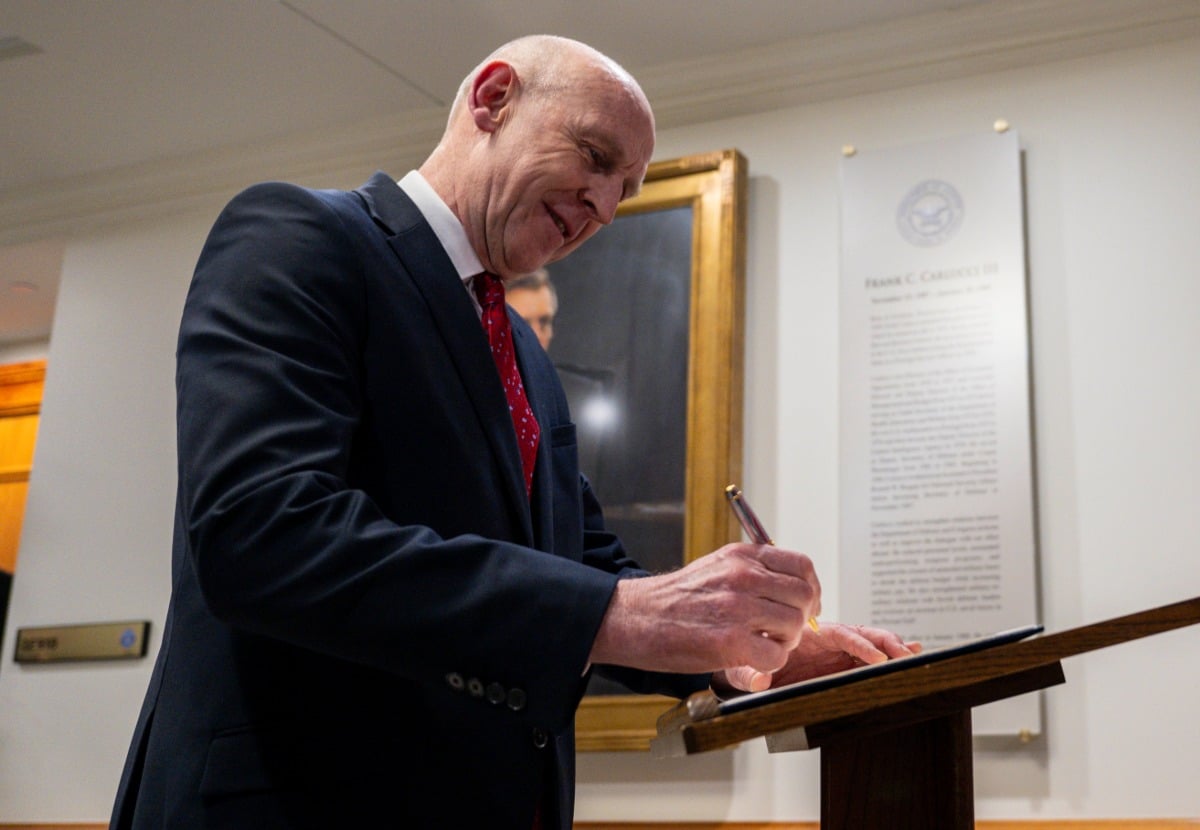
- UK Defence Secretary John Healey resigned on June 11, 2026, citing a Defence Investment Plan settlement he said falls well short of what Britain needs at this dangerous time.
- Healey's letter states the settlement rises to only 2.68% of GDP by 2030 and forces decisions that would reduce military readiness and increase risk to personnel on operations.
Britain’s Defence Secretary has resigned, accusing Prime Minister Keir Starmer of delivering a defence spending settlement so inadequate that staying in the job would force him to reduce military readiness and put personnel at risk.
John Healey, the Rt Hon Member of Parliament who served as Defence Secretary under Starmer’s Labour government, submitted his resignation on June 11, 2026, in a letter addressed to the Prime Minister.
The letter, published in full, describes a Defence Investment Plan financial settlement that Healey says “falls well short of what is required for defence and the country at this dangerous time.” He told Starmer directly that without a plan meeting the moment, he was “being forced to make decisions that would reduce the readiness of our Forces and increase the risk to personnel on operations, and could make the country less safe.”
The resignation letter is remarkable for its candour about the strategic environment Britain faces. Healey quoted Starmer’s own intelligence assessment back at him: “it is our intelligence assessment, and the assessment of other countries in NATO, that there could be an attack by Russia on NATO as soon as 2030.” He described the Defence Investment Plan settlement as backloaded, meaning the bulk of additional funding arrives in later years rather than now, rising to just 2.68 percent of GDP in 2030, when Britain would already reach 2.6 percent the following year through existing commitments. Healey had been pushing for Britain to commit to 3 percent of GDP on defence by 2030, a figure he said in the letter would command strong cross-party support and would align with what other European allies are committing.
The backdrop to Healey’s resignation is a Labour government that came to power in 2024 inheriting both a strained defence budget and a deteriorating security environment. In the letter, Healey listed the achievements he considered genuine: raising defence investment to 2.5 percent of GDP three years ahead of schedule, launching what he called the deepest defence reforms in 50 years, winning the biggest UK defence export deals for decades, publishing a first-of-its-kind Strategic Defence Review, delivering the largest military pay rise in nearly 20 years, and signing major defence agreements with Germany, Norway, and France. He also referenced Britain’s leadership of the Coalition of the Willing alongside the Ukraine Defence Contact Group, the UK and France leading a multinational defensive mission to support freedom of navigation through the Strait of Hormuz after the Iran crisis disrupted shipping through the waterway, and the UK playing a significant role in NATO’s Arctic Sentry initiative in the High North.
Those achievements make his resignation letter more pointed, not less. Healey is not a critic of the government’s direction. He is a minister who built the architecture of Britain’s defence revival and is now saying that architecture cannot stand without more money than the Treasury is willing to provide. The gap between what Healey says the Defence Investment Plan offers and what he says the threat environment requires is the substance of the political crisis his resignation creates.
The security demands Healey cites in the letter go beyond the long-running Ukraine conflict. Britain and France have led planning for a defensive multinational mission to support freedom of navigation through the Strait of Hormuz after the Iran crisis disrupted shipping through the waterway, the narrow passage through which roughly 20 percent of global oil supply transits. The UK is playing a significant role in NATO’s Arctic Sentry initiative, established in response to increased Russian military activity in the High North. Healey also references the Paris Agreement confirming a British deployment to Ukraine after a ceasefire, a commitment that would require sustained funding to honour in any realistic scenario. Each of these operational commitments costs money that Healey says the settlement does not adequately provide.
The phrase “Defence Investment Plan,” which appears throughout the letter, refers to the government’s multi-year spending plan for defence, essentially the document that translates political commitments into actual budgets for equipment, personnel, readiness, and operations. Healey’s complaint is that the DIP settlement he was finally shown in full on the Monday of his resignation week does not match the commitments the Prime Minister has made publicly about spending levels, and that the shortfall is too large to manage without concrete harm to military capability. He notes that he recognised the strain defence spending places on other government departments and that he had outlined credible ways of meeting the funding challenge through multinational approaches, but that the Treasury remained unwilling to commit the resources required.
The political consequences of Healey’s resignation extend well beyond the Ministry of Defence. Starmer has made defence and security central to his government’s international reputation, building a public profile as a serious leader at a serious moment. A Defence Secretary resigning over inadequate funding, and doing so in a letter that quotes the Prime Minister’s own intelligence warnings about a Russian attack on NATO, undercuts that narrative sharply. Healey explicitly told Starmer that the commitment he made at the Munich Security Conference in February required a Defence Investment Plan that matched the moment, and that the settlement he received does not.
“After explaining to you that I would not be able to accept a DIP settlement that does not give our Forces the resources they need, I am now left with no other option than to submit my resignation as your Defence Secretary,” Healey wrote.
He closed the letter by expressing continuing support for the Labour government and wishing Starmer strength for the challenges ahead.