


U.S. Soldiers from the Multi-Purpose Company, 1st Battalion, 502nd Infantry Regiment, 2nd Mobile Brigade Combat Team, 101st Airborne Division (Air Assault) are field-testing an improvised, 3D-printed munition dropper dubbed the Widowmaker during Combined Resolve 26-1, the unit said.
Mounted on a PDW C100 drone platform, the device is being evaluated for its ability to deliver M67 fragmentation grenades, M18 smoke grenades, and training munitions quickly and with precision during simulated combat scenarios.
According to the unit, the Widowmaker is intended to increase responsiveness and give small units more options when external fires are not immediately available. Company materials describe a concept in which one drone detects or designates a target while another delivers effects, enabling platoon-level actions without waiting on artillery or aircraft.
“With this system, we can create platoon-level effects on target much faster than traditional methods,” said Spc. Basil Holland, an Infantryman with 1-502’s Multi-Purpose Company (ARES). “It allows us to respond quickly to targets that are danger close.” The soldier’s description underlines the tactical intent: to provide small units with a scalable, quickly fielded effect to address immediate threats.
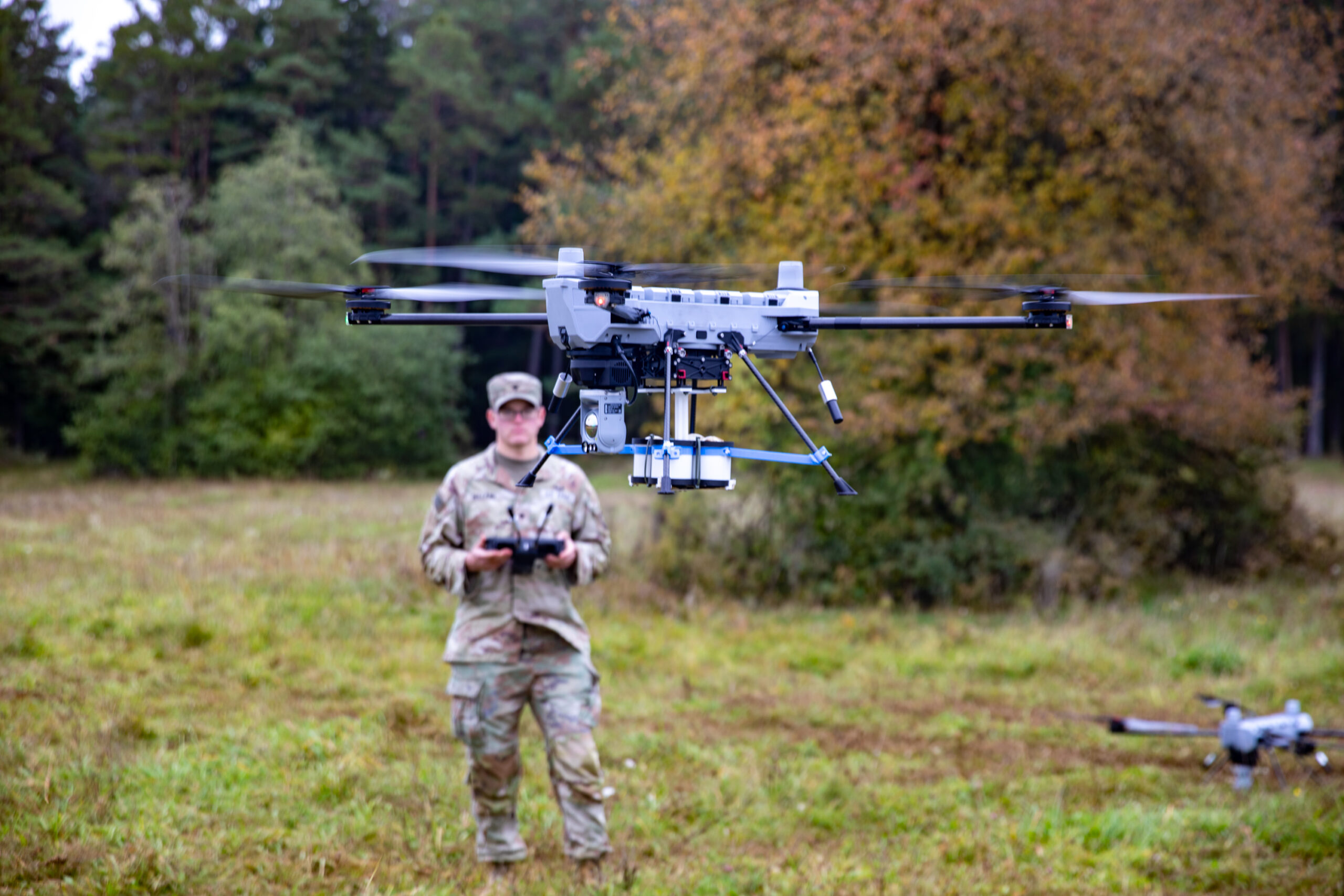
As noted by the unit, the Widowmaker was developed in-house using standard-issue munitions, commercial 3D printers and computer-aided design software. The design team says the platform can be produced quickly from non-specialized parts and replicated across units. “None of us had prior computer design experience,” Holland said. “We started from a clean slate, and after a few months, we had a working prototype that’s been very successful engaging targets from about 350 feet.”
A single PDW C100 equipped with the dropper can release up to four grenades per sortie, deploying two in rapid succession when required. The intent is not to replace established joint fires but to give platoon leaders an immediate tool to shape the fight at close ranges and reduce dependence on higher-echelon assets in fast-moving engagements.
The design has attracted attention inside the 101st. The unit says the prototype is being shared with the division’s innovation lab at Fort Campbell, Kentucky, and with other formations to refine tactics, techniques and procedures for drone-enabled effects. The ongoing exercises provide an opportunity to test the concept against opposing forces, assess safety and integrate the device into established command-and-control and rules-of-engagement frameworks.
The push to create locally produced, mission-tailored effects reflects broader trends in expeditionary forces where off-the-shelf commercial technologies are adapted to military use. Company officials note that the combination of additive manufacturing and small unmanned platforms can shorten development cycles and allow units to prototype responses that match their immediate operational needs.
For commanders, the appeal is operational agility: the ability to generate controlled effects from organic systems while keeping personnel at safer stand-off distances. For critics, the rapid adaptation of commercial tools into lethal roles raises legal, safety and escalation questions that doctrine and policy must address.