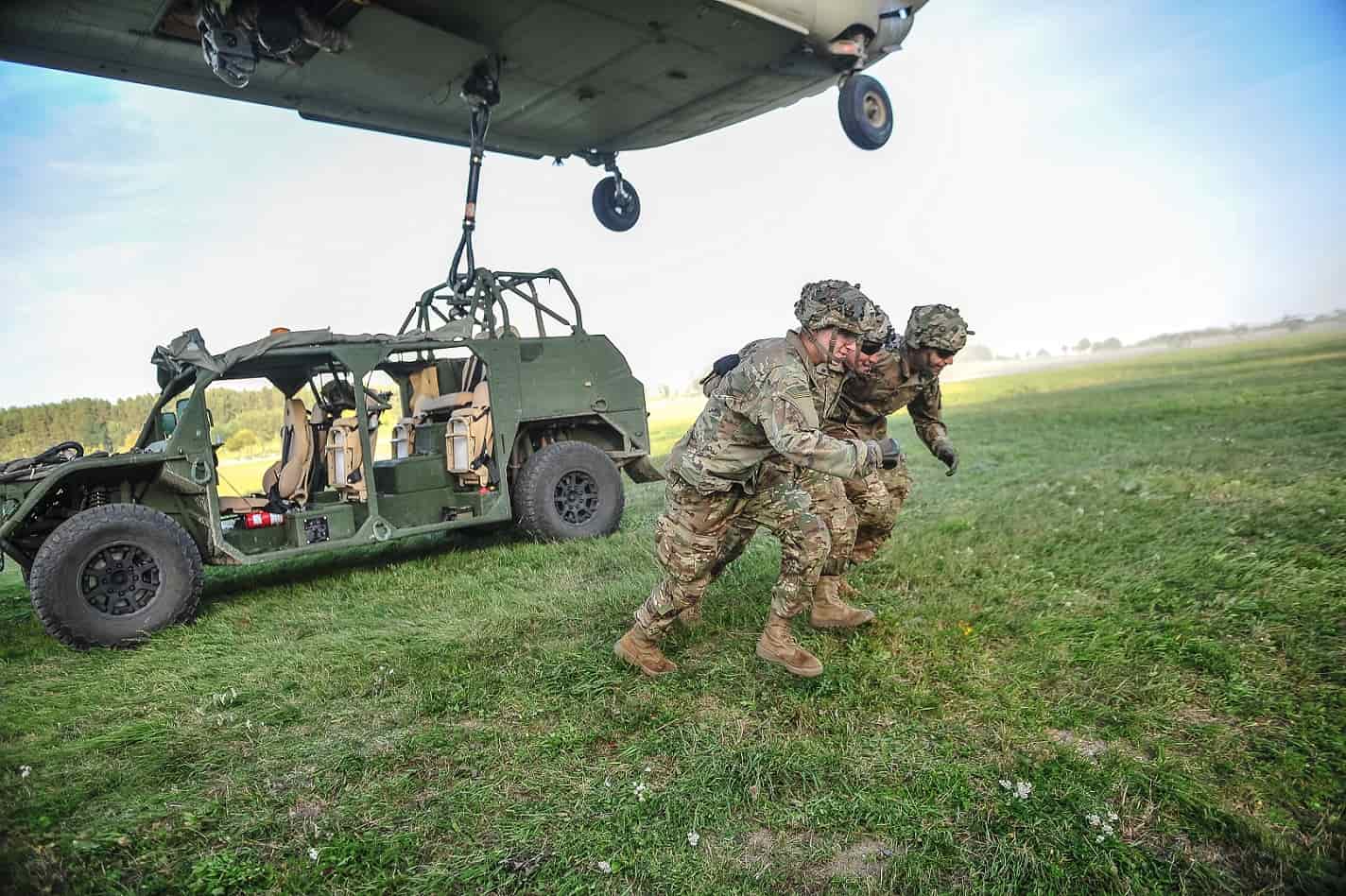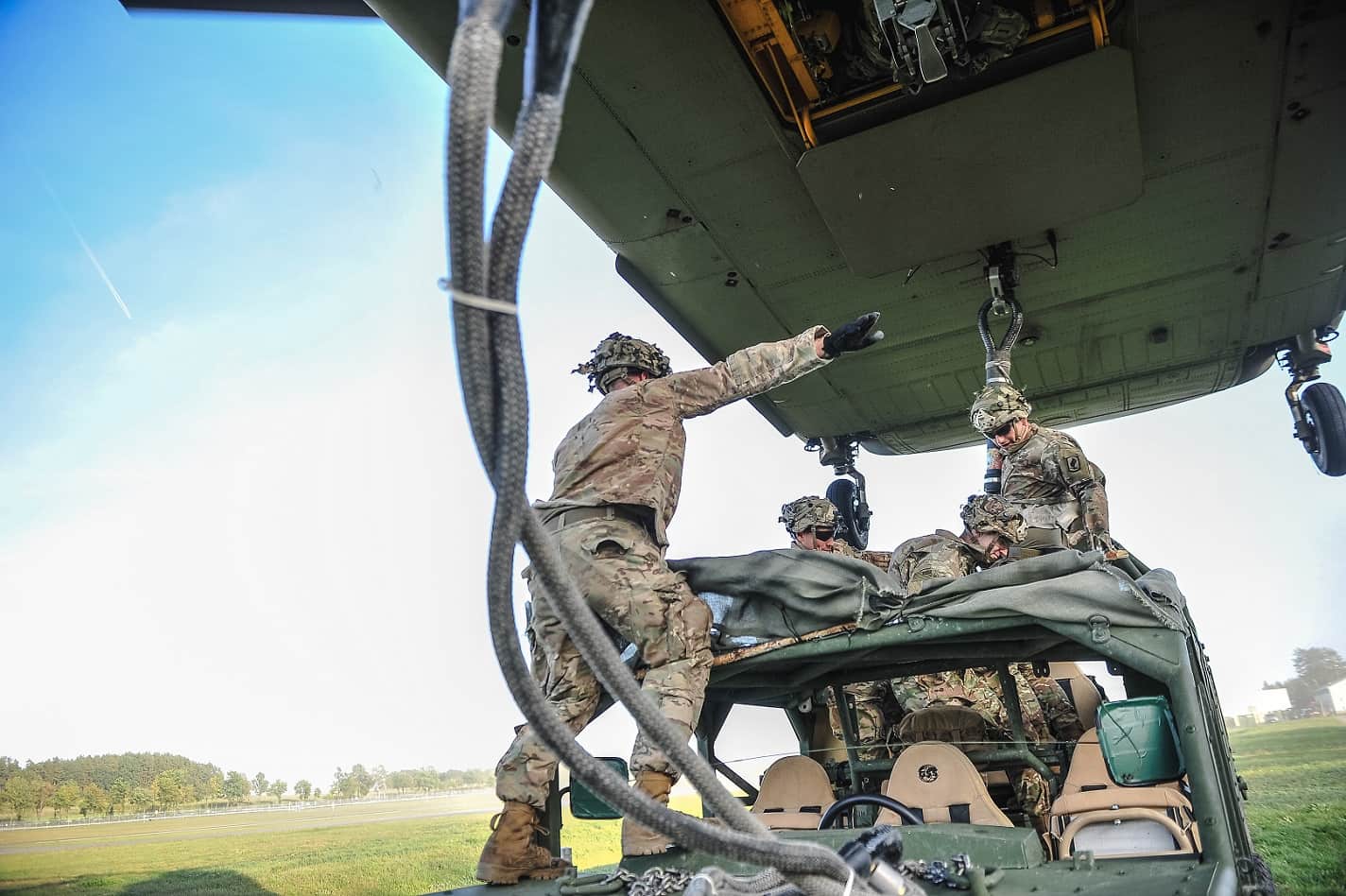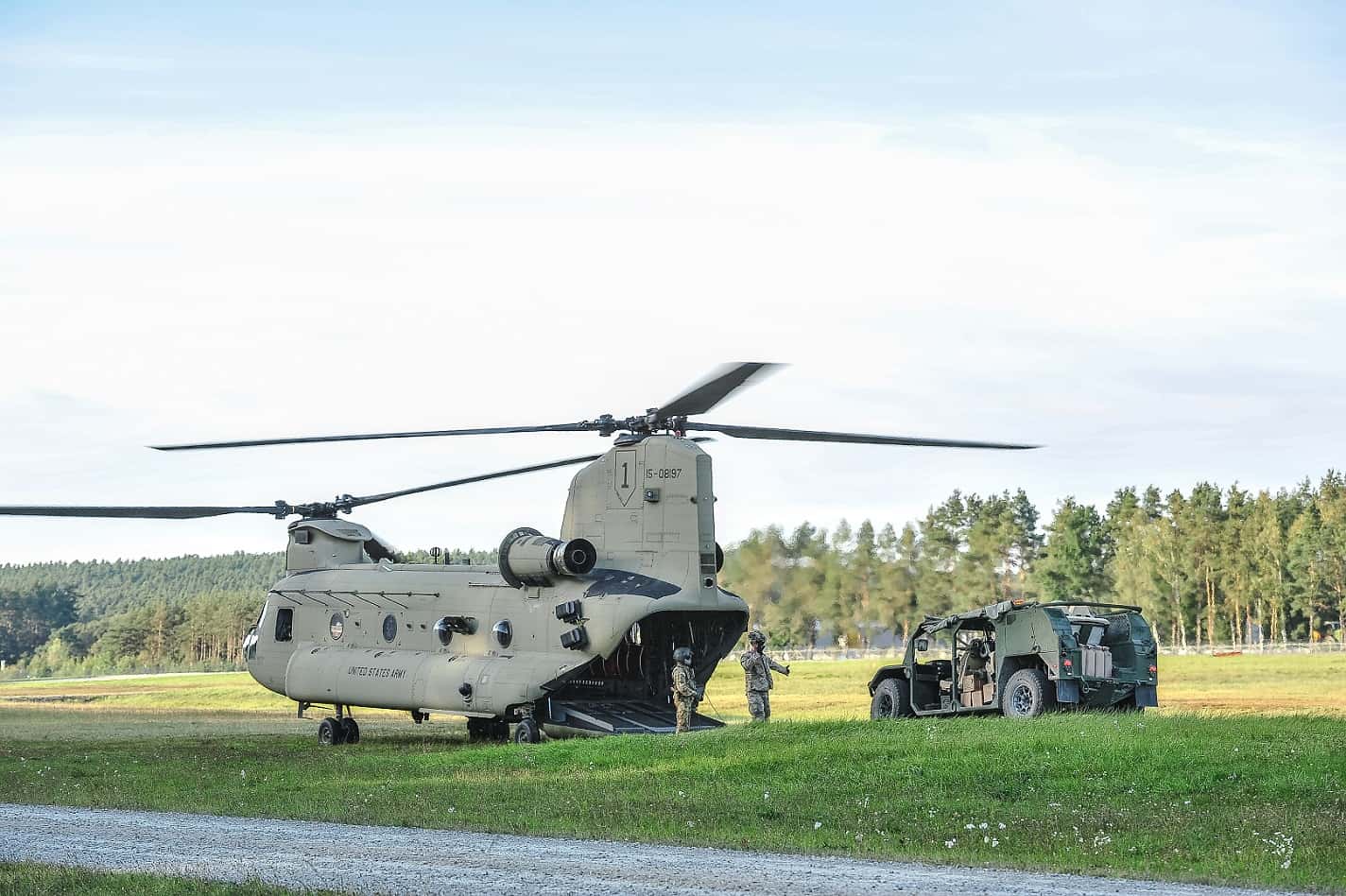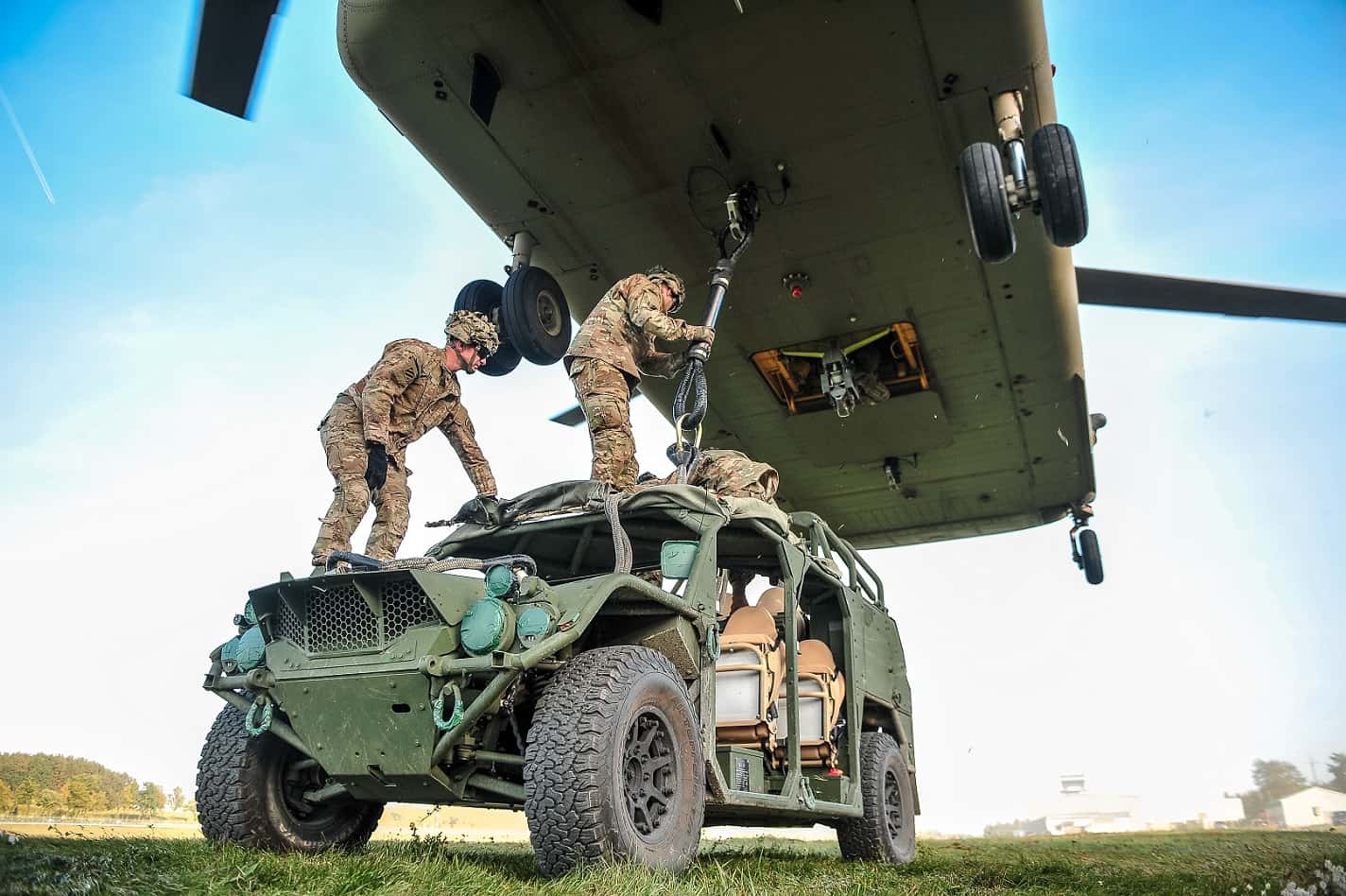
U.S. Army Paratroopers continues field testing of its newest Army Ground Mobility Vehicles during Exercise Saber Junction 2019 in Grafenwoehr Training Area, Germany.
The Army Paratroopers assigned to the 173rd Airborne Brigade continues to test out it’s newest vehicle addition, the Army’s Ground Mobility Vehicle (GMV) during Exercise Saber Junction 2019. Paratroopers covered the battlefield both on foot and with the new GMVs.
The U.S. Army’s GMV program provides Infantry Brigade Combat Teams (IBCT) a lightweight vehicle to move Soldiers and their equipment quickly over complex and difficult cross-country terrain.
GMVs will allow Soldiers quicker mobility, than by foot, across an operational area, to close on an objective with less fatigue and greater readiness. The Army can deliver the vehicle to the field by airdrop or helicopter, increasing the flexibility of Soldiers on the move.
The GMV provides enhanced tactical mobility for nine-Soldier infantry squad with their associated equipment (payload of 3,200 pounds) to move quickly around the battlefield, to include medium distance insertion or repositioning operations.
The Army needs flexible, resilient ground formations to project combat power in a multi-domain environment.
Enhanced mobility platforms will enable early entry forces to envelop, infiltrate, and penetrate in and/or across multiple domains at select points of entry. These mobile platforms provide our Forces with enhanced tactical and operational advantage.
The Army GMV is the epitome of toughness, of transportability, of strength and most importantly of capability. It’s a purpose-built military-grade vehicle whose all-terrain capabilities have been tested and proven. With its unmatched payload capacity and reliability, the GMV can ensure mission success beyond the usual mission range. To further enhance mission capability, the GMV can be transported internally in the V-22, CH-53, C-130 and C-5 aircraft or external lift by CH-47 Chinook helicopter.