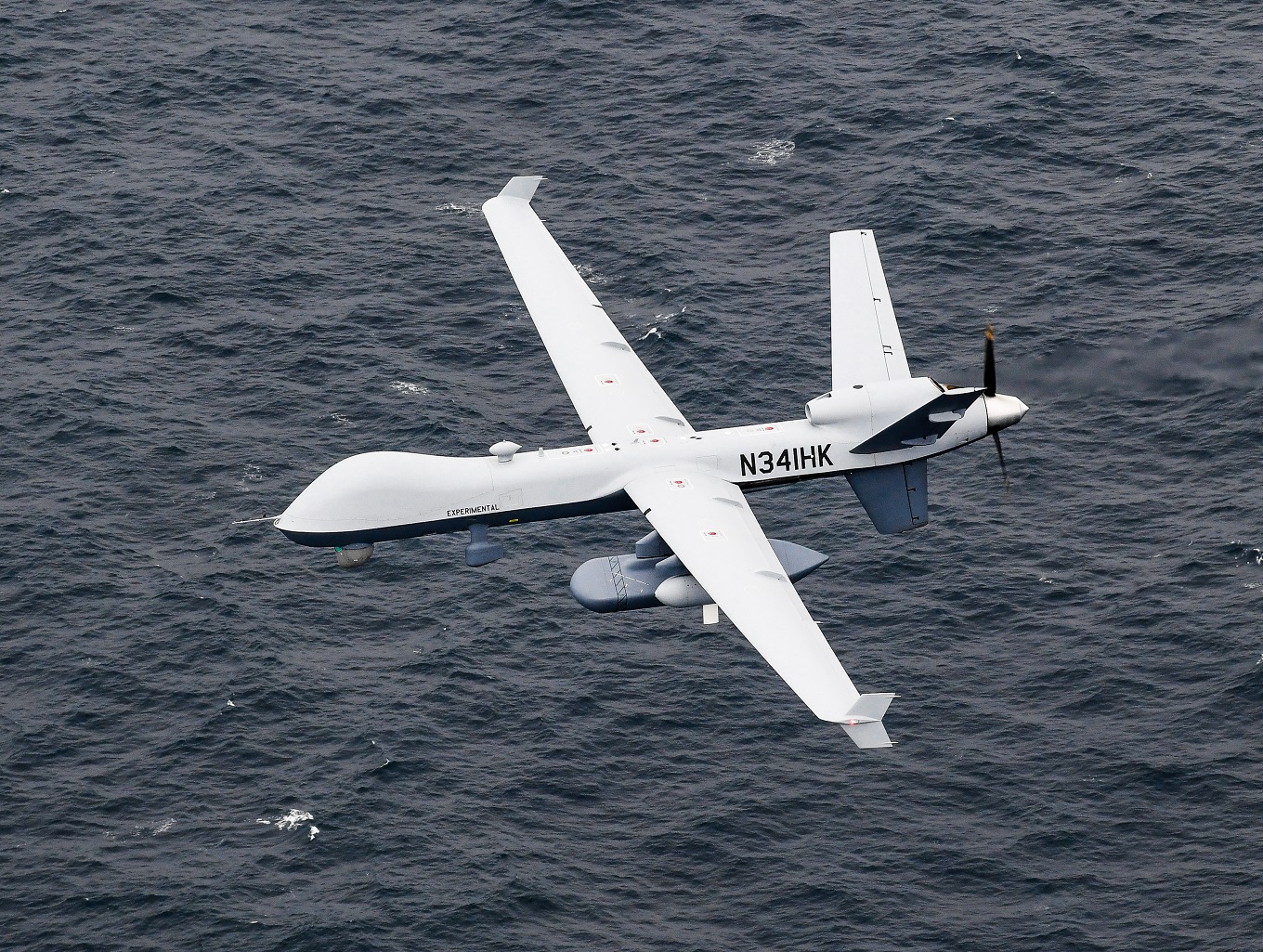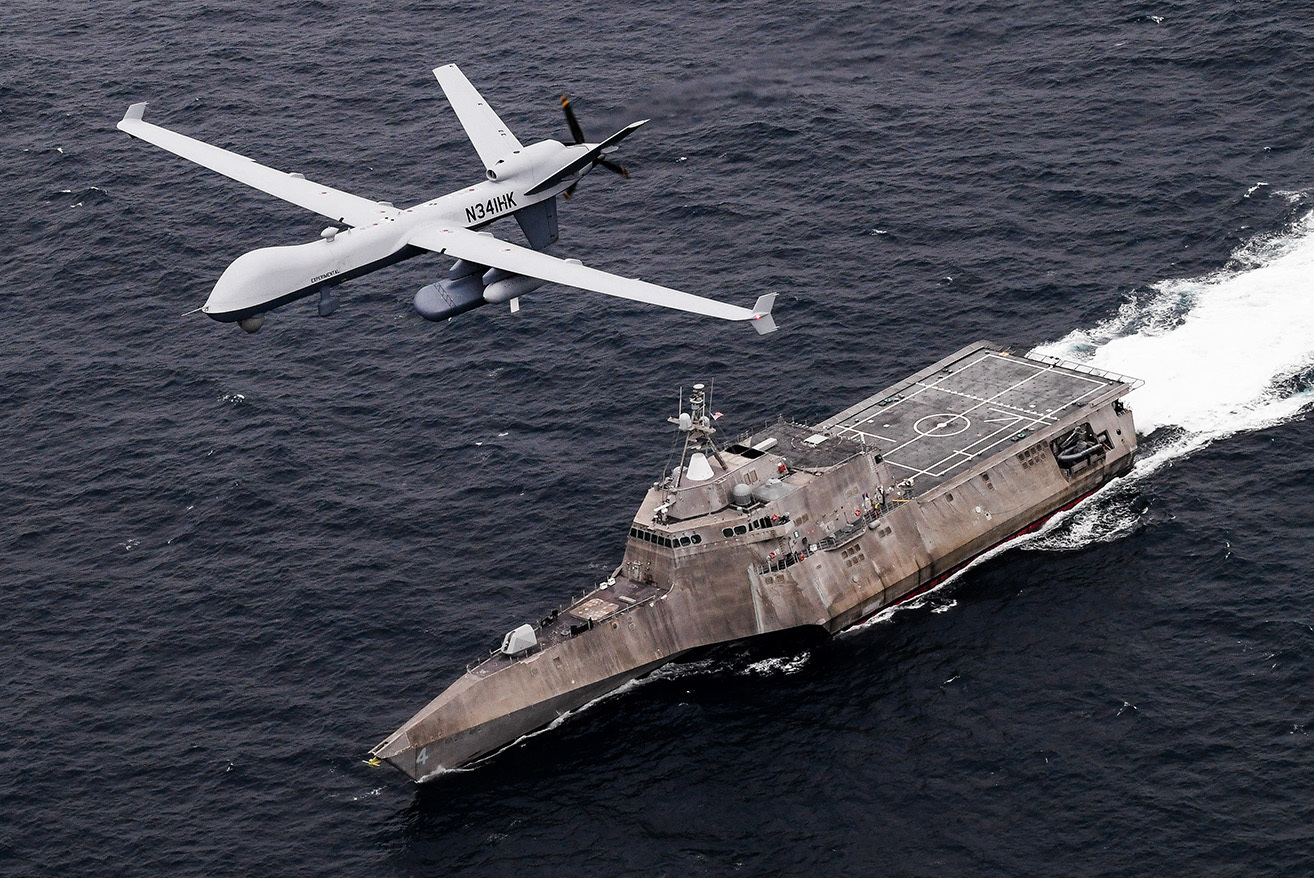
On Thursday, the U.S. Navy has reported that it successfully integrated an MQ-9B Sea Guardia drone system with manned capabilities during the Unmanned Systems Integrated Battle Problem 21 (UxS IBP 21) off the coast of San Diego, April 21.
The unmanned system developed by General Atomics Aeronautical Systems (GA-ASI) recently used in an anti-submarine warfare demonstration.
According to a recent service news release, the MQ-9B Sea Guardian unmanned maritime surveillance aircraft system operated in conjunction with a guided-missile cruiser, executing long-range, over-the-horizon targeting. Using sonobuoys and other assets, the Sea Guardian identified contacts and reported locations remotely to the commander on board the cruiser.
“The integration between unmanned and manned capabilities shown today provides an operations approach to strengthening our manned-unmanned teaming,” said Rear Adm. James A. Aiken, UxS IBP 21 tactical commander. “Putting our newest technology into our Sailors’ hands directly enhances our fleet.”
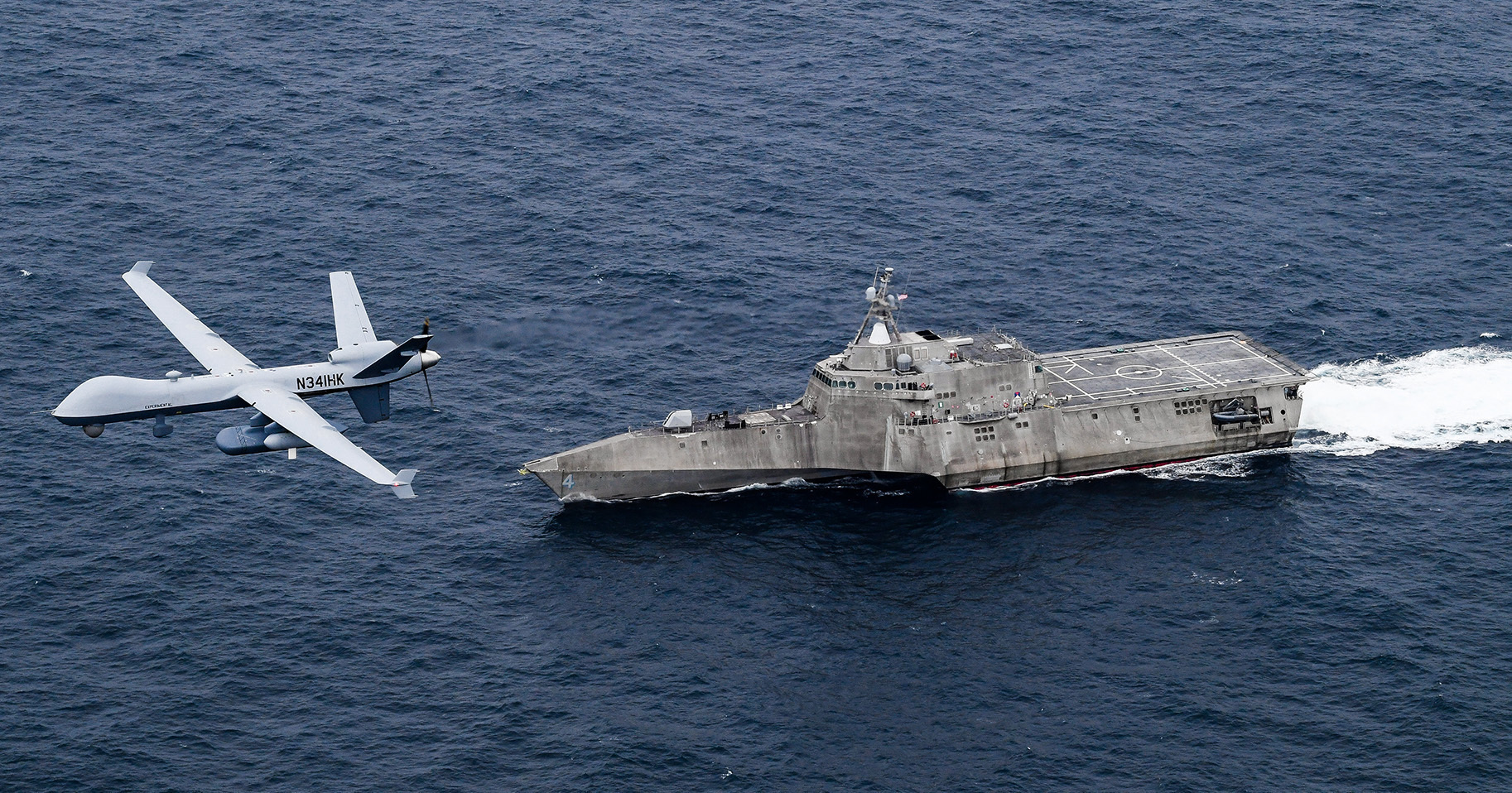
Operational synchronization between unmanned capabilities and traditional manned naval assets ensures the Navy maintains its technological and warfighting advantage. Sea Guardian enhances the Navy’s anti-submarine and anti-surface warfare capabilities, among many others.
GA-ASI says the maritime variant of its unmanned aerial vehicle can be configured with cross-domain capabilities for a vast range of maritime surveillance operations.
MQ-9B mission portfolio may include Anti-Surface Warfare (ASuW), Anti-Submarine Warfare (ASW), HA/DR – Humanitarian Assistance/Disaster Relief, Search and Rescue, Law Enforcement (Drug Trafficking, Illegal Immigration, Piracy OMSI – Oceanic Maritime Security Initiative).
Delivering accurate, real-time information for faster response, MQ-9B SeaGuardian is designed to conduct a vast range of multi-domain maritime surveillance operations.