

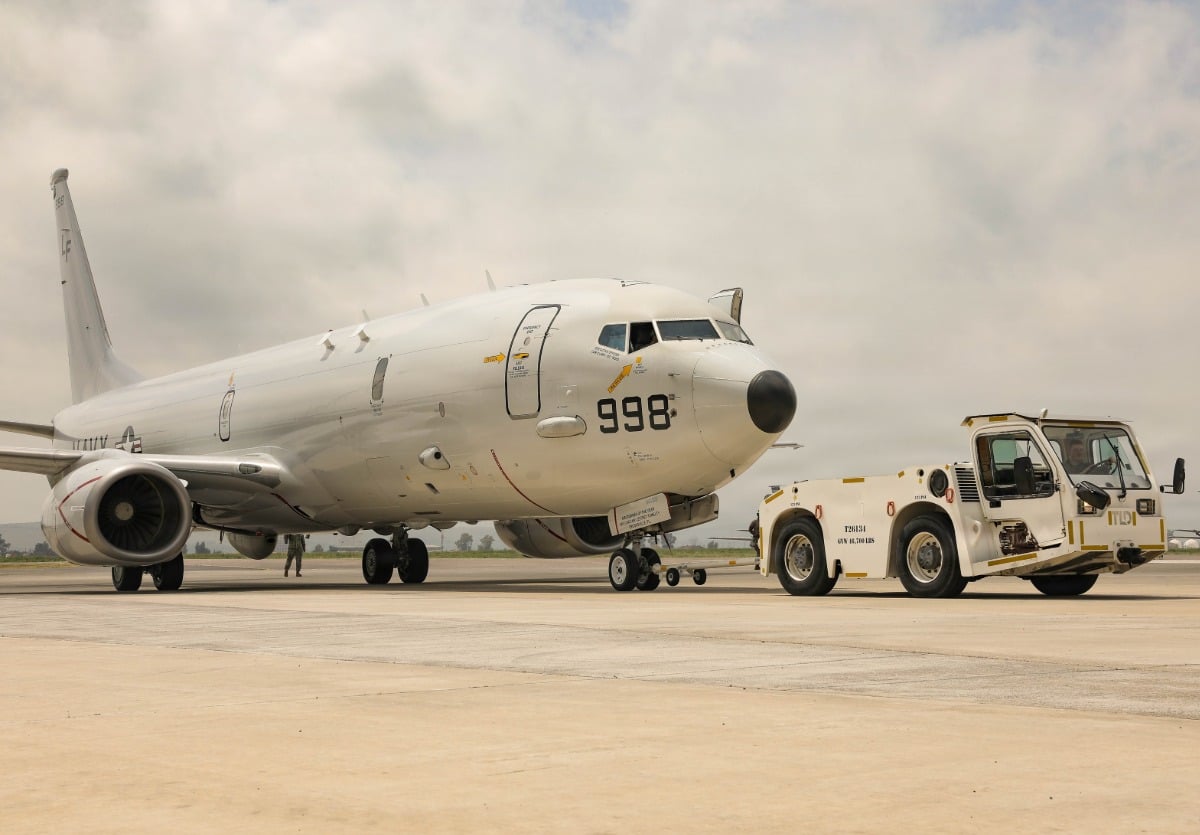
- Boeing received a $121 million contract, to retrofit nine P-8A Poseidons with Increment 3 Block 2 A-kits: six for the U.S. Navy and three for Australia.
- The P-8A Increment 3 Block 2 system achieved Initial Operational Capability on April 24, 2026, following testing by Air Test and Evaluation Squadron One at Patuxent River.
The aircraft the U.S. Navy relies on to hunt submarines and track enemy ships across millions of square miles of open ocean is getting smarter, faster, and harder to evade, after Boeing received a $121 million contract to upgrade nine P-8A Poseidon maritime patrol aircraft to the most advanced configuration yet fielded, with six of those jets belonging to the U.S. Navy and three to the Royal Australian Air Force, which is the only allied operator in the world currently committed to receiving the full upgrade package.
The contract covers what the Navy calls Increment 3 Block 2 retrofit A-kits, a designation that translates to the physical hardware package installed on each aircraft to bring it to the new standard: new airframe racks, a new radome, new antennas, upgraded sensors, and new wiring that supports a fundamentally more capable mission system than the P-8A carried before. An A-kit is the airframe modification package, containing all the structural and electrical changes needed to accept new equipment. A B-kit is the mission system hardware itself, the computers, radios, and sensors, provided separately by the government. Together they transform a P-8A built under an earlier configuration into an aircraft that, according to NAVAIR, can now search for, locate, and track the most advanced submarines in the world using capabilities the original design did not include.
The P-8A Poseidon, built by Boeing on the commercial 737-800 airframe and introduced into U.S. Navy service in 2013 as the replacement for the aging Lockheed P-3 Orion, has become the primary airborne anti-submarine and maritime patrol aircraft for the U.S. Navy and a growing list of allied air forces. The aircraft carries torpedoes, anti-ship missiles including the AGM-84 Harpoon, sonobuoys dropped from the fuselage to detect submerged submarines by acoustic signature, and an extensive sensor suite that includes the AN/APS-154 Advanced Airborne Sensor radar for surface search and the acoustic processing systems required to analyze sonobuoy data in real time. With a range of approximately 7,500 kilometers (4,660 miles) and an endurance of roughly ten hours without aerial refueling, a single P-8A can cover an enormous patrol area in a single sortie, making it the backbone of NATO and Indo-Pacific maritime surveillance architecture.
The Increment 3 Block 2 modification incorporates a new combat systems suite with improved computer processing, higher security architecture, a wideband satellite communication system, an anti-submarine warfare signals intelligence capability, a track management system, and additional communications and acoustics systems to enhance search, detection and targeting capabilities, according to NAVAIR’s official description of the upgrade. The wideband satellite communications link is particularly significant because it allows the aircraft to maintain high-data-rate connectivity with ships, submarines, and other aircraft even at long ranges from shore-based communications infrastructure, effectively making the P-8A a node in the broader naval kill chain rather than a standalone sensor platform that must return to base or low altitude to pass its data. A submarine contact detected at long range can now be shared across a carrier strike group, a surface action group, or allied maritime forces in near-real time rather than after a communications delay.
The Navy declared Initial Operational Capability for the Increment 3 Block 2 system on April 24, 2026, following initial operational testing by Air Test and Evaluation Squadron One, known as VX-1, the Navy’s primary airborne test and evaluation unit based at Naval Air Station Patuxent River, Maryland. IOC does not mean the entire fleet has been upgraded; it means a designated operational unit has received the modification, is trained on it, and can conduct missions using the new capability. The Navy plans to eventually upgrade its entire fleet of P-8A aircraft, which currently numbers approximately 130 in service with 13 on order, according to FlightGlobal.
The Australian dimension of the June 22 contract adds a layer of allied interoperability significance that goes beyond the three aircraft involved. Australia is currently the only international P-8A operator committed to Increment 3 Block 2 modifications, with its first aircraft beginning modification work in the United States in October 2025, according to USNI News. The contract covers three A-kit installations for RAAF aircraft, funded by Australian government money totaling approximately $20 million of the contract’s total value. The RAAF operates 14 P-8A Poseidons from RAAF Base Edinburgh in South Australia, using them for maritime patrol across the vast ocean approaches to Australia’s northern and western coastlines, a surveillance task that covers some of the most strategically sensitive sea lanes in the Indo-Pacific. The first two RAAF aircraft will be upgraded at Boeing’s Maintenance, Repair and Overhaul facility at Cecil Airport in Jacksonville, Florida, while the remaining aircraft will be modified by Boeing Defence Australia at its Deeper Maintenance and Modification Facility near RAAF Base Edinburgh, according to Boeing’s announcement of the RAAF induction.
The work in the June 22 contract is concentrated at Boeing’s Jacksonville facility, which accounts for 80 percent of the contract effort, with Boeing’s St. Louis facility taking 11 percent and Mesa, Arizona handling the remaining 9 percent. Jacksonville has been the center of P-8A upgrade work since the program began, and the concentration of this contract there reflects both the facility’s certified capability and the accumulated workforce experience that makes it the most efficient location for this specific modification. Work runs through May 2029, a timeline consistent with the pace of modifications established since the first aircraft entered the upgrade process in March 2024.