

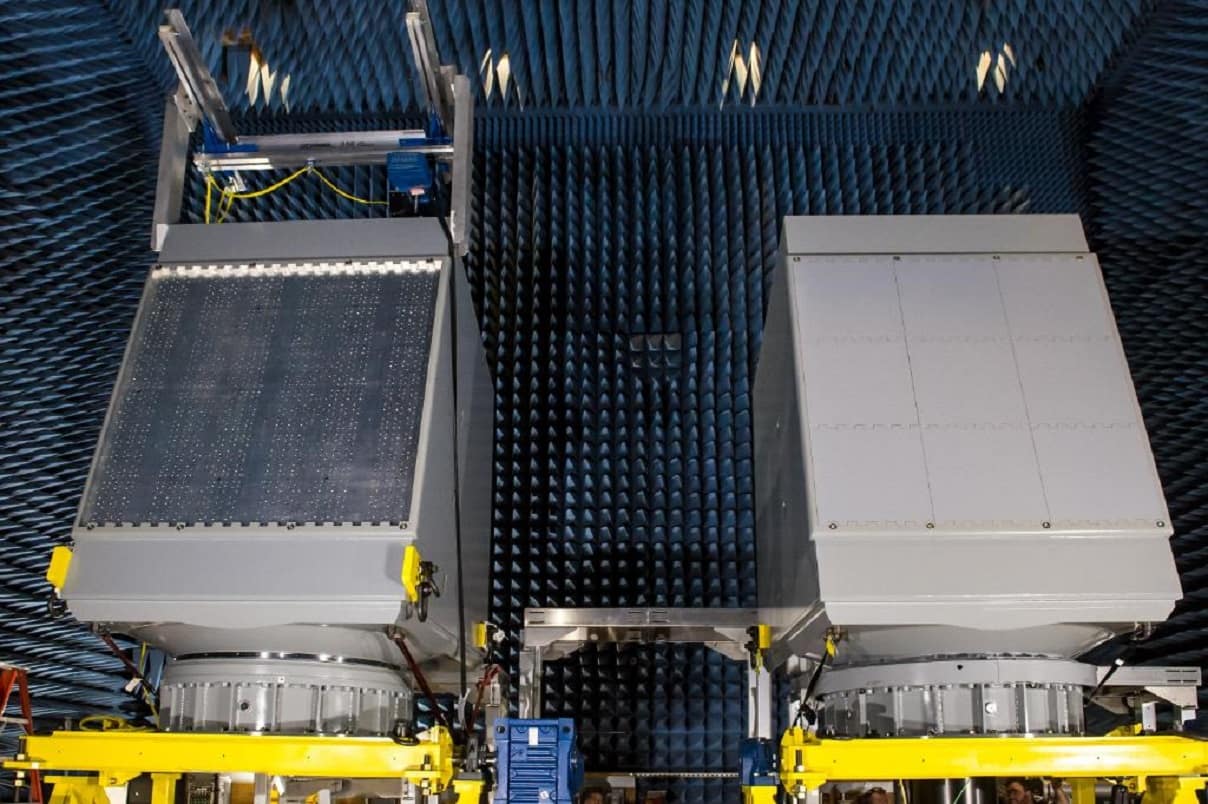
Raytheon Integrated Defense Systems, a subsidiary of U.S. defense contractor Raytheon Company, has announced that the U.S. Navy began testing next generation radar for aircraft carriers and amphibious warfare ships, better known as Enterprise Air Surveillance Radar (EASR).
The testing is happening at the Wallops Island Surface Combat Systems Center in Virginia, in collaboration Raytheon with the Navy’s Program Executive Office for Integrated Warfare Systems.
EASR provides simultaneous anti-air and anti-surface warfare, electronic protection and air traffic control capabilities. The radar delivers increased performance, higher reliability and sustainability, and lower total ownership cost than the radars they will replace.
EASR leverages the highly-scalable design and mature technologies of AN/SPY-6(V) Air and Missile Defense Radar (AMDR), in a tailored configuration to deliver superior capability to meet the mission requirements of carriers and amphibious ships. It features:
- Power, efficiency, size/weight, cost and reliability benefits of gallium nitride (GaN)
- Digital beamforming and advanced algorithms for operation in high clutter, near-land, electromagnetic interference environments.
- Built-in cyber resiliency
The radar’s performance and reliability are a direct result of more than 10 years of investment in core technologies, leveraging development, testing and production of high-powered Gallium Nitride (GaN) semiconductors, distributed receiver exciters, and adaptive digital beamforming. GaN components cost 34% less than Gallium Arsenide alternatives, deliver higher power density and efficiency, and have demonstrated meantime between failures at an impressive 100 million hours.