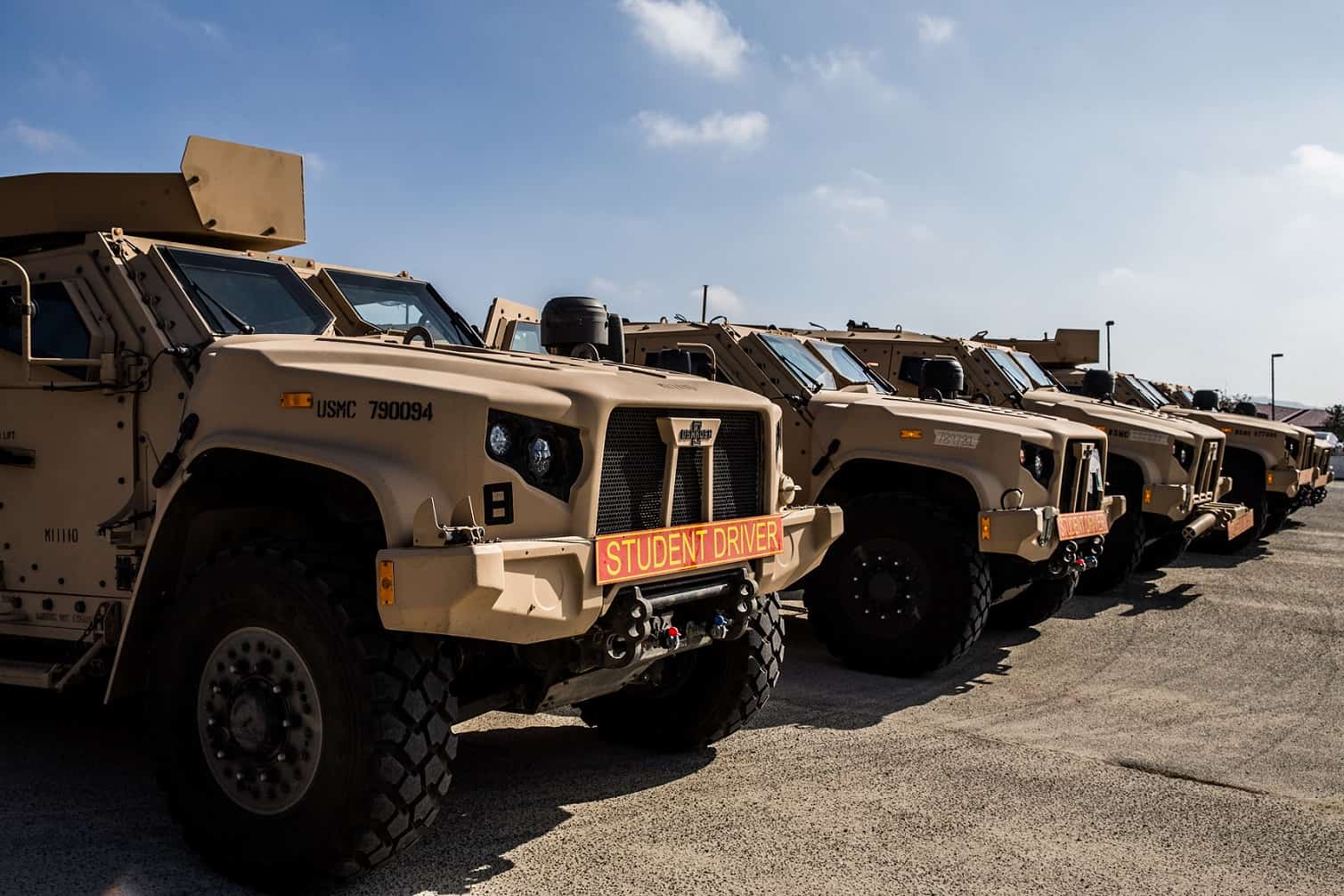
The United States Marine Corps has announced that multiple units on Marine Corps Base Camp Pendleton have started to introduce the new Joint Light Tactical Vehicle to their Marines by teaching them the basic operations of newest ground vehicles.
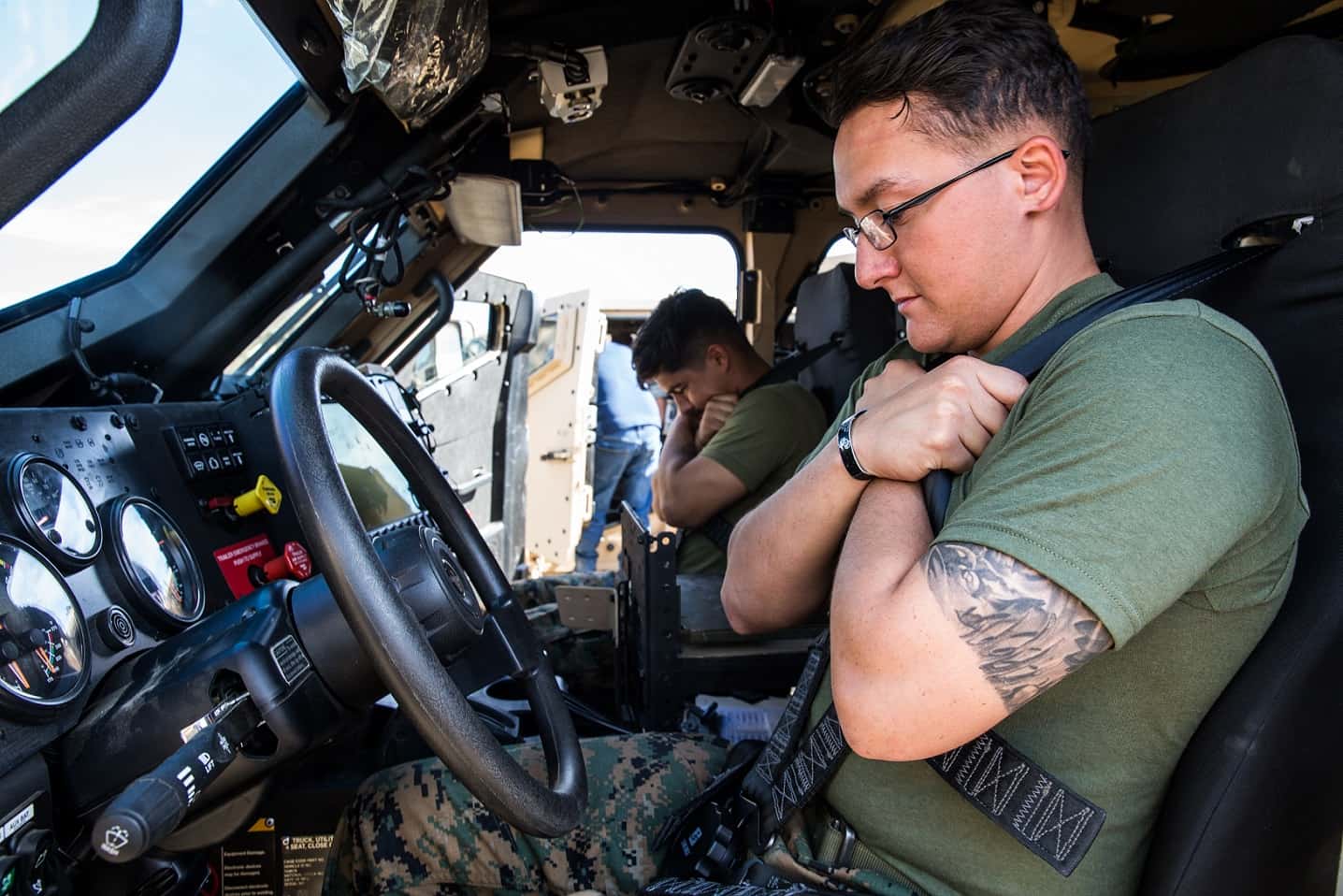
“The JLTV is a lot more capable than the Humvee,” said Mario Marin, the JLTV lead instructor with the I Marine Expeditionary Force JLTV Operator New Equipment Training course. “The ability for the driver to actually manipulate the system itself, using what’s called a MUX panel, a multi-plex panel, or the driver smart display. The driver has, at his finger tip, a lot of control of the vehicle. It has a lot of technological advances that the Humvee does not, and that is just your basic JLTV.”
The JLTV is meant to replace the Humvee all across the Department of Defense. The JLTV is equipped with more highly evolved technology compared to the basic equipment of a Humvee. The JLTV is mechanically reliable, maintainable with on-board diagnostics, all terrain mobile, and equipped to link into current and future tactical data nets.
“We get the students accustomed here, locally,” said Marin. “Today we are doing the walk and run phase. The walk phase is what we call the ‘Camp Pendleton 5000,’ and then the run phase is where we take them out to the (Interstate Highway 5).”
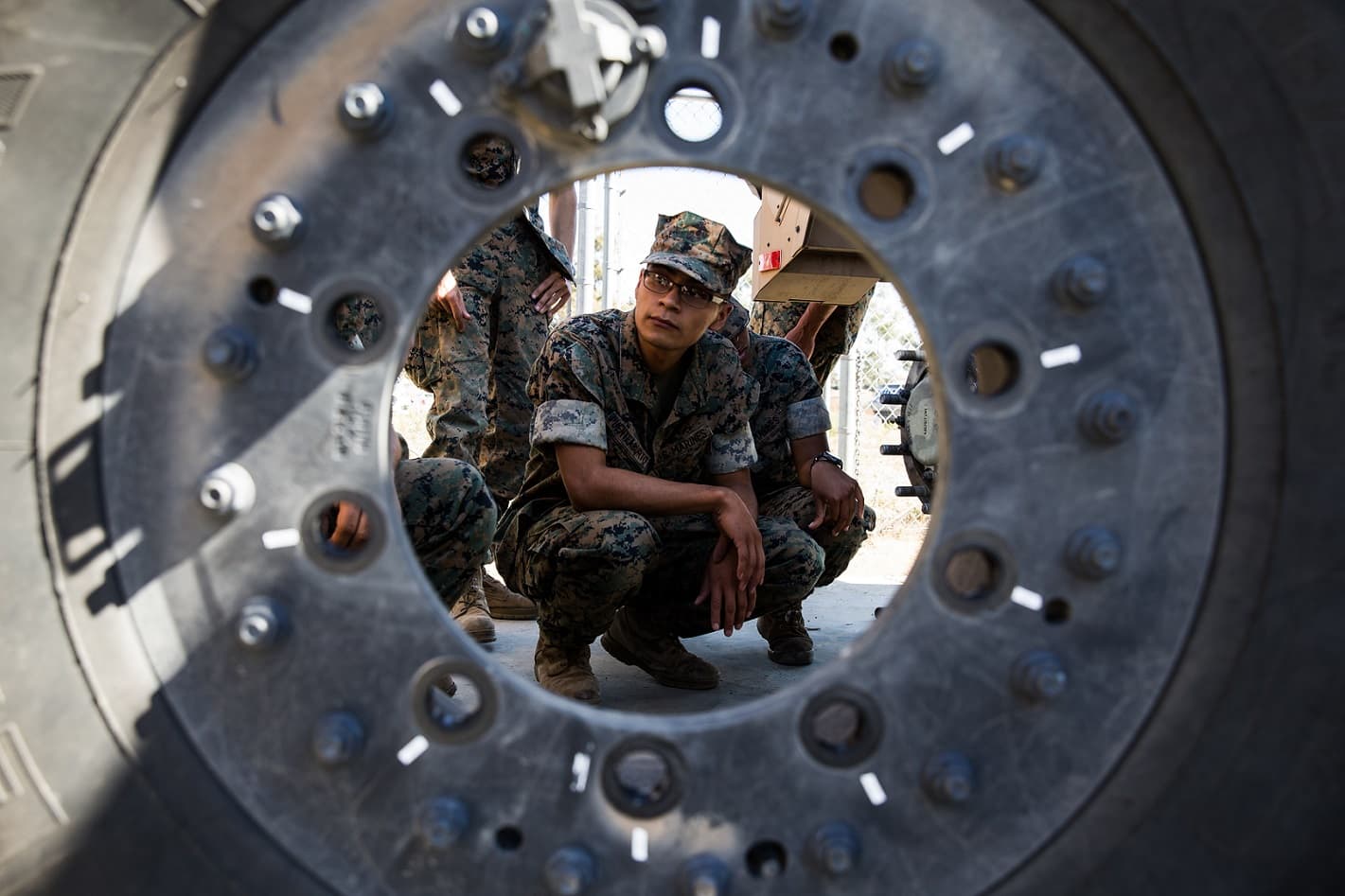
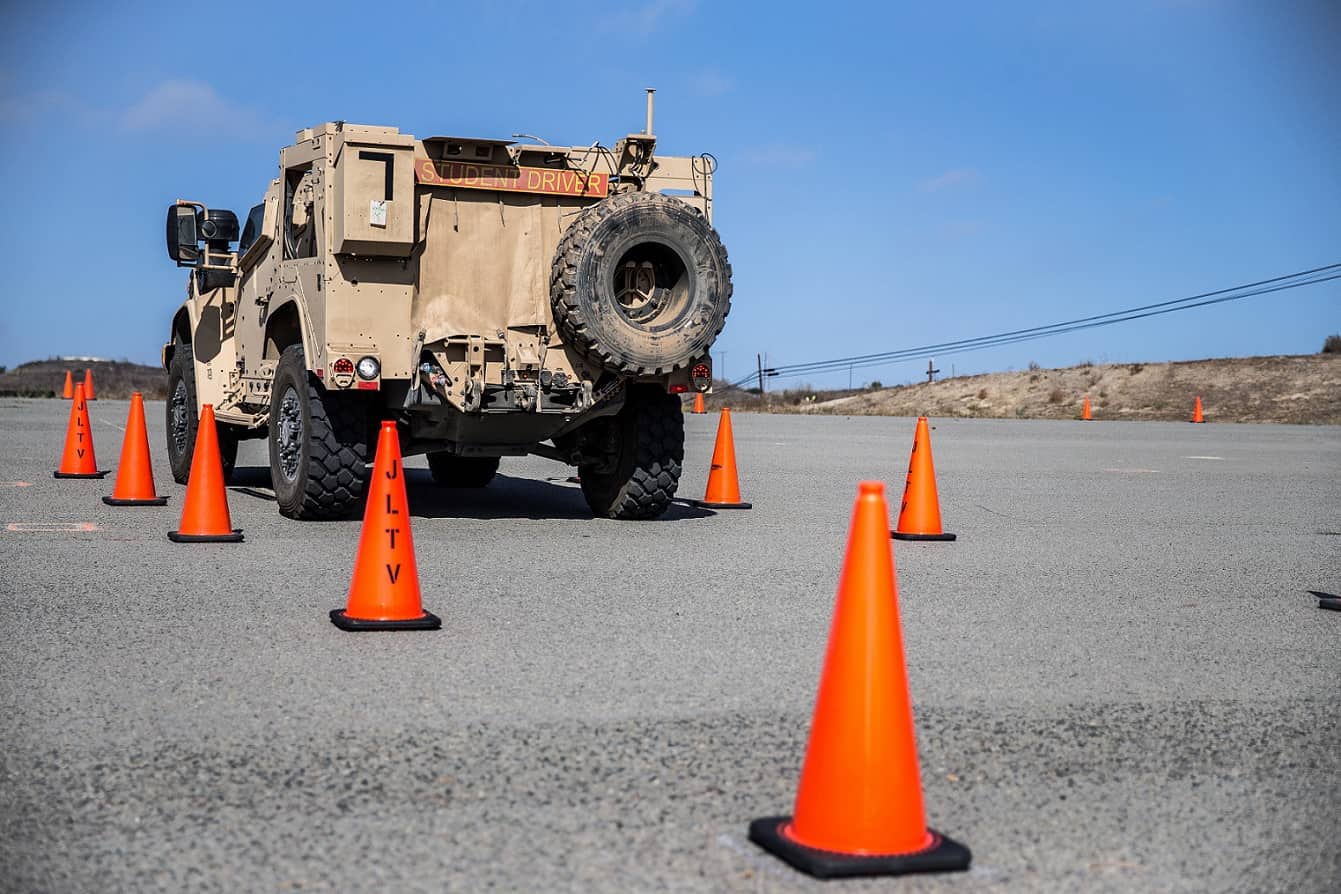
The JLTV Course is an eight-day training course that teaches students about the vehicle’s characteristics, operations, operator maintenance and safety. The first day, students are in a classroom environment where they learn the basic information of a JLTV. Following their time in the classroom, they proceed outside to receive hands-on training with a JLTV. They will learn about the parts and see first hand the new features a JLTV has to offer. From there, the students will do a cone-skill course. During the cone course, the students will learn basic maneuvers, with an instructor as the assistant driver to help guide the students. After getting the feel of a JLTV, students then drive out to I-5, to experience the max speed of the JLTV. Finally, students take the JLTV’s onto various training areas on Camp Pendleton. This gives students the opportunity to experience different types of terrain.
The students are from various units on Camp Pendleton. Once they are trained, they will return to their respective units ready to conduct missions with the new JLTVs being assigned to those units.
“This license is better than any other license that I’ve had,” said Cpl. Devonte Jacobs, a motor vehicle operator with 1st Battalion, 5th Marine Regiment, 1st Marine Division. “This vehicle is capable of doing a lot more than any other vehicle, and it will help Marines become better.”