

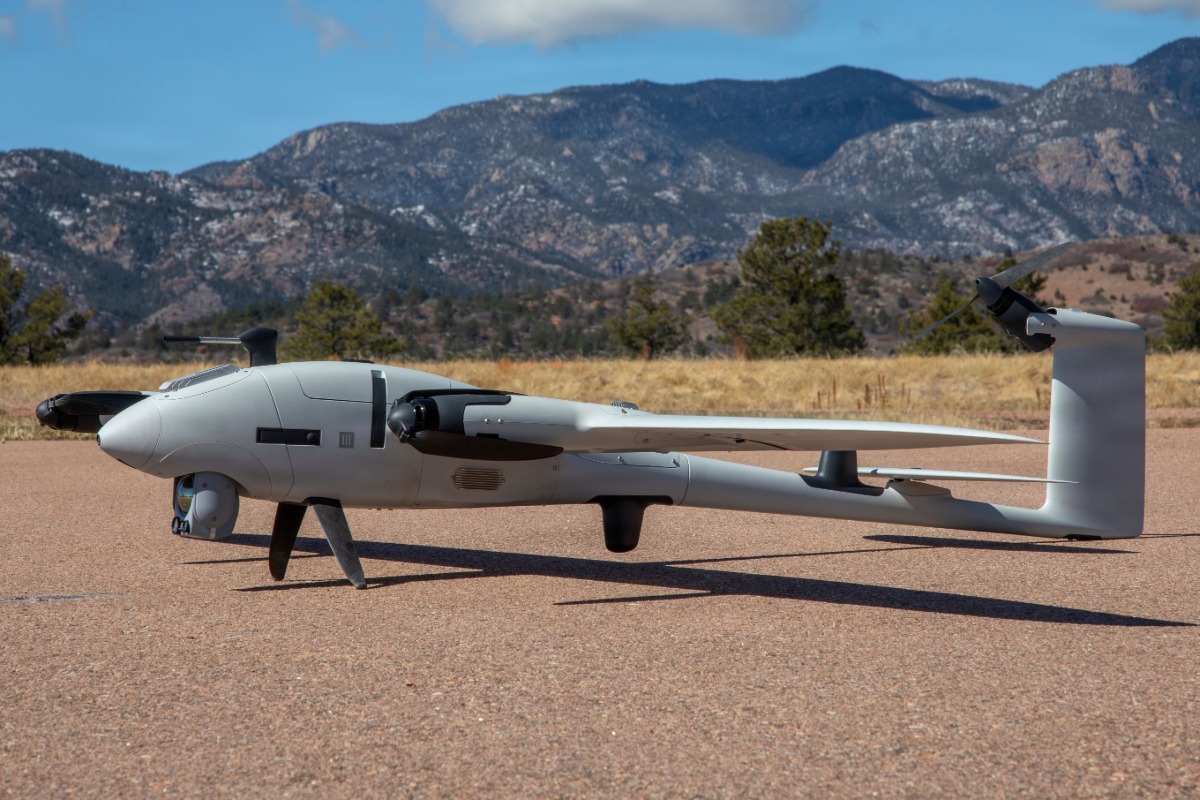
- German Quantum Systems Inc. received a $15.3 million U.S. Army contract on April 15, 2026 to field the Vector AI drone to Brigade Combat Teams.
- Vector AI logged over 20,000 operational flight hours in Ukraine and was selected after a competitive Army evaluation of performance and interoperability.
German-based Quantum Systems announced on April 15, 2026, that its Vector AI unmanned aircraft system has been selected for the U.S. Army’s Company-Level Small Unmanned Aircraft System Directed Requirement 2 initiative under a contract valued at $15.3 million.
The award positions the German-American company’s flagship tactical drone for deployment to Brigade Combat Teams, bringing electric vertical take-off and landing reconnaissance capability directly to maneuver units operating at the tactical edge. The contract was announced by Quantum Systems Inc., the U.S. entity of Quantum Systems, and represents one of the more significant near-term fielding decisions under the Army’s ongoing push to rapidly place commercially proven unmanned systems in the hands of soldiers without waiting for longer-term developmental programs to mature.
Vector AI was selected following a competitive evaluation process that assessed aircraft performance, payload integration, and interoperability with emerging Army software architectures, according to the company. The program sits within the Army’s broader modernization strategy to field commercially available unmanned systems rapidly while simultaneously informing the development of its future Medium Range Reconnaissance program — the service’s next-generation tactical unmanned aircraft system intended to define reconnaissance capabilities for maneuver units in the years ahead. In that sense, Vector AI is both an immediate operational solution and a data-generating testbed for requirements that will shape what comes next.
“Today’s battlefield demands unmanned systems that are adaptable, resilient, and proven in real-world operations,” said Dave Sharpin, CEO of Quantum Systems Inc. “The Vector platform has logged more than 20,000 operational flight hours in Ukraine alone where operational use has helped refine its autonomy and mission adaptability in contested environments. Its modular architecture and open integration approach align directly with the Army’s push toward interoperable, rapidly evolving capabilities.”
That operational pedigree is central to why Vector AI cleared the Army’s evaluation bar. More than 20,000 flight hours accumulated in Ukraine — one of the most demanding and electronically contested operational environments on earth — provides a level of real-world validation that laboratory testing and controlled trials cannot replicate. Ukraine’s battlespace has served as an accelerated stress test for unmanned systems across every performance dimension: GPS-denied navigation, electronic warfare resilience, sensor reliability, and the practical realities of sustained tactical operations under fire. Vector AI’s selection signals that the Army is weighing that combat-proven track record heavily as it makes near-term fielding decisions.
The system itself is built around an electric vertical take-off and landing architecture that eliminates the need for a prepared runway or launch equipment, allowing it to lift off and recover from virtually any terrain a ground unit might occupy. Despite launching and recovering like a multirotor, Vector AI transitions to fixed-wing flight for its operational cruise, which gives it the endurance and efficiency advantages of a conventional aircraft rather than the power-hungry hover flight that limits most purely rotary-wing drones. A single operator can have the system airborne in under five minutes — a critical attribute when the tactical picture is moving fast and commanders need eyes on a situation without waiting for a full crew to assemble and configure equipment.
Once airborne, Vector AI delivers real-time intelligence through a combination of AI-enabled mission planning, advanced electro-optical sensing, and vision-based targeting. The system supports reconnaissance, surveillance, and target acquisition — the core functions that Brigade Combat Team commanders rely on to understand what is happening beyond visual range and to develop targets for fire missions or maneuver decisions. Its AI-enabled planning tools allow the system to automate portions of flight and sensor management, reducing operator workload during complex or time-sensitive missions.
Survivability in a jammed or GPS-degraded environment is baked into the design. Vector AI incorporates anti-jamming features alongside a multi-layered GPS-denied navigation stack that supports visual navigation and precision targeting completely independently from GPS infrastructure. That independence matters enormously on a modern battlefield where GPS jamming and spoofing are routine tools in a peer adversary’s electronic warfare arsenal, and where a drone that loses GPS lock becomes either a drifting liability or a crashed asset. The system’s modular open architecture also enables rapid payload integration and interoperability with external systems including TAK and other battlefield management software, allowing units to feed sensor data directly into the command-and-control networks they already use.
With more than 20,000 combat flight hours in Ukraine serving as its operational resume, Vector AI arrives at Brigade Combat Teams not as an experimental platform but as a system that has already been tested where it counts most.