


U.S. Army and Marine Corps units carried out joint beach landing drills at Marine Corps Base Hawaii on August 26.
According to the Marines, the exercise involved a Maneuver Support Vessel (Light), or MSV(L), from the 7th Transportation Brigade, which was used for onloading and offloading drills with Marines of the 3d Littoral Logistics Battalion, 3d Marine Littoral Regiment, 3d Marine Division. The training was designed to test the ability of Army watercraft to integrate with Marine Corps equipment in amphibious operations.
The MSV(L), its newest class of watercraft, offers greater flexibility and speed in transporting personnel, vehicles, and supplies across contested littoral environments. The vessel, built for shallow-draft operations, is capable of conducting ship-to-shore movement, supporting distributed operations, and delivering heavy payloads in austere conditions.
The MSV(L) is intended to replace the Army’s aging Landing Craft Utility fleet and is capable of carrying an Abrams tank, armored vehicles, or multiple tactical trucks. It can operate independently or as part of larger amphibious task forces.
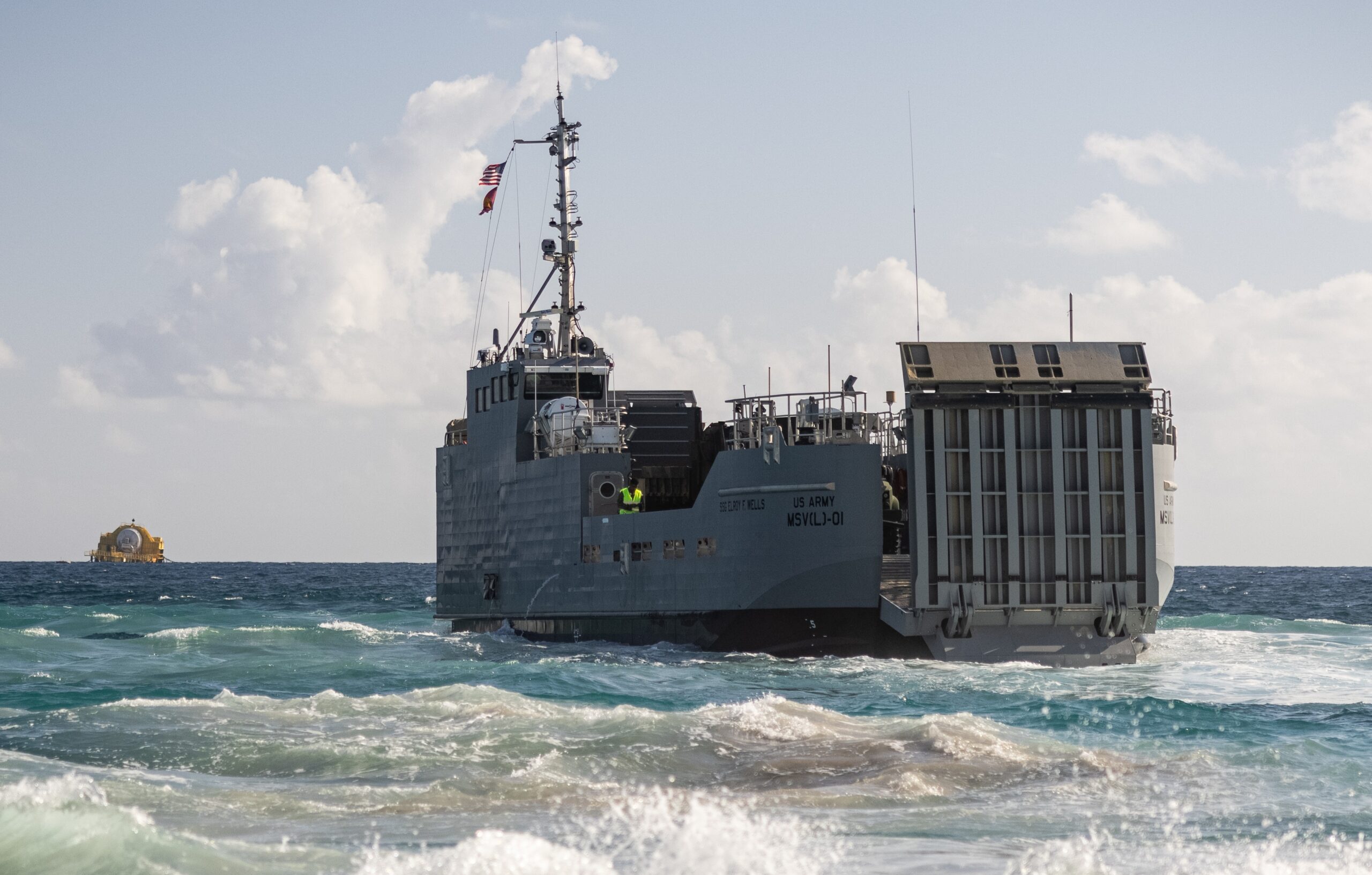
For the Marine Corps, the drills provided an opportunity to validate the 3d Littoral Logistics Battalion’s readiness to adapt to interservice transportation requirements. The 3d Marine Littoral Regiment is central to the Marine Corps’ Force Design 2030 initiative, which prioritizes small, mobile units capable of operating across island chains while integrating with joint and allied forces.
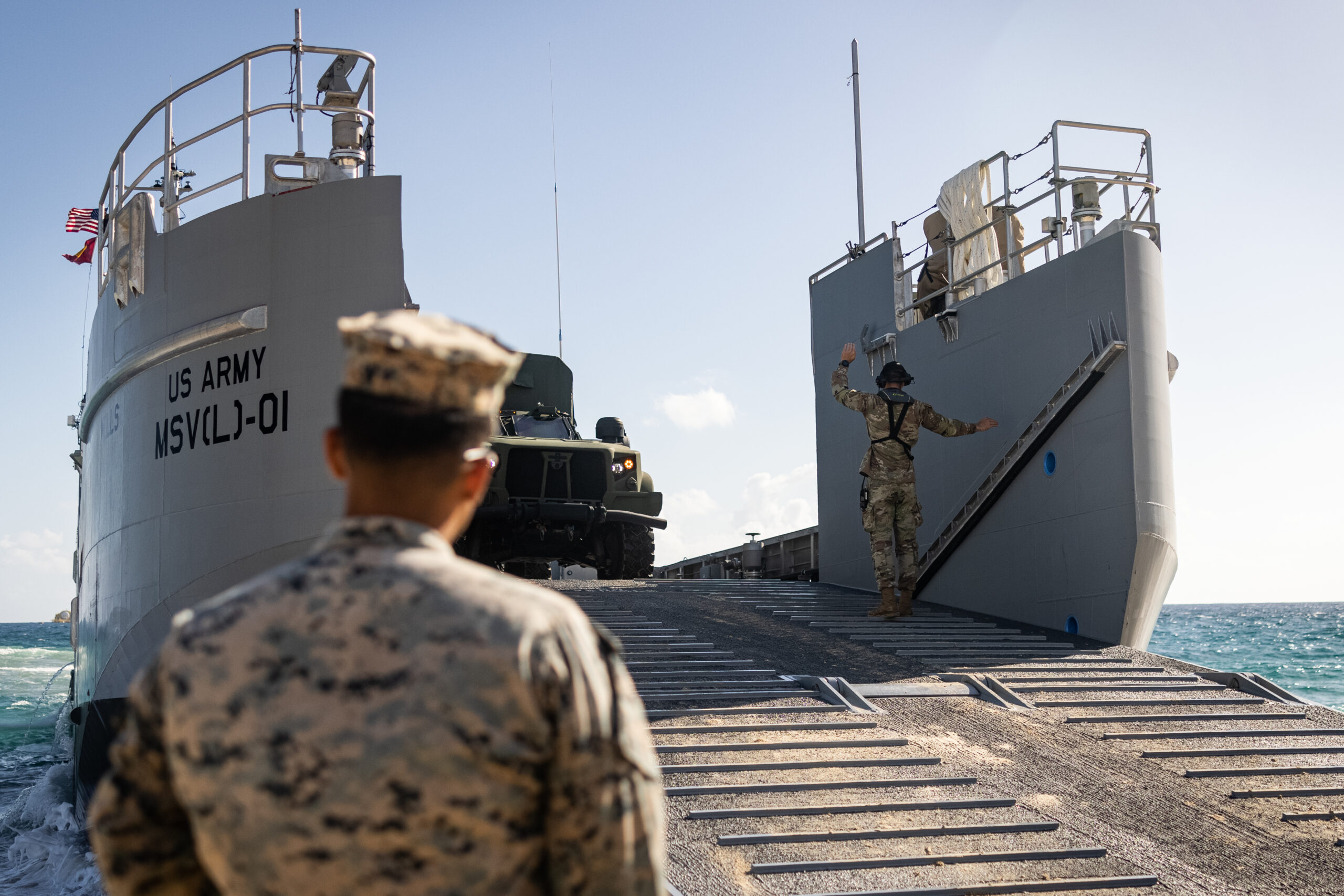
Exercises of this kind are particularly relevant in the Pacific, where any potential conflict would demand coordinated logistics, rapid mobility, and the ability to sustain forces across dispersed island positions. Interoperability between Army and Marine units ensures both services can operate seamlessly together, whether in humanitarian assistance missions, deterrence patrols, or high-end combat scenarios.