

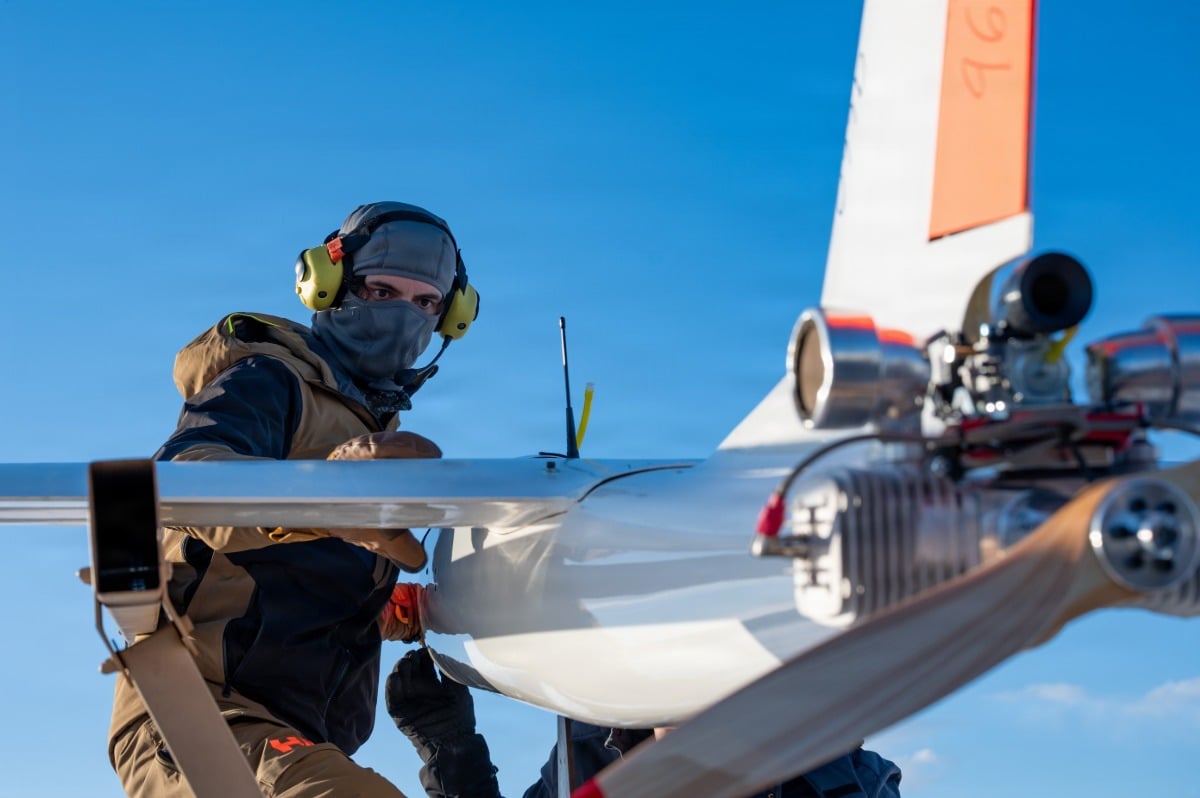
- The U.S. Army awarded Griffon Aerospace a $67.9 million contract on June 3, 2026, for Outlaw Gen 3 target drones in support of Operation Epic Fury.
- The sole-source contract was awarded by Army Contracting Command, Redstone Arsenal, with a completion date of March 30, 2027.
America’s military campaign against Iran has been running for three months, and the Army is already writing checks to close one of the capability gaps it exposed. A $68 million contract awarded June 3, 2026, to Griffon Aerospace of Madison, Alabama, will deliver the next generation of one of the U.S. military’s most widely used aerial target drones, giving air defense units a realistic threat surrogate to train against as the Pentagon absorbs the hard lessons of a live combat operation.
Army Contracting Command at Redstone Arsenal, Alabama, awarded Griffon Aerospace a $67.9 million contract for procurement of the Outlaw Gen 3 unmanned aircraft system, explicitly citing support for Operation Epic Fury, the large-scale U.S. and Israeli military campaign against Iranian military infrastructure that began on February 28, 2026. The contract carries an estimated completion date of March 30, 2027, and was awarded on a sole-source basis, with only one bid received, a signal that the Outlaw’s long institutional history with the Army gave Griffon a commanding position in the competition.
Operation Epic Fury has been anything but a routine training exercise. U.S. Central Command confirmed that American air combat and electronic warfare platforms led the first 24 hours of the operation, a large-scale campaign targeting Iranian military infrastructure. The opening phase demonstrated the extent to which drone threats had become central to the operational environment. In the early hours of the operation, a deployed counter-drone Fly-Away Kit successfully detected and defeated small unmanned aircraft systems operating over a strategic U.S. installation, according to U.S. Northern Command commander General Guillot in written testimony before the Senate Armed Services Committee. The incident underscored a problem that defense planners had been warning about for years: American forces needed more realistic, more capable aerial targets to train their air defense systems against, and they needed them fast.
Epic Fury uncovered gaps in America’s capabilities, including counter-UAS and counter-mining operations, according to analysis published by RealClearDefense. The U.S. Army compressed a contracting timeline to 72 hours in response to urgent needs revealed by Epic Fury, a measure that reflects the pace at which operational commanders were identifying shortfalls and pushing requirements back up the chain. The Griffon contract, while not awarded on a 72-hour timeline, fits squarely within the broader procurement acceleration that Epic Fury set in motion.
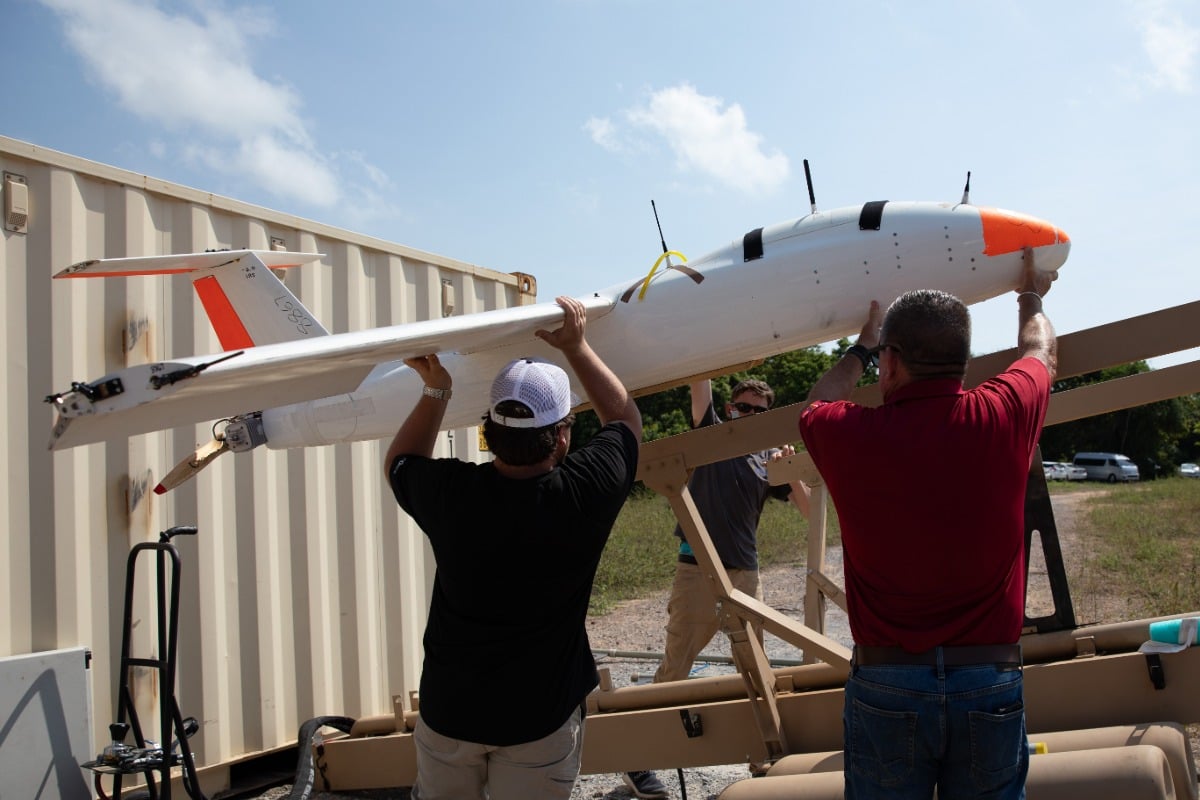
Griffon Aerospace has been supplying aerial target drones to the U.S. military for more than two decades. The company’s MQM-170 Outlaw has been in use since 2004 and serves as a target drone, surrogate training platform, and in a surrogate aerial reconnaissance and forward observation role for the United States Army, Navy, Marine Corps, and Air Force. Griffon has produced over 6,000 unmanned air vehicles for customers ranging from the U.S. Department of Defense to foreign military sales customers, commercial businesses, and university research labs, making the Outlaw family one of the most numerically significant drone programs in American military history.
The Outlaw Gen 3 represents the latest evolution of that lineage, following the original MQM-170A and the MQM-170C Outlaw G2 that has served as the Army’s baseline aerial target for more than a decade. The Outlaw G2E, an enhanced variant introduced around 2024, features a 4.9-meter (16-foot) wingspan, maximum airspeed of 100 knots, endurance of over six hours, and payload capacity of between 9 and 18 kg (20 to 40 lb), providing a baseline from which the Gen 3 appears to build. Griffon has not published detailed specifications for the Gen 3 variant, and the contract notice does not describe the system’s performance parameters, so its precise capabilities beyond the confirmed generational designation remain unknown at this stage.
Delivery by March 2027 gives the Army roughly nine months to get Gen 3 systems into the hands of air defense units still processing the operational lessons of a campaign that began less than four months ago. In a conflict environment where the gap between lesson learned and capability fielded has historically been measured in years rather than months, that timeline is a statement of intent as much as a logistics schedule.