

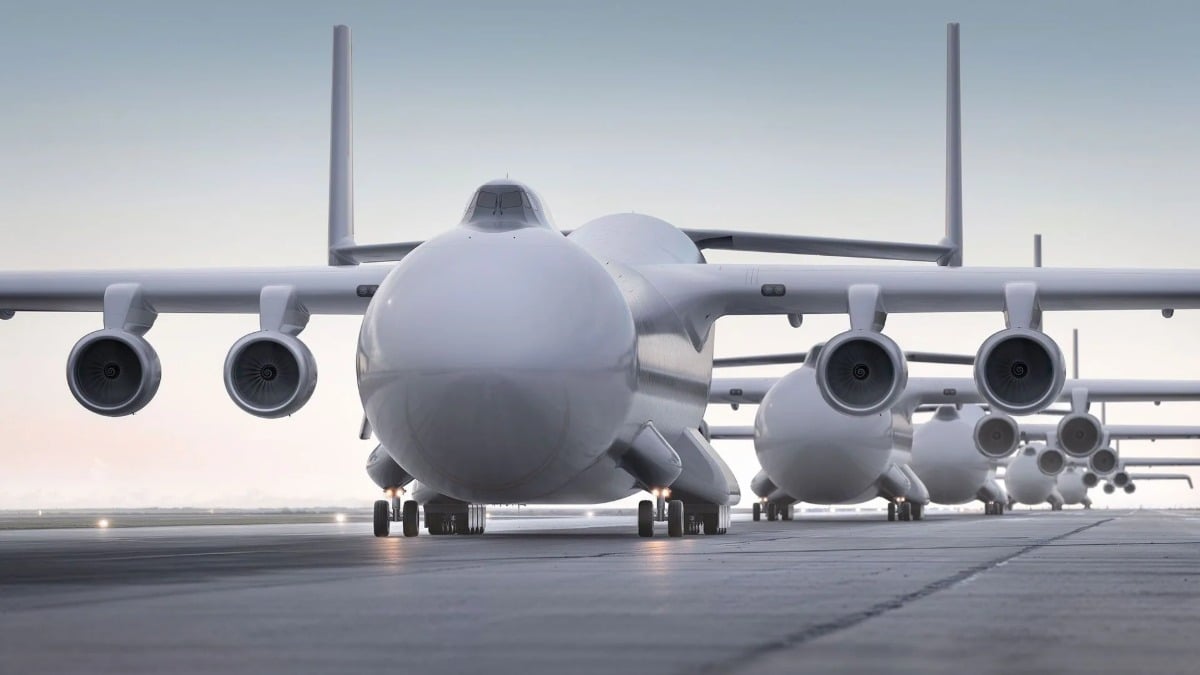
- The U.S. Air Force published a new RFI, seeking concepts for the Next Generation Airlift platform to replace C-5M and C-17A fleets.
- Industry white papers are due July 17, 2026, with a formal Analysis of Alternatives expected in fiscal year 2027.
The U.S. Air Force is asking aircraft makers a question that would have sounded like science fiction a decade ago: could the giant cargo plane meant to replace its aging fleet eventually fly itself. The Air Force Life Cycle Management Center’s Mobility Aircraft Directorate published a formal Request for Information on June 12, 2026, seeking industry concepts for what it calls the Next Generation Airlift platform, or NGAL, envisioned as the eventual successor to both the C-5M Super Galaxy and the C-17A Globemaster III, the two workhorse aircraft that have hauled troops, tanks, and humanitarian supplies around the world for decades.
Companies have until 5:00 p.m. Eastern on July 17 to submit white papers, and a public question-and-answer session posted July 2 revealed the Air Force is leaving the door wide open on automation, telling one respondent that the service wants a broad, unconstrained view of crew concepts ranging from traditional cockpits to fully autonomous operation.
The urgency behind this search traces back to just how old America’s strategic airlift fleet is getting. The Air Force operates 222 C-17A Globemaster IIIs, an aircraft that first entered service in 1995 and stopped being built entirely in 2015, alongside 52 C-5M Super Galaxies upgraded from airframes whose production run stretched from 1968 to 1989. Air Mobility Command’s own Airlift Recapitalization Strategy, signed by Brig. Gen. David Fazenbaker in November 2025, acknowledges the math involved is brutal, since keeping the C-17 fleet flying until its planned retirement around fiscal year 2075 would mean some of the youngest airframes reach roughly 80 years of service before the last one lands for good.
The C-5M fleet faces its own crisis in the meantime, with the Air Force’s own budget documents showing the type’s mission-capable rate, meaning the percentage of aircraft ready to fly a mission at any given time, has fallen to just 37 percent even after a multibillion-dollar modernization program meant to keep the Galaxy relevant.
NGAL is designed to solve both problems at once rather than replacing each aircraft with a separate successor. Air Force Gen. John Lamontagne, who led Air Mobility Command through the strategy’s development, told reporters at the Air & Space Forces Association’s 2025 conference exactly how the service was thinking about the swap.
“When I say two-for-one, we’re probably going to procure one aircraft. We won’t get a C-5 replacement and a C-17 replacement. There’ll be one airplane that does strategic airlift,” Lamontagne said.
That single aircraft would first replace the C-5M fleet on a one-for-one basis starting around fiscal year 2050, a date the Air Force pushed back roughly five years from its original fiscal 2045 target, before transitioning to swap out C-17s one for one through the aircraft’s eventual retirement decades later. Getting there means buying roughly 274 new airplanes over a program that could stretch across five decades, assuming the Air Force can produce the first NGAL aircraft as early as fiscal year 2038 and reach initial operational capability by fiscal year 2041, timelines the strategy memo explicitly ties to what it calls an uninterrupted acquisition process with consistent funding, a caveat that leaves plenty of room for delay if Congress or future budgets do not cooperate.
The design requirements laid out in this month’s RFI reveal just how tightly constrained any winning concept has to be despite the decades-long horizon. The Air Force is demanding a wingspan strictly under 223 feet (68 meters), a limit the RFI explains is dictated by existing global airfield infrastructure, including taxiways, hangars, and parking ramps that were never built to accommodate anything larger, a ceiling that sits only marginally above the C-5’s own 222.7-foot (67.9-meter) wingspan and effectively caps how physically massive any future design can become. Within that footprint, the aircraft must still carry at least 160,000 pounds (72,575 kilograms) of cargo over a minimum of 2,500 nautical miles (4,630 kilometers) without refueling, a benchmark that edges past the C-17’s roughly 2,400-nautical-mile (4,445-kilometer) unrefueled range at a comparable payload while asking for meaningfully more capacity than the Globemaster can carry on its own.
Industry questions answered alongside the RFI update revealed the Air Force is thinking about NGAL’s mission profile well beyond raw lift capacity. Respondents pressed for clarity on whether the aircraft needs to operate from rough, unpaved airstrips and fly low-level routes to survive in contested airspace, and the government’s written answer confirmed that while formal requirements await a fiscal 2027 Analysis of Alternatives, operational assessments strongly indicate low-level flight capability will be required, a signal that planners expect NGAL crews to fly the same kind of terrain-hugging, radar-evading routes that have historically been the domain of smaller tactical transports rather than a jet the size of a C-5. The Air Force also confirmed it does not intend to bound industry with existing policy on optionally crewed platforms, effectively inviting manufacturers to propose anything from a conventionally piloted jet to an aircraft that could someday fly cargo runs with no crew aboard at all.
Jessica Ruttenber, a former Air Force pilot and program manager who previously oversaw the C-5 and C-17 portfolios, put the current predicament in blunt terms when the service life extension plans became public.
“It’s a grandfather jet, so it doesn’t surprise me one bit,” Ruttenber said.
That assessment captures the bind the Air Force finds itself in heading into this RFI, forced to keep flying aircraft designed in the Cold War and the 1990s for another two to five decades while it figures out what should eventually replace them, and asking industry in the same breath whether the answer might not need a pilot at all. Whatever NGAL ultimately becomes, the companies responding to this month’s questions are effectively sketching the aircraft that will carry America’s tanks, troops, and disaster relief supplies well into the second half of this century, long after everyone currently working on the program has retired.