

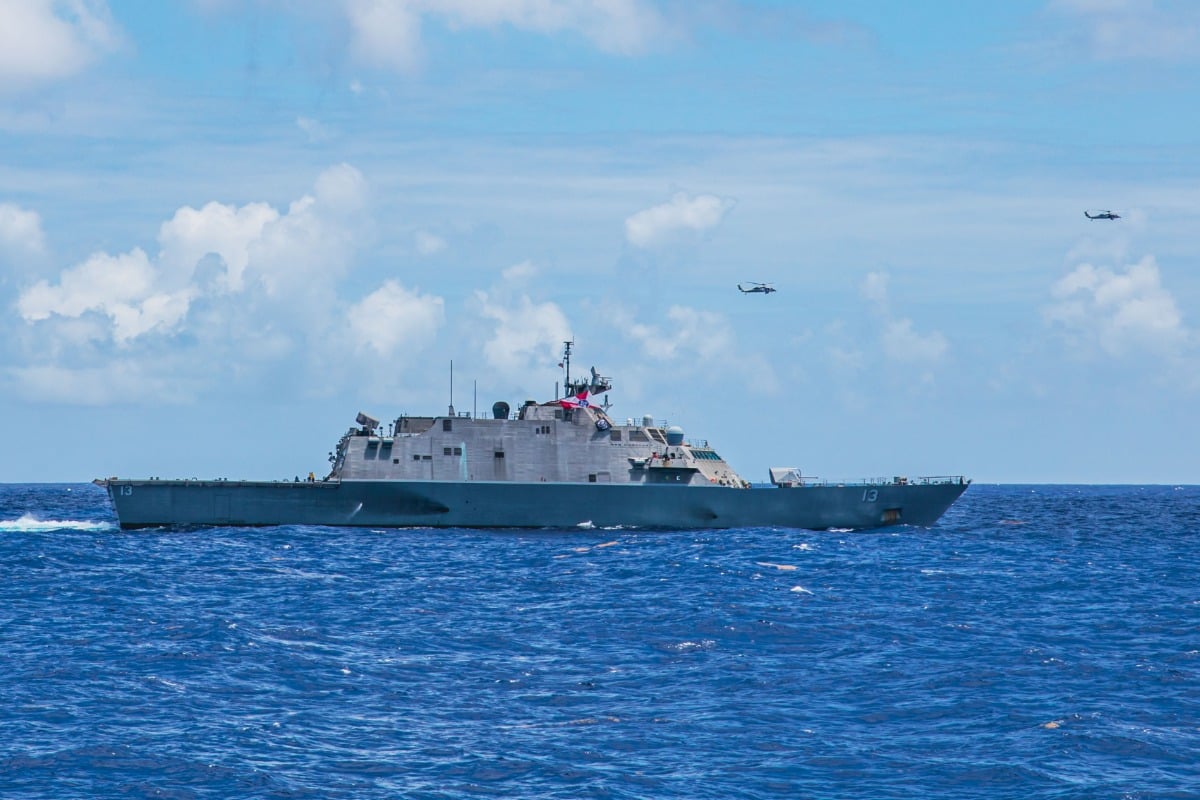
- BAE Systems won a $49.3 million contract, potentially $60.9 million, to maintain and modernize USS Wichita (LCS 13).
- The Navy previously tried to decommission Wichita in 2022 before Congress blocked the retirement plan.
A warship the U.S. Navy tried to scrap just a few years into its life is heading back into the shipyard, and taxpayers are footing another multimillion-dollar bill to keep it running. BAE Systems’ Jacksonville Ship Repair facility won a $49 million contract to maintain, modernize, and repair USS Wichita (LCS 13), a Freedom-class littoral combat ship designated LCS 13, with the total value climbing to $60,891,843 if the Navy exercises all the contract’s options.
The work covers what the Navy calls a Chief of Naval Operations Availability, a scheduled maintenance period during which a ship goes into dry dock so crews can perform critical repairs, modernization upgrades, and system overhauls that cannot be done while the vessel is at sea or tied up at a regular pier.
Littoral combat ships were designed as small, fast, shallow-water vessels meant to operate close to shore against threats too minor to justify sending a full-sized destroyer, and the Freedom-class variant that includes Wichita has struggled with reliability problems severe enough that the Navy tried to retire nearly its entire in-service fleet years before the ships’ planned 25-year service lives were up. The Navy proposed decommissioning nine Freedom-class ships, Wichita among them, in its fiscal year 2023 budget request, arguing the vessels were too expensive to maintain and repair relative to the capability they provided, a plan that would have sent Wichita to the scrapyard less than four years after it was commissioned on January 12, 2019, at Naval Station Mayport, Florida. Congress blocked that plan through provisions in the fiscal 2023 National Defense Authorization Act, and on August 11, 2023, the Department of Defense reversed course entirely, deciding Wichita would instead receive a full main engine replacement rather than face early retirement.
That reversal came only after Wichita had already suffered a serious mechanical breakdown of its own. In October 2022, the ship experienced what the Navy classified as a Class A mishap, a designation reserved for incidents causing more than $2.5 million in damage, when its propulsion plant failed while the vessel was returning home from a deployment in which its crew had helped interdict nearly 10,000 pounds (4,540 kilograms) of cocaine in the Caribbean Sea. The breakdown reflected a broader design flaw that plagued the entire Freedom class, a faulty piece of machinery called a combining gear that links a ship’s diesel engines and gas turbines so they can work together, a defect that caused multiple sister ships to break down at sea and forced the Navy to halt deliveries of new Freedom-class vessels until the problem could be fixed.
The maintenance period that followed Wichita’s reprieve was extensive by any standard, ultimately stretching roughly 26 months and including the installation of new main propulsion diesel engines and both of the ship’s combining gears before the vessel was finally restored to full operational capability by mid-2025. Wichita returned to sea only months ago, departing Mayport on November 14, 2025, to support U.S. Northern Command’s counter-illicit trafficking mission in the Navy’s 4th Fleet area of responsibility, the same drug-interdiction role the ship had been performing when it broke down three years earlier. That the Navy is now sending the vessel back into a shipyard for another round of critical maintenance and modernization work barely a year after completing one of the most extensive repair periods in the ship’s history illustrates just how maintenance-intensive this class of vessel has proven to be throughout its service life.
The new contract’s scope, described in Navy contracting documents as covering all labor, supervision, equipment, production, testing, facilities, and quality assurance necessary to prepare for and complete the availability, suggests this round of work goes beyond routine upkeep into the kind of modernization the Navy has been applying fleetwide to Littoral Combat Ships still deemed worth keeping in service, following funding Congress approved for LCS in-service modernization under recent defense authorization bills. The Navy awarded this contract without competitive bidding, citing a legal justification under Title 10 U.S. Code Section 3204(a)(3), known as the industrial mobilization exception, which allows the government to bypass open competition when a specific shipyard already possesses the specialized facilities, workforce, and infrastructure needed for a particular repair job, a common and practical justification in ship maintenance where moving a vessel to a different yard would cost far more than any savings a competitive bid might produce.
Funding for the work comes almost entirely from money Congress appropriated for fiscal year 2025, with 94 percent of the contract’s value drawn from that year’s other procurement funds and the remaining 6 percent coming from fiscal 2026 allocations, both of which the Navy structured so the money will not expire at the end of the current fiscal year regardless of how long the actual repair work takes. Naval Sea Systems Command in Washington, D.C., which oversees the Navy’s shipbuilding and maintenance programs, expects the work at Mayport to wrap up by May 2027.
USS Wichita’s story captures something the Littoral Combat Ship program has struggled to shake since its earliest ships entered service, a persistent gap between the vessels’ original promise and the sustained investment they have actually required to stay afloat and combat-ready.