

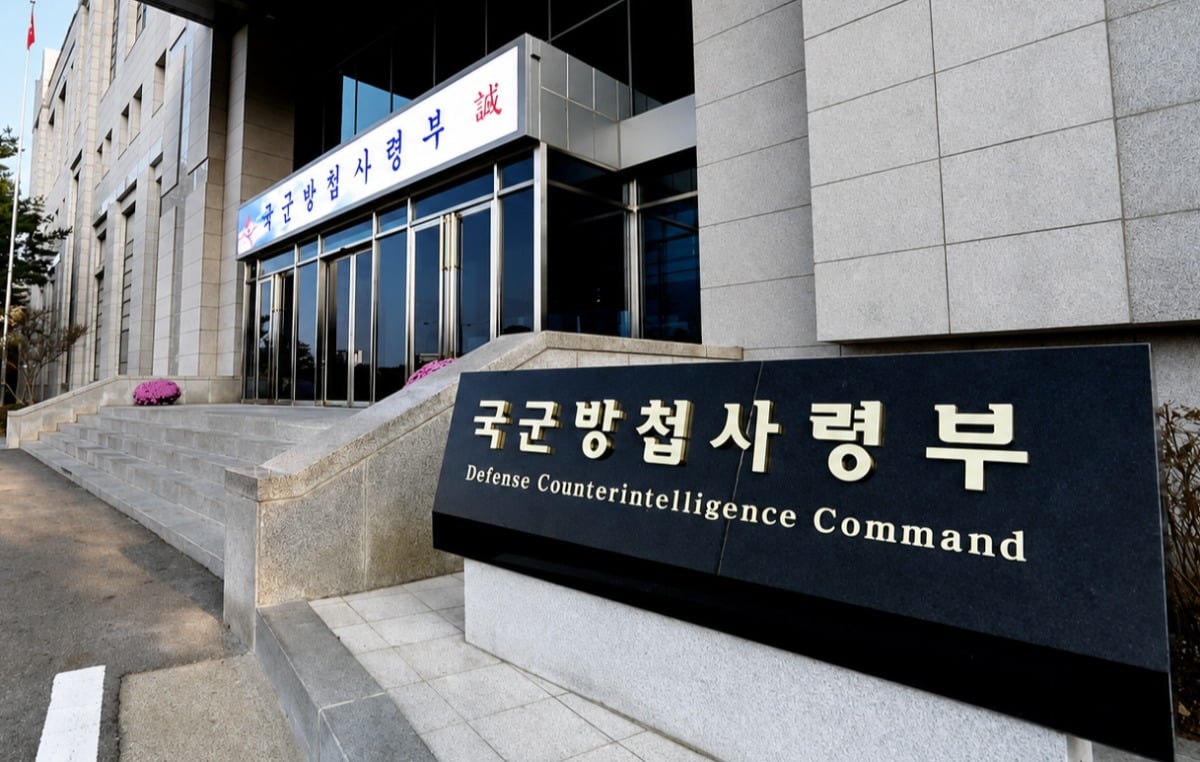
South Korea’s Defense Ministry has announced plans to dissolve its Defense Counterintelligence Command, the powerful military intelligence agency that played a central role in former President Yoon Suk Yeol’s failed attempt to impose martial law in December 2024, the Korea Times reported. Defense Minister Ahn Gyu-back unveiled the sweeping reform plan at a press conference, describing it as the most consequential restructuring of South Korean military intelligence in the agency’s nearly five-decade history.
The Defense Counterintelligence Command, known as the DCC, was established in 1977 as the Military Security Command, a unit that integrated counterintelligence functions across the Army, Navy, and Air Force. Over the decades it accumulated authority well beyond its original mandate, eventually wielding powers that included intelligence-gathering on military personnel, national security investigations, security audits, and the ability to conduct joint investigative operations. That concentration of functions in a single organization, without adequate civilian oversight, is what made it so dangerous when placed in the hands of a president willing to use it against political opponents.
The night of December 3, 2024, illustrated exactly how dangerous. Under Yoon’s orders, the DCC deployed personnel to the National Election Commission to investigate election fraud allegations raised by far-right groups, and the agency supported plans to detain politicians. Investigators have since focused on evidence that the command drafted operational plans for a joint investigative headquarters intended to function under martial law conditions. The command is also suspected of organizing troops to detain around ten key politicians, including the then leaders of the ruling and main opposition parties as well as the National Assembly speaker. Yoon’s martial law declaration lasted only hours before the National Assembly voted to lift it, but the DCC’s involvement in preparing and executing it placed the agency at the center of what South Korean prosecutors have described as an insurrection attempt.
Former DCC chief Lt. Gen. Yeo In-hyung was indicted on insurrection-related charges, and investigations into current and former command personnel are ongoing. Special prosecutors have been examining allegations that preparations for the martial law plan began months in advance. Investigators have recently focused on reports that the command drafted operational plans for the joint investigative headquarters intended for use under martial law, and on allegations that the agency sought to establish coordination mechanisms with other organizations before the declaration.
The reform plan Ahn announced goes further than anything attempted in previous cycles of criticism directed at the agency. Under the plan, the DCC will be dissolved entirely and its functions divided among three new organizations. A defense counterintelligence headquarters will handle counterintelligence activities, defense industry intelligence operations, and cybersecurity missions. Military security functions, including security audits and investigations into security incidents, will move to a new defense security support unit. National security investigations and wartime joint investigative authority will go to a separate investigative body established within the ministry itself. The ministry will also abolish what it described as politically vulnerable functions outright, including monitoring and compiling intelligence on military personnel, and information-gathering activities unrelated to the core mission of a military intelligence agency.
“The reform plan goes beyond a simple organizational restructuring or adjustment of functions,” Ahn said at the press conference.
“This will serve as a historic watershed in rebuilding our military intelligence apparatus so that it can never again become involved in politics,” the minister said.
The DCC’s history is a record of an institution that has repeatedly expanded beyond its mandate and been reined in, only to expand again. After a civilian surveillance scandal in the early 1990s, the organization faced reforms under liberal administrations and was renamed, though its English name remained unchanged. It was downgraded to the Defense Security Support Command under liberal President Moon Jae-in in 2018, before having its powers restored and being renamed again as the Defense Counterintelligence Command under the conservative Yoon administration in 2022. That cycle, reform under one government, restoration under the next, is precisely what the current overhaul is designed to break by eliminating the organizational structure rather than just renaming it.
Ahn also announced a package of new oversight mechanisms intended to prevent any future concentration of the same powers. These include the appointment of an external inspector general, the creation of a compliance oversight committee composed of civilian experts, and regular reporting requirements to the National Assembly. The ministry aims to complete the restructuring and launch the new organizations by late July or early August, though officials acknowledged that regulatory reviews and consultations with other government agencies could affect the timeline.
Experts have cautioned that dismantling the command outright could weaken core counterintelligence capabilities at a time when South Korea remains in confrontation with North Korea and faces ongoing intelligence threats. That concern is real. The Korean Peninsula remains one of the most heavily militarized borders in the world, and South Korea’s counterintelligence apparatus exists for legitimate and urgent reasons that have nothing to do with domestic politics. The challenge for the ministry is to preserve those genuine capabilities while stripping away the powers that allowed the agency to be turned against South Korean citizens and institutions.
What the DCC’s dissolution ultimately represents is a reckoning with a structural problem that South Korean democracy has struggled with since the country’s founding. Military intelligence agencies built during the authoritarian era were designed to serve the state’s political interests, not just its security interests, and dismantling that legacy has proved far harder than passing laws or changing names. Whether the new organizational structure actually holds depends not on the reform plan itself, but on the political will of whoever comes next to resist the temptation that every government before them eventually succumbed to.