

- The State Department approved a possible $1.96 billion sale of up to 20,000 APKWS II guidance sections to Saudi Arabia.
- The deal covers 10,000 air-to-air and 10,000 air-to-ground guidance kits, with BAE Systems as the principal contractor.
The U.S. State Department approved a possible arms sale to the Kingdom of Saudi Arabia worth an estimated $1.96 billion, covering up to 10,000 air-to-air guidance sections and up to 10,000 air-to-ground guidance sections for the Advanced Precision Kill Weapon System, known as APKWS II, according to a congressional notification the Bureau of Political-Military Affairs published Wednesday.
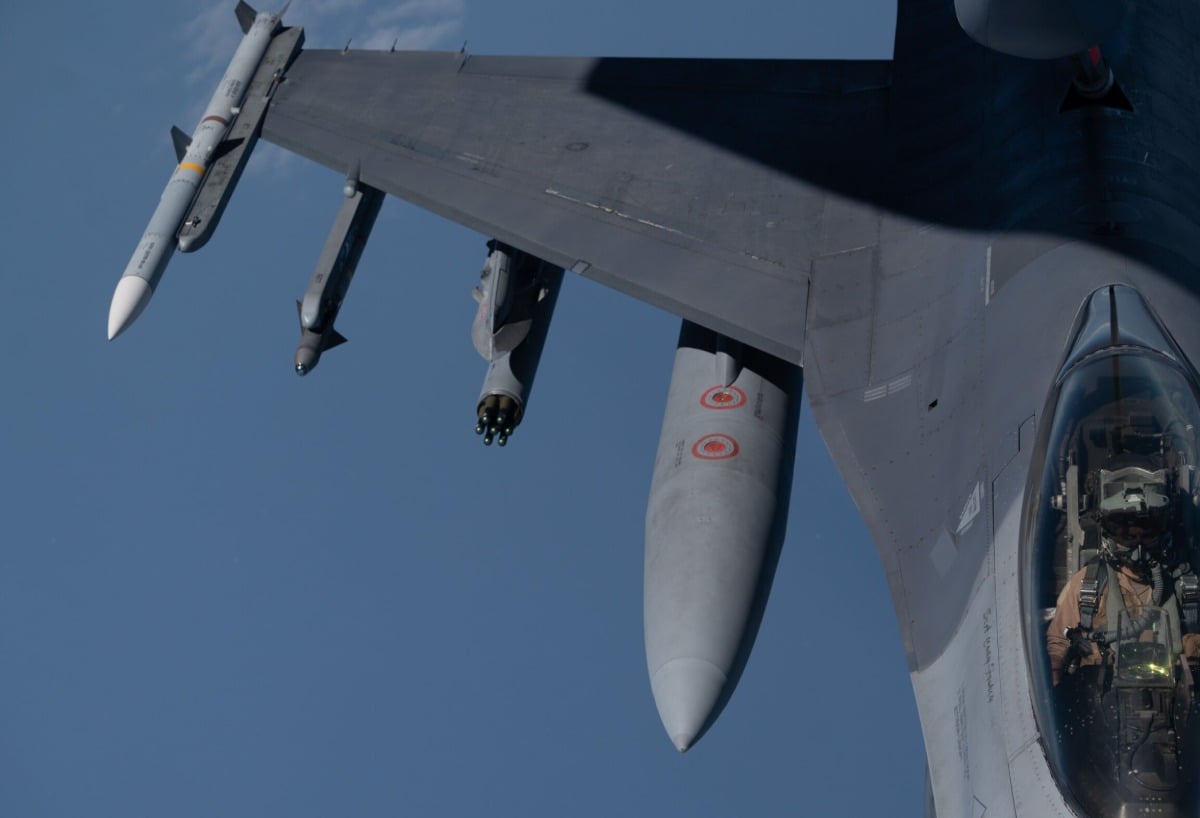
APKWS II is not a missile in the traditional sense. It is a guidance kit, built by BAE Systems, that slots into the middle of an ordinary 70-millimeter (2.75-inch) Hydra rocket, a decades-old, unguided munition the U.S. military has stockpiled by the millions, and turns it into a laser-guided precision weapon capable of steering itself toward whatever a pilot or ground operator points a laser at. The conversion matters because it takes a rocket that would otherwise fly in a straight, unguided line and gives it accuracy rivaling far more expensive missiles, all while keeping the unit cost somewhere between $15,000 and $22,000, a fraction of the roughly $1 million price tag on a single AIM-120 AMRAAM air-to-air missile or even the $450,000 cost of an AIM-9X Sidewinder.
That cost gap has turned APKWS II into the U.S. military’s weapon of choice for a very specific and increasingly common problem: shooting down cheap, one-way attack drones and low-end cruise missiles without burning through interceptors that cost fifty or a hundred times more than the target they are destroying. American fighter pilots have used the air-to-air version of APKWS II repeatedly to down Iran-backed Houthi drones launched from Yemen, and U.S. Air Force officials have publicly described it as their primary weapon against that specific threat, a track record that directly explains why Saudi Arabia wants a much larger stockpile of its own.
The kingdom has spent years fighting Houthi rebels across its southern border with Yemen, absorbing repeated drone and missile attacks aimed at its territory, and Riyadh has grown increasingly aware of just how expensive it becomes to intercept a swarm of cheap drones using conventional air-to-air missiles built for far more sophisticated threats. This latest request builds directly on that experience and on a much smaller purchase Saudi Arabia made in March 2025, when the State Department approved a $100 million sale covering 2,000 APKWS II guidance kits, a package roughly one-twentieth the size of Wednesday’s proposed deal. The jump from 2,000 units to a potential 20,000 signals Saudi Arabia is moving from testing the system in limited numbers toward building a large, sustained stockpile meant to last through years of continued regional tension rather than a single procurement cycle.
The notification does not specify which aircraft will carry the new rockets, but Saudi Arabia’s existing fleet offers the most likely answer. The Royal Saudi Air Force flies both the Eurofighter Typhoon and the F-15SA, a Saudi-specific variant of the F-15 Strike Eagle, and both jets have already been identified as candidate platforms for APKWS II integration by defense analysts tracking the program, meaning the kingdom would likely mount the new guidance kits on aircraft already in its inventory rather than needing to acquire new launch platforms. The equipment package accompanying the guidance sections includes LAU-131 rocket launchers, Mk-152 high-explosive warheads, Mk66 rocket motors, and proximity fuzes, along with practice warheads, spare parts, technical documentation, and training support, essentially everything needed to build a complete, sustainable capability rather than a one-time batch of ready-to-fire rockets.
Congressional notification is only the first procedural step in a foreign military sale, not a signed contract, and Saudi Arabia could still adjust the quantities or timeline before any rockets actually change hands. But the scale of this request alone tells its own story: after years of watching cheap drones force expensive trade-offs on air defense, Saudi Arabia is betting heavily that the answer to a swarm of low-cost threats is a rocket built to match their price, not outmatch it.