

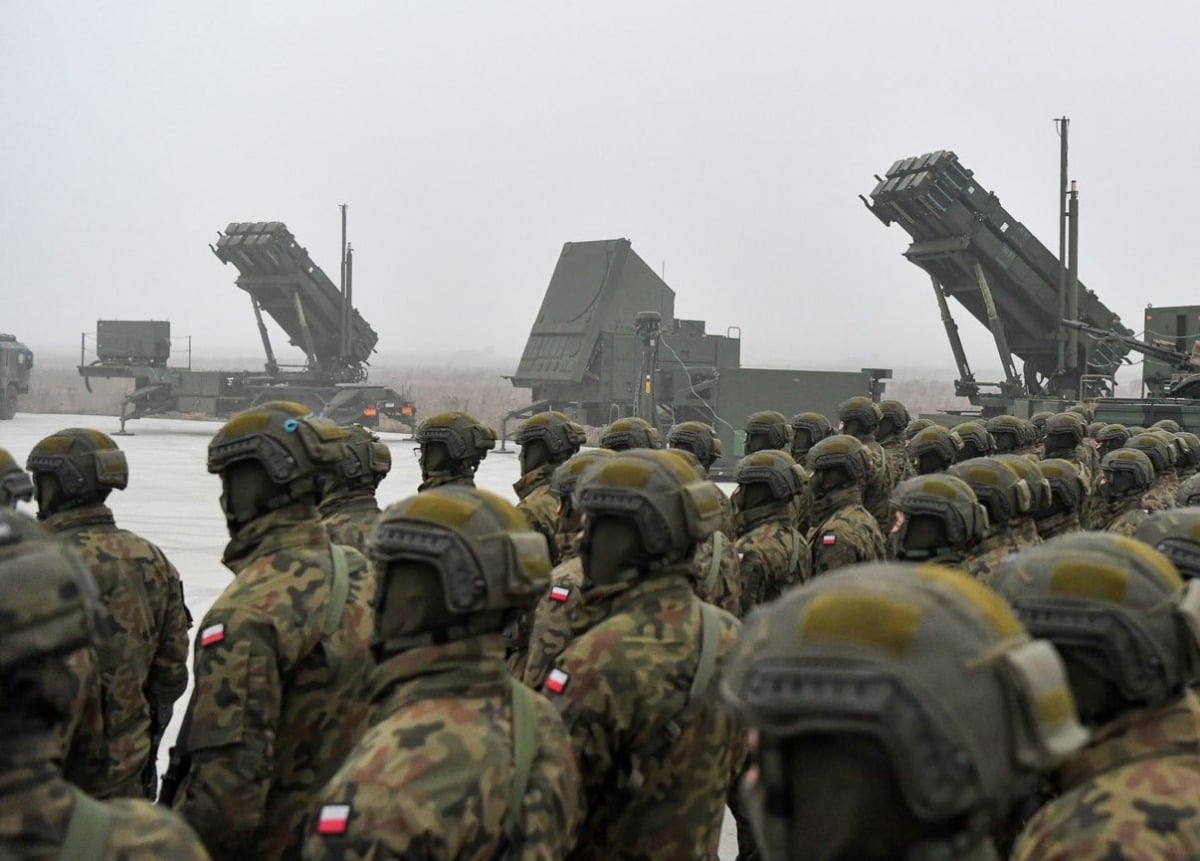
- Northrop Grumman received a $31 million contract modification for WISLA Integrated Air and Missile Defense Battle Command System sustainment, bringing the total contract to approximately $78 million.
- Work will be performed in Huntsville, Alabama, through December 31, 2029, funded by Poland through the U.S. Foreign Military Sales program.
The United States has awarded Northrop Grumman an additional $31 million to keep Poland’s advanced air and missile defense command system operational, deepening the American industrial commitment to one of NATO’s most strategically positioned frontline air defense networks.
The contract modification, awarded by Army Contracting Command at Redstone Arsenal, Alabama, adds $31 million to a sustainment contract for the WISLA Integrated Air and Missile Defense Battle Command System, bringing the total cumulative value of that contract to approximately $78 million.
Work will be performed in Huntsville, Alabama, with a completion date of December 31, 2029. The funding comes from Poland through the Foreign Military Sales program, the U.S. government mechanism through which allied nations purchase American defense systems and services with Washington acting as an intermediary between the foreign customer and the contractor.
WISLA is Poland’s national program to field a layered air and missile defense system capable of intercepting ballistic missiles, cruise missiles, and aircraft at multiple ranges and altitudes. The program is built around the Patriot surface-to-air missile system, one of the most combat-proven air defense platforms in the Western arsenal, combined with Northrop Grumman’s Integrated Battle Command System, known as IBCS. That combination is what makes the Polish WISLA architecture technically distinct from earlier Patriot configurations that other NATO allies operate.
IBCS is a networked command-and-control system that connects sensors and interceptors from different platforms into a single integrated air defense picture. Where a traditional Patriot battery uses its own organic radar to detect, track, and engage targets, IBCS allows operators to use data from any sensor in the network, including radars, aerial surveillance aircraft, and ground-based systems from multiple manufacturers, and direct any interceptor in the network to engage a threat regardless of which radar detected it. The practical result is a dramatically expanded engagement envelope and a significantly more resilient defense architecture: even if one radar is jammed, destroyed, or degraded, the system can continue engaging threats using data from surviving sensors connected through IBCS. Poland became the first U.S. NATO ally to fully operationalise IBCS as part of the WISLA system, and its integration into WISLA makes the Polish air defense network one of the most technologically advanced in the alliance.
Poland’s investment in WISLA reflects the country’s fundamental security reality. Poland shares borders with Russia’s Kaliningrad exclave to the north and with Belarus to the east, and since the February 2022 Russian invasion of Ukraine, Warsaw has accelerated its defense buildup at a pace that few NATO members have matched. Poland plans to spend about 4.8 percent of GDP on defence in 2026, the highest relative level in NATO, and has committed to expanding that investment further. For a country whose airspace borders a zone of active large-scale ballistic missile and cruise missile strikes, having a capable integrated air and missile defense system is not a theoretical requirement. Poland’s Patriot batteries represent a concrete deterrent against the kind of missile campaigns that Ukrainian cities have endured since 2022.

The sustainment contract ensures that the battle command software, hardware, communications systems, and operational support infrastructure behind Poland’s WISLA network remain operational and updated through 2029. Sustainment in modern defense systems is not a simple maintenance activity. IBCS is a software-intensive system that requires continuous updates to threat libraries, engagement algorithms, communications protocols, and interface standards as the tactical environment evolves and as Poland’s broader sensor and interceptor inventory changes. Northrop Grumman, as the developer and integrator of IBCS, is the only entity with the depth of system knowledge required to perform that work, which is why the contract was not competed.
Northrop Grumman’s Huntsville, Alabama operations form the center of the company’s IBCS work. Huntsville is home to Redstone Arsenal, the Army’s primary missile and aviation system development installation, and to a dense concentration of defense contractors supporting Army air and missile defense programs. Northrop Grumman’s presence in Huntsville positions it at the center of the Army’s integrated air defense ecosystem, including the IBCS program that the U.S. Army itself fields alongside Poland.
The U.S. Army declared IBCS initial operational capability in 2023 and received its first complete IBCS delivery in 2024, running the domestic fielding program in parallel with the Polish WISLA sustainment work this contract supports. Poland’s early fielding provides operational experience with IBCS in a demanding security environment, though any formal feedback mechanism between Polish operations and U.S. development should be sourced separately.
As Russian missile and drone strikes against Ukraine continue to test and evolve air defense tactics in real combat, the operational demands on Poland’s WISLA network grow more complex rather than less. Keeping the command system that integrates Poland’s sensors and interceptors fully operational and continuously updated is not a background administrative function. It is, as the contract’s sustained multi-year commitment suggests, a front-line priority for one of NATO’s most exposed members.