

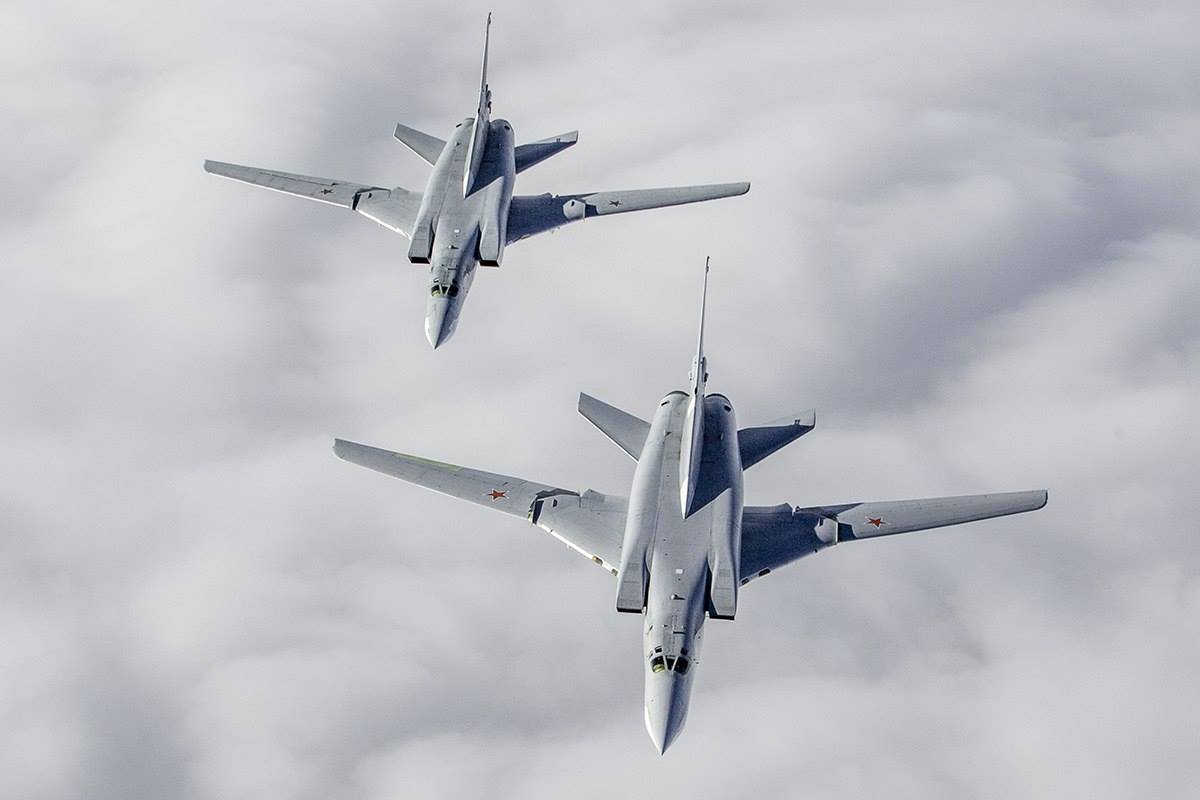
Russia has sent “squadrons” of Tu-22M3 strike bombers and ballistic Iskander missiles to Crimea in response to the deployment of NATO’s anti-missile shield in Romania in 2015, according to the head of the Russian Federation Council’s Committee for Defense and Security, Viktor Bondarev.
“The deployment of American missile defense systems in Romania came as a major challenge, in response to which the Russian Defense Ministry made the decision to deploy long-range missile-carrying bombers Tupolev Tu-22M23 at the Gvardeyskoye airbase. This move has drastically changed the balance of forces in the region,” Viktor Bondarev said
Russia’s state-of-the-art missile systems, including S-300 and S-400, Buk-M2, Pantsir-S1 and two modifications of [nuclear capable] Iskander, have also been stationed at the peninsula, he added.
“This move has drastically changed the balance of forces in the region,” Bondarev noted.
While the bombers are capable of carrying nuclear weapons, it is unclear if those weapons would come with the bombers when they are sent to Crimea.
“If it were not for a prompt return of Crimea and Sevastopol within Russia, these territories would have gone under protectorate of the US. The American ‘parent country’ would have immediately deployed its weapons systems there. In case of a war, obstacles could have been put without hindrance for our ships, for example through mining the floor of the Bosporus,” the senator stressed.
Notably, the Crimean Peninsula was annexed from Ukraine by the Russian Federation in February–March 2014 and since then has been administered as two Russian federal subjects—the Republic of Crimea and the federal city of Sevastopol. The annexation followed a military intervention by Russia in Crimea that took place in the aftermath of the 2014 Ukrainian revolution and was part of wider unrest across southern and eastern Ukraine.
Washington views the missile shield, which U.S. and NATO officials switched on in May 2016, as vital to defending itself and Europe from so-called rogue states — especially Iran — a claim Moscow has disputed. Rather, the Kremlin has said, the move is actually aimed at blunting Russia’s own nuclear arsenal.
U.S. officials have said that despite Washington’s plans to continue to develop the capabilities of its system, the shield would not be used against any future Russian missile threat.