

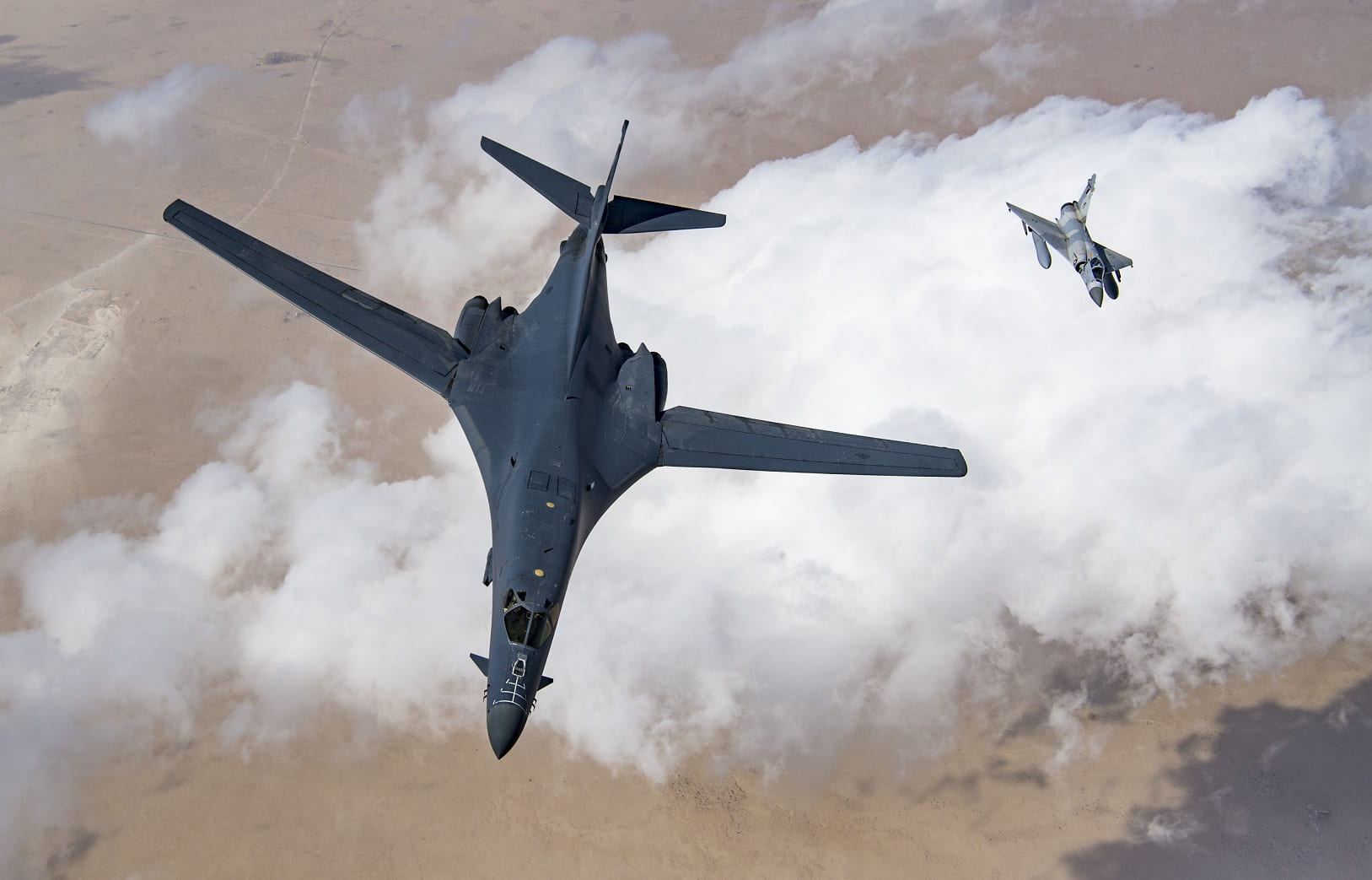
The Air Force’s B-1B Lancer long-range strike bombers participated, for the first time, in Joint Air Defense Exercise.
A statement from the U.S. Air Force claims that B-1B Lancers, F-15E Strike Eagles and regional coalition partner aircraft have been involved during Joint Air Defense Exercise 19-01, a regularly scheduled three-day training event focused on increasing the readiness of air defense assets in the U.S. Central Command (CENTCOM) area of responsibility.
“This is the first time a B-1 has been integrated into JADEX,” said Maj. Ricardo Lara, Allied Forces Central Europe (AFCENT) chief of exercises. “It gave us an opportunity to practice combined air operations with multiple aircraft and partners dedicated to regional defense to develop command and control tactics, techniques and procedures (TTPs).”
The multi-mission B-1 is the backbone of America’s long-range bomber force. It can rapidly deliver massive quantities of precision and non-precision weapons against any adversary, anywhere in the world, at any time.
During joint air defense war games, B-1B bombers can imitate a potential enemy aircraft such as the Russian Tu-160 or Chinese H-6.
Along with the live-fly portion, JADEX also included Navy ships and Army defense assets that participated in combined defense training. As well, the exercise consisted of robust table-top and simulated scenarios to test joint coalition C2 partners in all domains.
“We’re really testing the tactical levels of warfare,” Lara said. “We want to get after what that Soldier, Sailor or Airman is seeing down their scope, targeting pod or radar and how they communicate and operate as a joint coalition team.”
While the scenarios were simulated, the team practiced real-world TTPs to address missile, aircraft and small unmanned aerial system threats.
Regional partners operated alongside aircraft and Joint assets across the area of responsibility to practice defense against a variety of simulated threats. With geographically separated participants from different services and nations, communication and interoperability were crucial exercise aspects.
“JADEX is an opportunity for us to practice regional defense with our gulf partners,” said Lt. Gen. Joseph Guastella, Combined Air Forces component commander. “It’s our responsibility to maintain a credible, capable and dynamic defense posture to compete, deter and win against state and non-state actors. JADEX is one of many exercises that demonstrate those capabilities we practice alongside our international, joint and interagency teammates.”
JADEX is one of more than 75 exercises across the CENTCOM AOR that strengthens peaceful military-to-military relationships and provides regional stability with partner nations.