

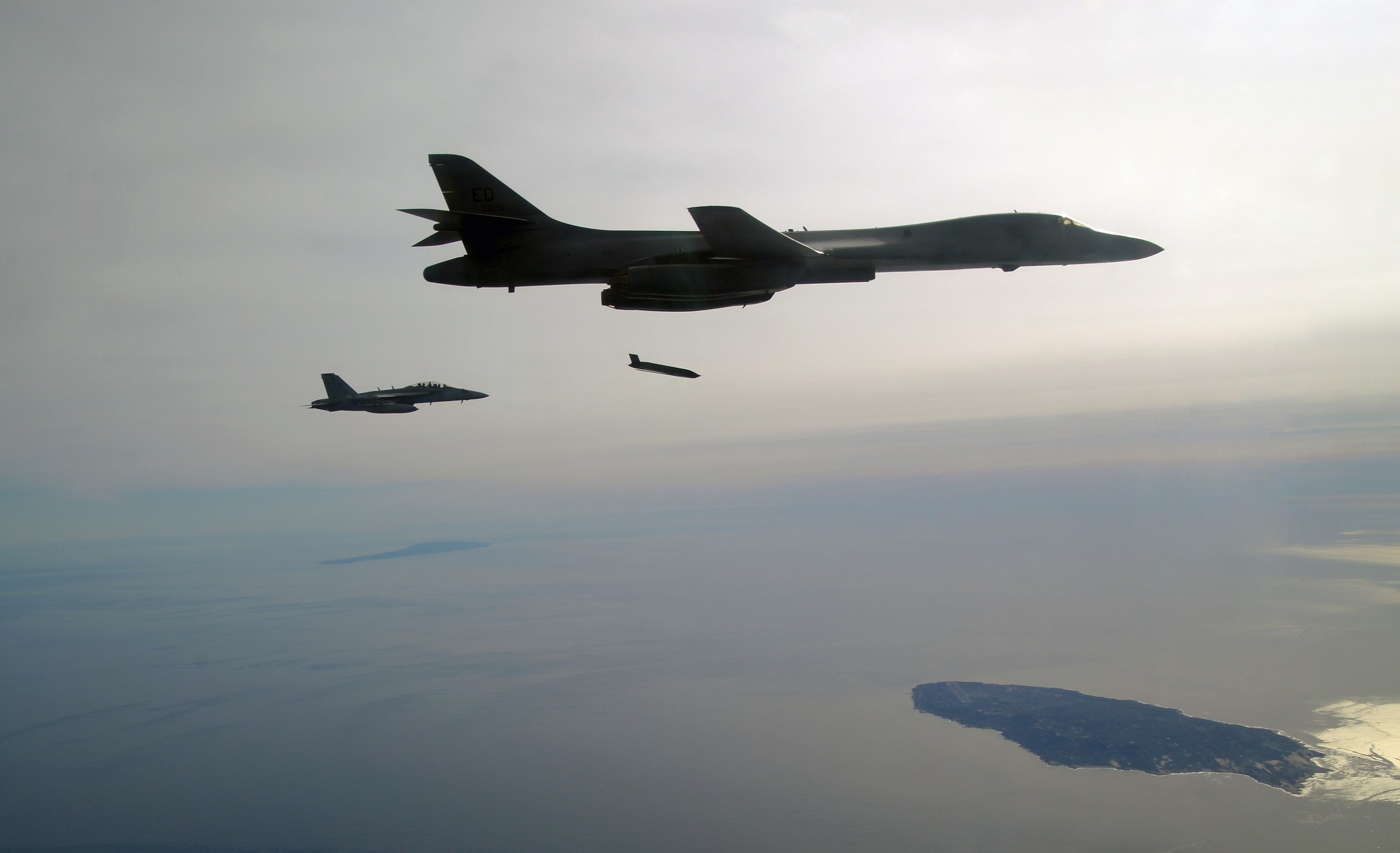
Lockheed Martin successfully fired production-configuration Long Range Anti-Ship Missiles (LRASM) from a U.S. Air Force B-1B bomber.
During the test over the Sea Range at Point Mugu, California, B-1B aircrew simultaneously launched two LRASMs against multiple maritime targets, meeting the primary test objectives, including target impact.
“This continued success with LRASM provides confidence in its upcoming early operational capability milestone, putting a proven, unmatched munition into the U.S. Navy and U.S. Air Force inventories,” said David Helsel, LRASM program director at Lockheed Martin Missiles and Fire Control. “The successful flight demonstrates LRASM’s continued ability to strengthen sea control for our forces.”
LRASM is designed to detect and destroy specific targets within groups of ships by employing advanced technologies that reduce dependence on intelligence, surveillance and reconnaissance platforms, network links and GPS navigation in electronic warfare environments. LRASM will play a significant role in ensuring military access to operate in open ocean/blue waters, owing that to its enhanced ability to discriminate and conduct tactical engagements from extended ranges.
LRASM is a precision-guided, anti-ship standoff missile based on the successful Joint Air-to-Surface Standoff Missile – Extended Range (JASSM-ER). It is designed to meet the needs of U.S. Navy and Air Force warfighters in contested environments. The air-launched variant provides an early operational capability for the U.S. Navy’s offensive anti-surface warfare Increment I requirement to be integrated onboard the U.S. Air Force’s B-1B in 2018 and on the U.S. Navy’s F/A-18E/F in 2019.