


Russian defense sources are claiming that the country’s Lancet loitering munitions have destroyed more than half of the American-made M109 self-propelled howitzers supplied to Ukraine by NATO countries.
The claim, which comes amid ongoing drone warfare in Ukraine, was made in reports circulated by Russian military-affiliated outlets.
According to the published data, Kyiv has received more than 160 M109 howitzers since the start of the full-scale war. Russian sources now assert that over 100 strikes against these systems have been recorded by Lancet-family loitering munitions developed by ZALA, a Kalashnikov Group subsidiary.
While Moscow characterizes the Lancet as one of its most effective tools for disabling high-value foreign artillery, independent military observers have offered a more cautious assessment. Analysts tracking battlefield equipment losses note that not all strikes result in permanent destruction. In many cases, drones failed to detonate, were caught in anti-drone netting, or damaged systems were quickly repaired and returned to service.
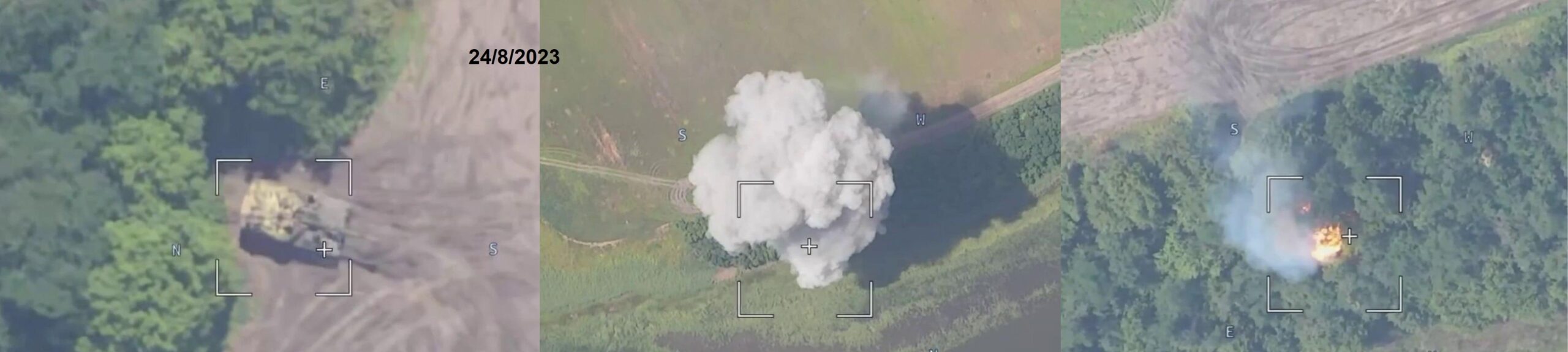
Open-source monitoring groups have confirmed the loss or damage of roughly 90 M109-series howitzers since the beginning of the conflict. However, this number includes systems lost to a range of threats—such as counter-battery fire, first-person view (FPV) drones, and conventional strikes—and not solely from Lancet attacks.
Still, Russian officials say the Lancet’s performance on the battlefield demonstrates its ability to “neutralize expensive Western equipment with relatively small resources,” reflecting an approach aimed at offsetting artillery shortages and technological gaps.
The M109, manufactured in the United States and widely used across NATO, has formed a core part of Ukraine’s long-range fire support since early 2022. The ongoing attrition of such systems, regardless of the source, poses operational challenges for Ukraine’s artillery forces as fighting continues along multiple fronts.
Russia is using the Lancet family of drones to compensate for its growing shortage of traditional artillery systems and the technological gap between its military and NATO forces.