


The Japan Ground Self-Defense Force (JGSDF) will carry out live-fire exercises involving its Hawk and Chu-SAM surface-to-air missile systems in the United States, Japan’s Ministry of Defense has announced.
According to a statement from the JGSDF, the drills aim to improve tactical proficiency in air defense operations and enhance the readiness of participating units. The exercises will be held as part of the Fiscal Year 2025 training schedule and will involve a series of live launches designed to test the operational capability of the missile systems under realistic conditions.
The JGSDF said the training is intended to validate the ability of its forces to conduct the full sequence of actions required for a surface-to-air missile launch. By practicing in the U.S., the units can conduct realistic testing of their equipment, refine operational procedures, and increase crew confidence in their systems, the ministry said.
The Hawk system, originally developed by the United States, has been a long-standing part of Japan’s air defense structure. Meanwhile, the Chu-SAM, or “Type 03,” is an indigenous Japanese system capable of engaging multiple aerial targets at medium ranges.
Both systems provide Japan with layered air defense coverage, with the Chu-SAM offering mobility and precision against modern aerial threats. During the upcoming training, troops will rehearse detection, tracking, and engagement procedures in live-fire conditions that are not possible within Japan’s restricted airspace.
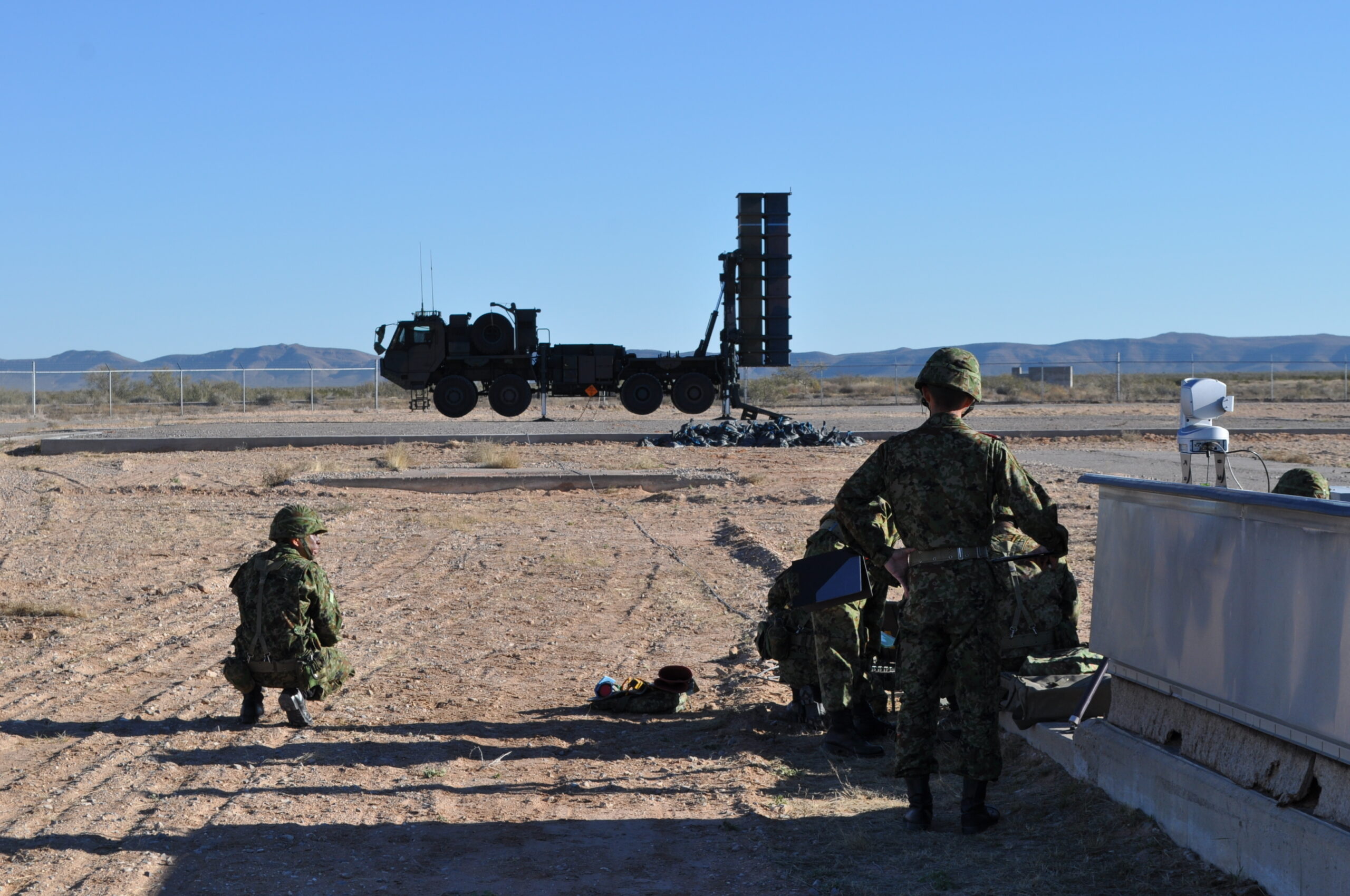
The Ministry of Defense described the exercise as a key element of Japan’s broader air defense strategy and a step toward maintaining readiness amid regional threats. The live-fire environment allows troops to “gain confidence in their weapon systems,” the JGSDF said.
Japan has conducted similar live-fire exercises in the United States in past years, often in collaboration with U.S. military forces. However, this year’s training will focus on independently validating the performance of Japanese air defense units in real-world scenarios.
The JGSDF noted that such drills are essential for adapting to evolving regional security conditions and maintaining the credibility of Japan’s deterrent posture.