

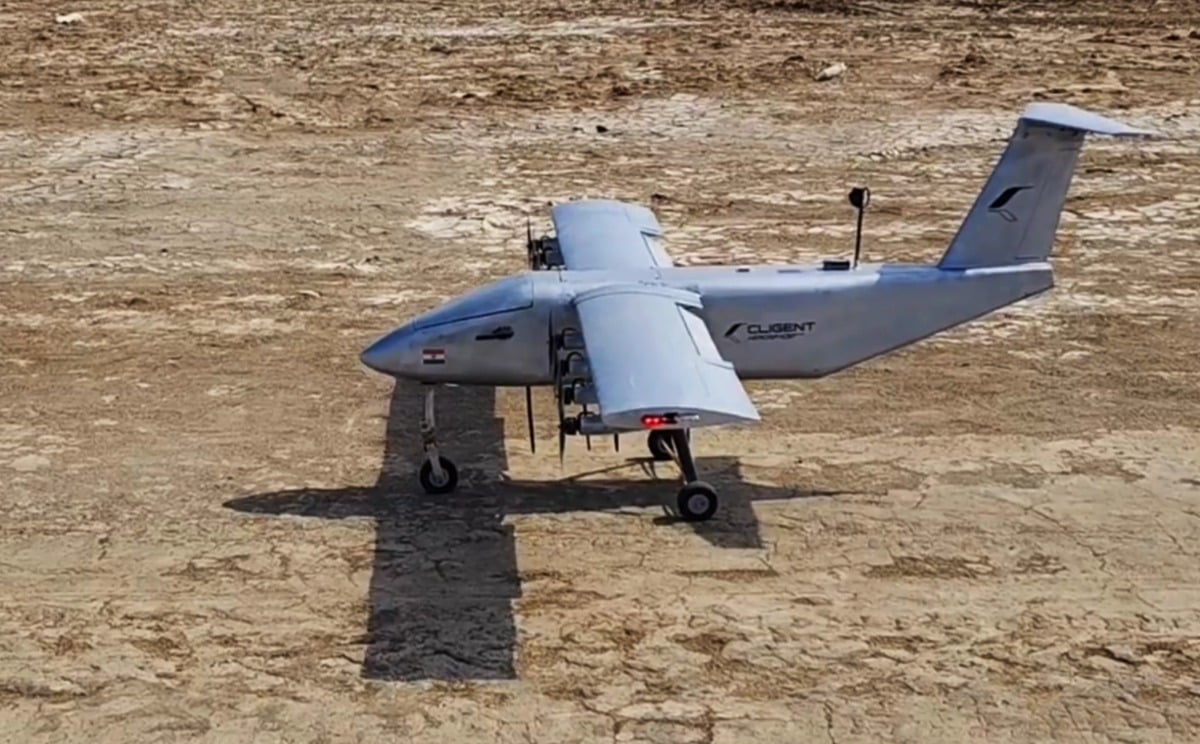
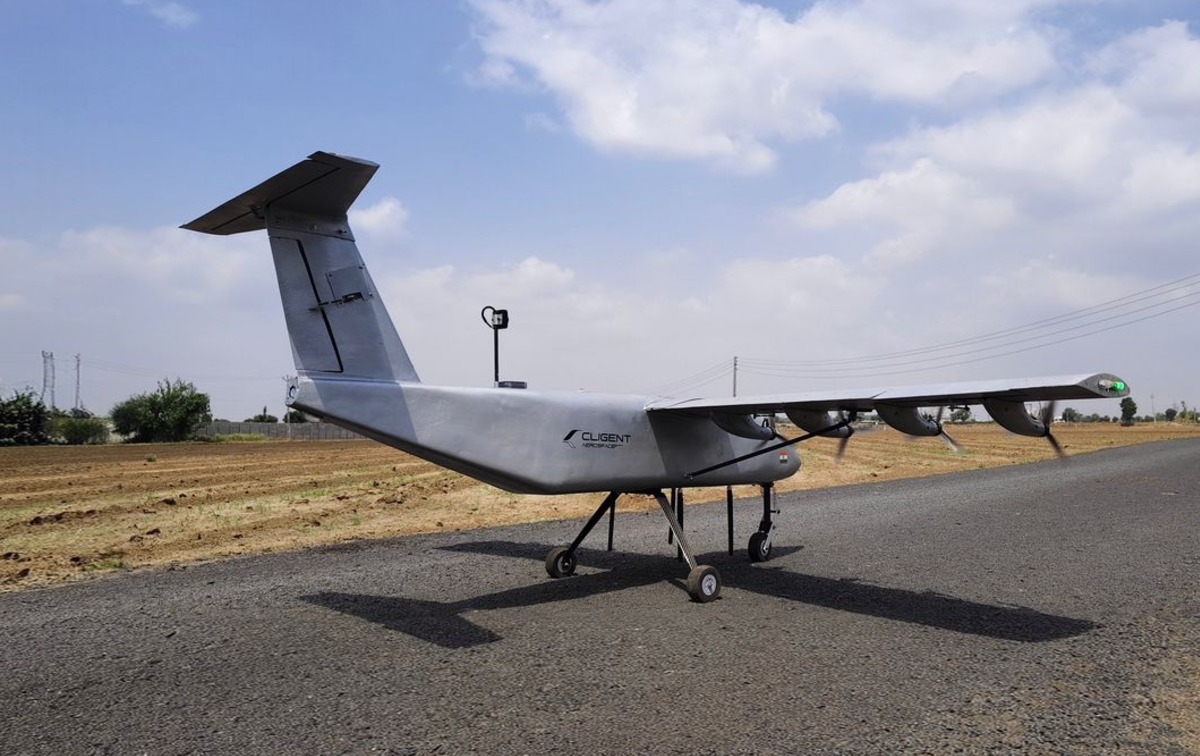
- Cligent Aerospace flight-tested a scaled eSTOL demonstrator that took off in 22 meters (72 feet) on an unprepared airstrip.
- The company is developing the CL1000, a hybrid-electric aircraft carrying nine passengers or 1,500 kg (3,300 lbs) of cargo.
A small aircraft lifted off a dirt airstrip in western India after rolling forward just 22 meters (72 feet), roughly the length of two school buses, and that short hop has validated a technology an Indian startup hopes could eventually move troops and supplies into places no runway has ever reached. Ahmedabad-based Cligent Aerospace confirmed it successfully flight-tested a scaled demonstrator of its hybrid-electric eSTOL aircraft, with the company’s own reported test results showing the 22-meter takeoff distance alongside stable operation in temperatures up to 42 degrees Celsius (108 degrees Fahrenheit), performance in wind speeds up to 30 kilometers per hour (19 mph), and takeoff and landing achieved from an unprepared test strip rather than a paved runway.
eSTOL stands for electric short takeoff and landing, a category of aircraft designed to combine the fuel efficiency and reduced emissions of electric propulsion with the ability to operate from airstrips far shorter than what conventional cargo planes or airliners require.
Founded in 2023 by aerospace engineers Harsh Joshi and Vivek Dhut, both alumni of Parul University in Gujarat, Cligent Aerospace has built its team around veterans from established aerospace organizations including Airbus, ATR, Lockheed Martin, and India’s own Hindustan Aeronautics Limited, giving a young startup access to institutional experience that would normally take years to accumulate independently. Joshi spent roughly five years in Bangalore’s aerospace startup scene, working at companies including Azista Aerospace and GalaxEye Space, while Dhut brought a background in structural engineering combined with an MBA, and the pair are now working toward a full-scale aircraft called the CL1000, a hybrid-electric platform designed to carry up to nine passengers or as much as 1,500 kilograms (3,300 pounds) of cargo over routes stretching roughly 1,000 kilometers (620 miles), all while taking off and landing in under 150 meters (490 feet), a fraction of the runway length even small regional airports typically require.
The hybrid-electric design at the heart of the CL1000 combines battery power with a generator, letting the aircraft draw on electric propulsion for efficiency while avoiding the range limitations that have held back purely battery-powered aircraft, since current battery technology simply cannot store enough energy per unit of weight to match the range of a fuel-burning engine. Cligent has said this combination could bring operating costs below one cent per mile, compared to roughly three to six cents per mile for a conventional aircraft like the Cessna Caravan commonly used on similar short regional routes, a cost advantage the company argues becomes increasingly important as fuel typically accounts for 30 to 40 percent of a regional operator’s total expenses. The company structured its development around a three-phase plan, with the recently completed scaled demonstrator flight representing progress within the first phase, building toward a full-size airframe flight using the electric powertrain before introducing the complete hybrid configuration and eventually scaling toward production aircraft in later phases.
India’s regional aviation gap gives this kind of aircraft an obvious market even before considering any military application, since the country remains the world’s fastest-growing aviation market and its third-largest by domestic passenger volume, yet vast stretches of hill states, island territories, flood-prone districts, and remote agricultural regions lack the reliable road infrastructure that might otherwise connect them to larger cities. Hundreds of small or underutilized airstrips already exist across India, remnants of earlier aviation infrastructure or agricultural airfields that see little to no regular traffic, and Cligent has explicitly positioned the CL1000 as a way to activate that dormant infrastructure for passenger transport, cargo logistics, medical evacuation, and emergency response missions that conventional aircraft cannot economically serve. The company has already signed multi-million-dollar memorandums of understanding with regional logistics companies in India, early commercial signals suggesting real demand exists for the kind of short-runway capability Cligent is building, even before the CL1000 itself reaches full-scale flight.
Short takeoff and landing capability carries genuine relevance well beyond civilian regional connectivity, a point Cligent’s own leadership has acknowledged by tagging recent company updates with references to defense innovation and dual-use technology. Military forces have long valued aircraft capable of operating from short, unprepared airstrips precisely because battlefield logistics rarely benefit from the luxury of a paved runway, and an aircraft that can move cargo, medical supplies, or personnel into a remote or contested location using only 22 meters of rough ground represents exactly the kind of flexible airlift capability that conventional cargo aircraft cannot replicate.