

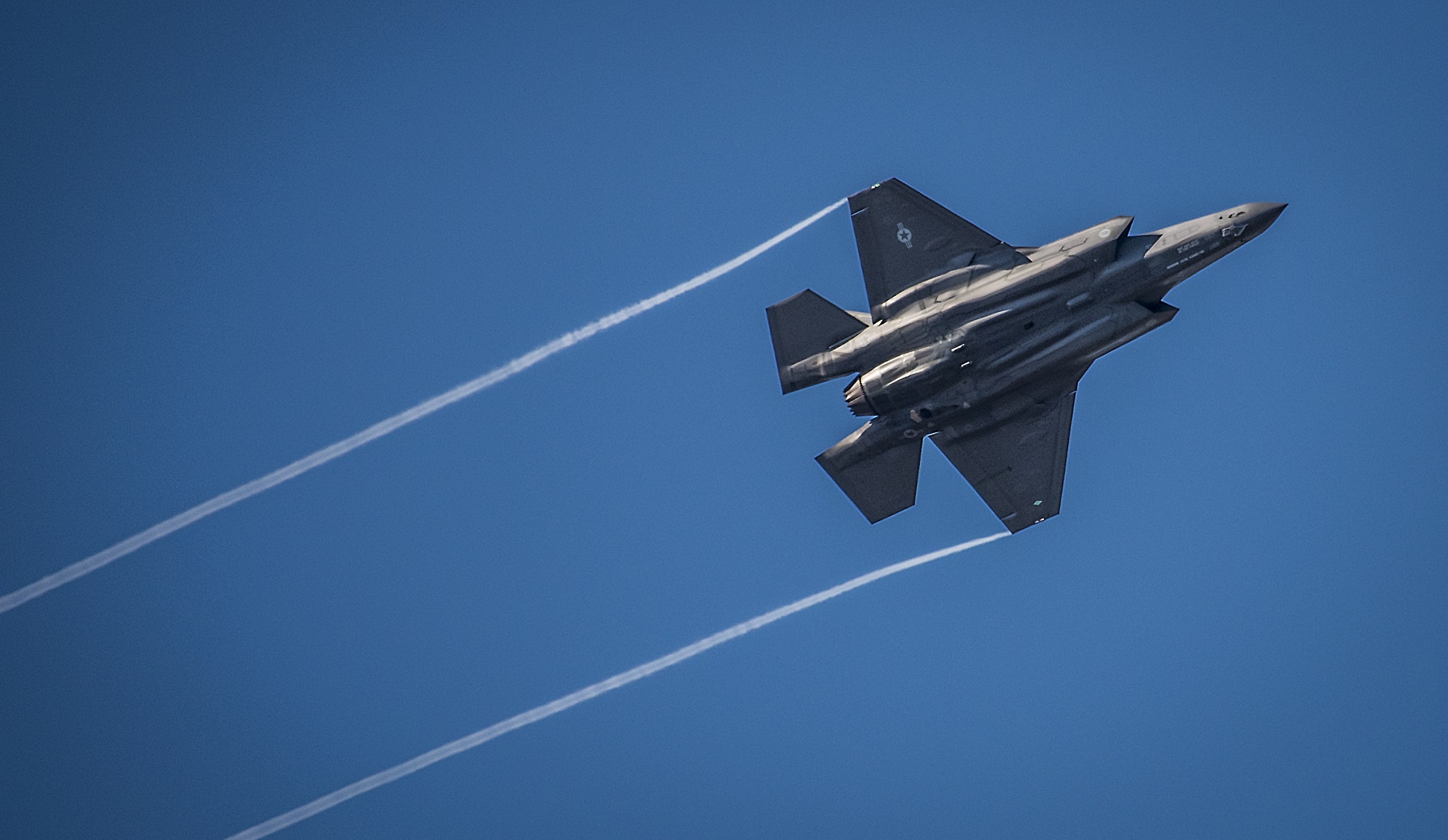
DARPA, the Defense Advanced Research Projects Agency, is working on a program called Air Combat Evolution (ACE) to make automated dogfighting a reality. The Pentagon’s research focused to automate air-to-air combat, which would free pilots to concentrate on the larger air battle creating a human-machine team.
As part of program, Dynetics, Inc., has been awarded Phase 1, Technical Area 3 (TA3), by the DARPA Strategic Technology Office (STO). ACE TA3, also known as Alpha Mosaic, is valued at $12.3 million.
The ACE program is using aerial dogfighting as the initial challenge scenario for implementing artificial intelligence (AI) into high-intensity air conflicts, which intends to increase warfighter trust in combat autonomy. Similar to how the United States military trains fighter pilots, ACE performers will work to increase trust in automated, within-visual-range, air-to-air dogfighting. As algorithms and tactics mature, so will the scenarios and adversarial capabilities.
During the 18-month Phase 1 award, Dynetics will leverage program advances in automated dogfighting to enable operational-level scenarios with a large number of heterogeneous aircraft. By improving the algorithms and tactics developed within ACE, TA3 will lay the groundwork for future live, campaign-level experimentation of manned and unmanned vehicles.
“The ACE program is inspiring on so many levels,” said Tim Keeter, ACE program manager for Dynetics. “Our team brings novel solutions that have proven to be feasible and scalable to these challenging ACE objectives. These efforts will help DARPA and the U.S. military expand their advantage in the evolution of Mosaic warfare.”
The program consists of three phases. Phase 1 begins research in a simulated environment. Phase 2 advances to a flight environment using unmanned air vehicles. Phase 3 includes a realistic, manned-flight environment involving complex human-machine collaboration.
“Our entry into Phase 1 of ACE represents years of relevant research within Dynetics and our team members that position us to do great things for our country,” said Kevin Albarado, Dynetics’ chief engineer. “Our scientists and engineers are eager to continue advancing these state-of-the-art AI applications to help our warfighters defend our nation.”