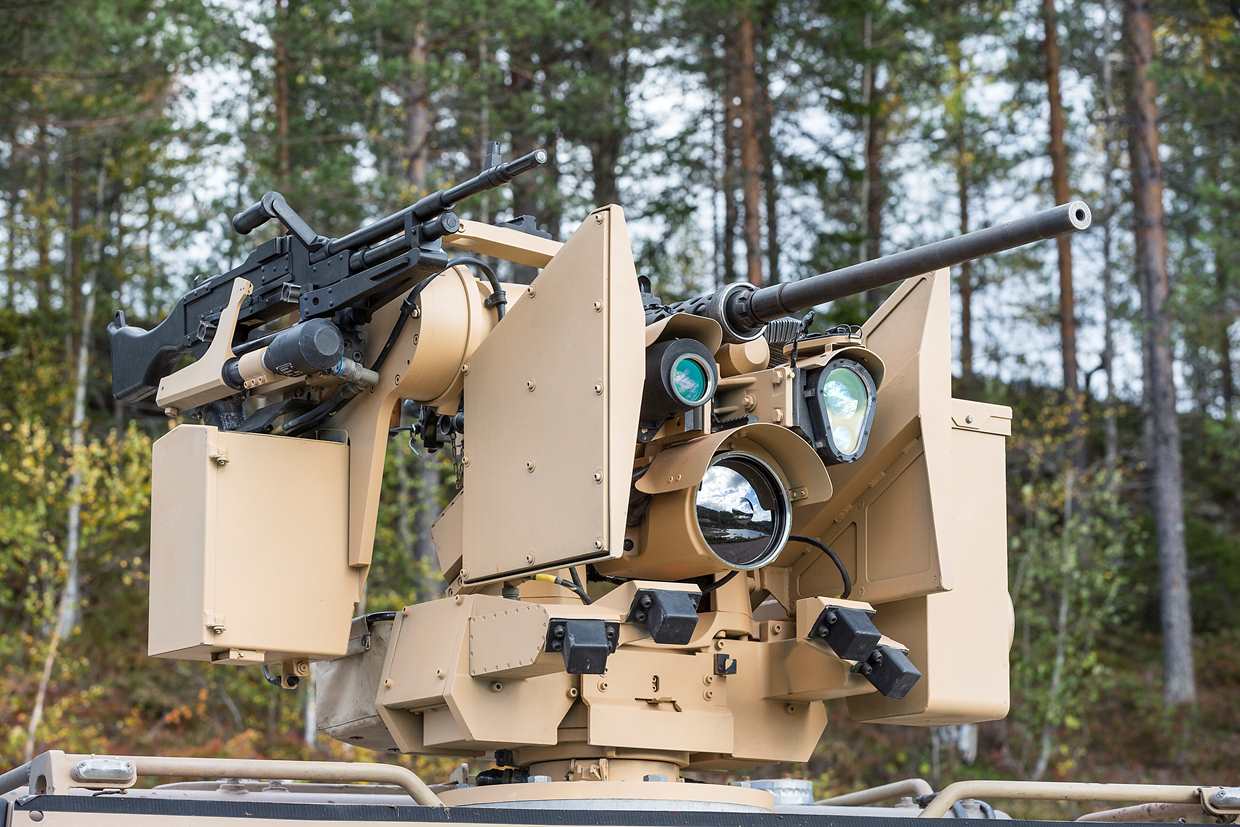
Kongsberg Defence & Aerospace has announced on Tuesday that the Canadian Army will equip the Armoured Combat Support Vehicles (ACSV) with a newest generation remote weapon station.
General Dynamics Land Systems – Canada and Kongsberg have signed a contract for delivery of the Protector Remote Weapon Stations (RWS) to the Canadian Army valued 500 MNOK. The PROTECTOR RWS will be integrated on Canada’s fleet of Armored Combat Support Vehicles. Canada signed their first Protector RWS contract in 2005 followed by additional contracts in 2012 and 2014.
“We are very pleased to be chosen again as the supplier of Remote Weapon Stations to the Canadian Army. This confirms the strong position of Kongsberg’s Protector RWS, and continues the close relationship between Kongsberg and the Canadian Army and General Dynamics Land Systems – Canada,” says Pål E. Bratlie, executive vice president, Kongsberg Defence & Aerospace AS.
“In the midst of the most uncertain and difficult economic times in our lifetime, we are very pleased to win this order in spite of the COVID-19 pandemic. Our business base is long-term and solid, with an order backlog that provides a strong foundation for continued operations into the future,” says Eirik Lie, President Kongsberg Defence & Aerospace AS.
Kongsberg has, for more than two decades, been the leading global supplier of Remote Weapon Stations. Leveraging millions of hours of operational use in all conditions, based on 20,000 delivered systems for 23 countries. The Protector RWS has continuously evolved to meet increasingly demanding requirements, utilizing technological advancements in order to meet new threat scenarios.
The Canadian Army will receive the latest generation Protector RWS, a Remote Weapon Station prepared for wireless control, counter UAS capability, multi-sensor fusion, as well as other new functions required by the expanding user community. The systems for Canada will be produced in parallel with five other programs, creating synergies in supply base and project execution for the benefit of the customers.
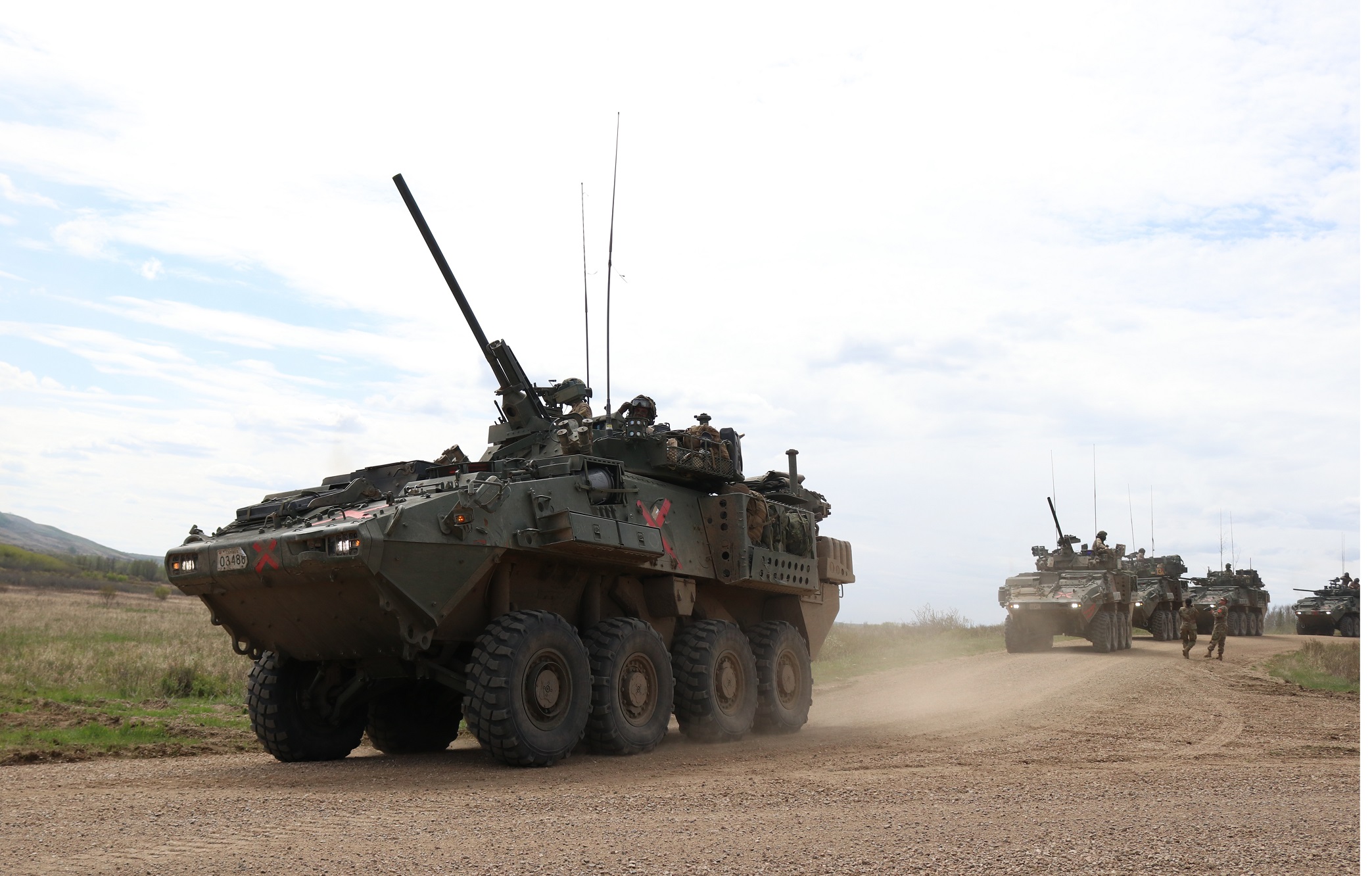
The Government of Canada will procure 360 ACSV to replace the Bison LAV and M113 Tracked LAV fleets. These vehicles will support a range of operations which include domestic disaster relief and overseas peace keeping missions.
The ACSV are based on the LAV 6.0 platform and will integrate with and support the existing LAV 6.0 platform currently in use by the CAF. This will provide a number of advantages including reduced training and sustainment costs, as well as the availability of common spare parts to fix vehicles quickly during operations.