

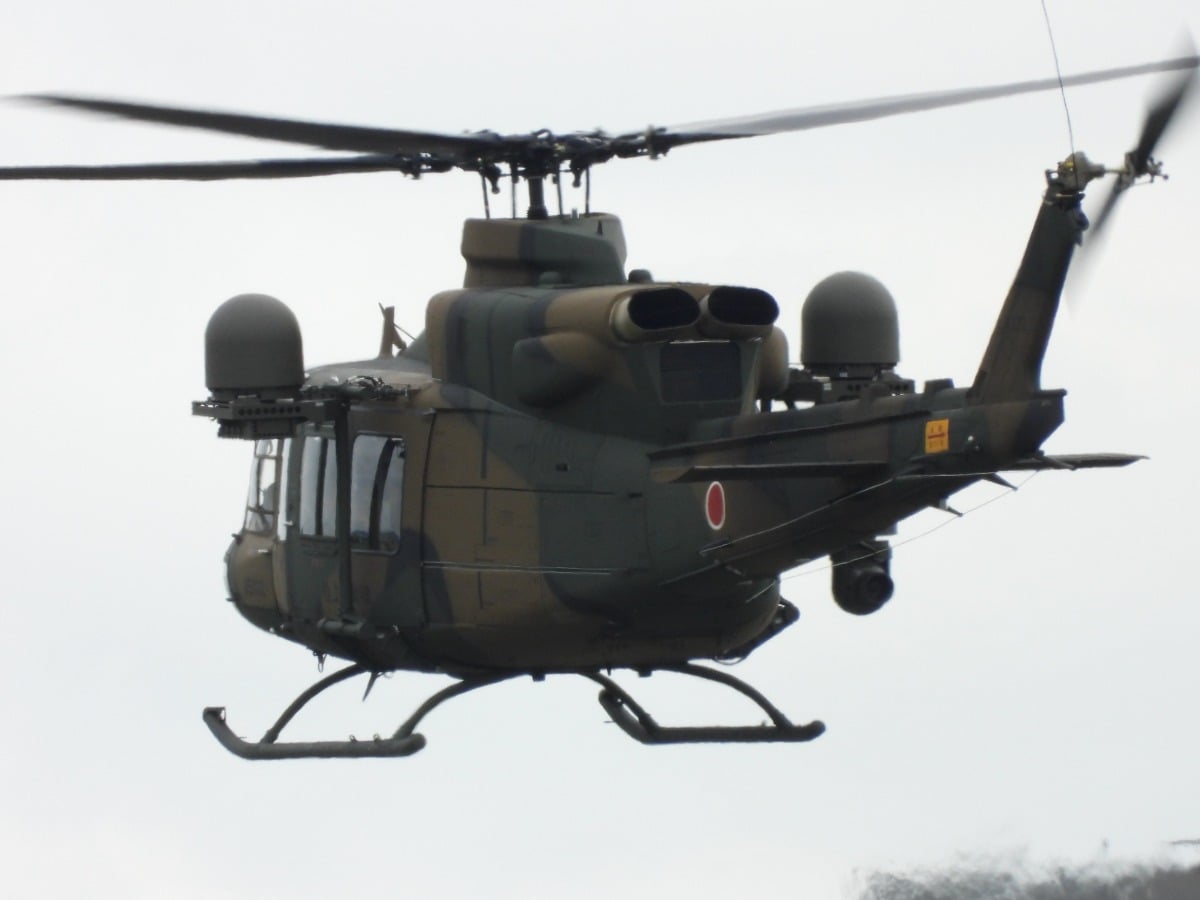
- A photographer using the handle nobita0114 documented a previously unseen JGSDF UH-2 modification with dual dome antennas.
- Other users noted the same aircraft had been photographed on the ground with this equipment as early as January 2026.
Japan’s military has apparently been flying a helicopter modification nobody outside a small circle of aviation watchers knew existed, until a Japanese photographer caught the aircraft airborne and posted the images online.
A user posting under the handle nobita0114 published photographs on X showing a Japan Ground Self-Defense Force UH-2 utility helicopter in flight fitted with two bulbous, dome-shaped antennas mounted on top of its cabin roof, a configuration that had not previously been documented flying in public. The paired dome shape is the kind of detail that would immediately catch a defense analyst’s eye, since signals intelligence platforms, aircraft built to detect and locate the source of an enemy radio or radar transmission, commonly rely on two or more separated antennas working together to triangulate exactly where a signal originated, a direction-finding technique used across numerous dedicated SIGINT aircraft flown by multiple air forces worldwide.
That resemblance alone does not confirm this UH-2 carries any signals intelligence role, since paired antenna domes also appear on systems built for entirely different purposes, but it explains why the photographs drew immediate attention once nobita0114 posted them.
The post quickly drew attention from other Japanese aviation enthusiasts, with users posting under the handles asura0998822 and chageimgur quoting the original images on July 4 and 5, 2026, and offering a more specific explanation for the hardware than the SIGINT resemblance alone would suggest. The user asura0998822 noted in a reply that the same airframe had previously been photographed sitting on the ground with this equipment already installed back in January, meaning roughly six months passed between the modification first being spotted and nobita0114’s images confirming the aircraft actually flying with the hardware attached, a gap that poster suggested reflected how long the modification took to clear for airborne use.
The UH-2 itself is Japan’s newest utility helicopter, a militarized derivative of the Subaru Bell 412EPX built jointly by Subaru Corporation and Bell Textron specifically to replace the Japan Ground Self-Defense Force’s aging fleet of UH-1J helicopters, an older type that had climbed to an average age of roughly 22 years across its 130 examples by the time UH-2 deliveries began in 2022. Powered by twin Pratt & Whitney Canada engines and built around a four-blade composite main rotor, a detail that distinguishes it visually from the older two-blade UH-1J it is replacing, the UH-2 was designed for utility transport and disaster relief missions across Japan’s often mountainous and island-heavy terrain, and the program has continued adding aircraft to the fleet in the years since that first 2022 delivery.
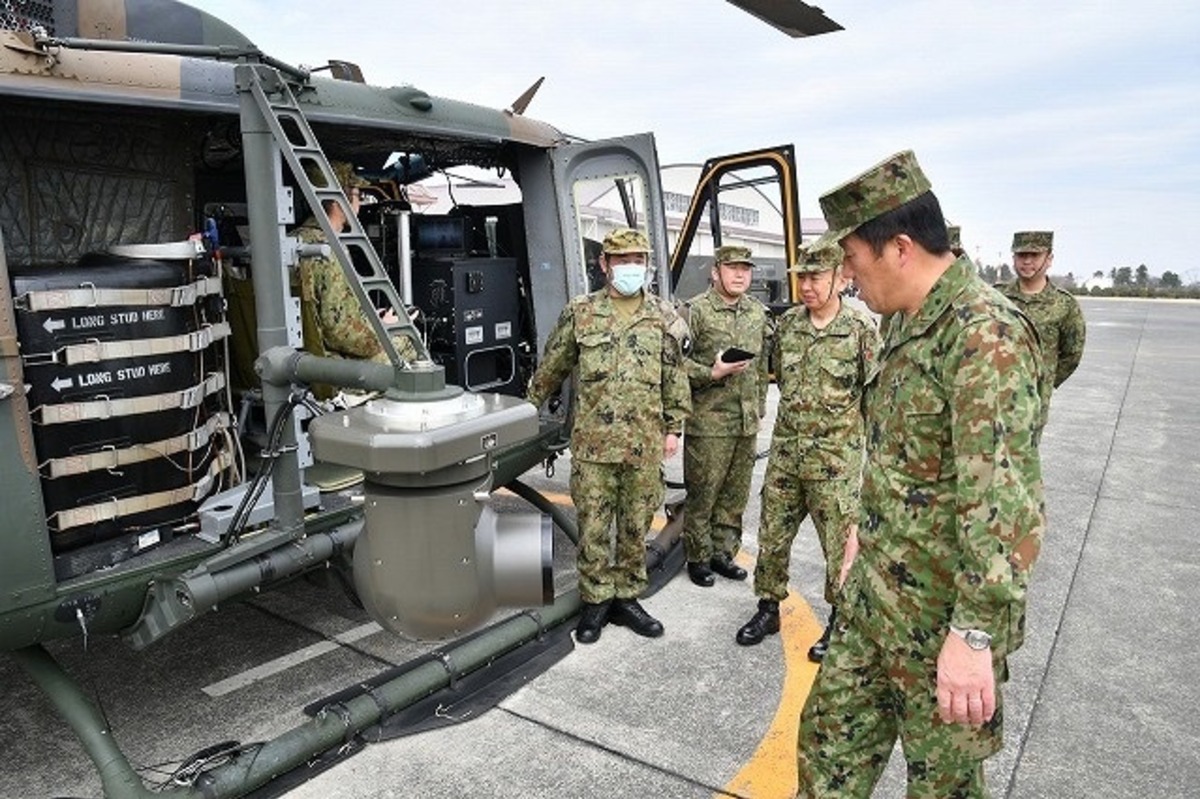
The user chageimgur offered the most detailed technical read of nobita0114’s photographs, and that account’s explanation points toward a data relay function rather than a signals intelligence role, identifying the antenna configuration using the Japanese term HeriSAT and situating it against an existing system Japan’s regional flying squadrons already operate today. According to that account, each of Japan’s regional aviation groups currently keeps one utility helicopter equipped with a system called HeliTele, a camera package that conducts aerial reconnaissance over a disaster zone and feeds live footage that gets distributed not just to military commanders but occasionally to television broadcasters covering the disaster. Chageimgur separately shared photographs of ground crew and officers inspecting a large sensor turret mounted beneath a helicopter’s side, consistent with the kind of stabilized camera ball that a system like HeliTele would need to capture usable aerial video, and argued that with drone technology now mature enough to handle this mission, Japan should consider handing the disaster-reconnaissance role over to unmanned aircraft entirely, freeing utility helicopters like the UH-2 and UH-60JA for the rescue and transport missions that only a crewed aircraft can perform.
Neither account amounts to an official confirmation from Japan’s Ministry of Defense, Ground Self-Defense Force, or Subaru Corporation, and both possibilities share the same underlying uncertainty that defines nearly every open-source military aviation sighting, that a photograph taken from the ground cannot by itself distinguish between two systems that might look outwardly similar while serving very different missions.