

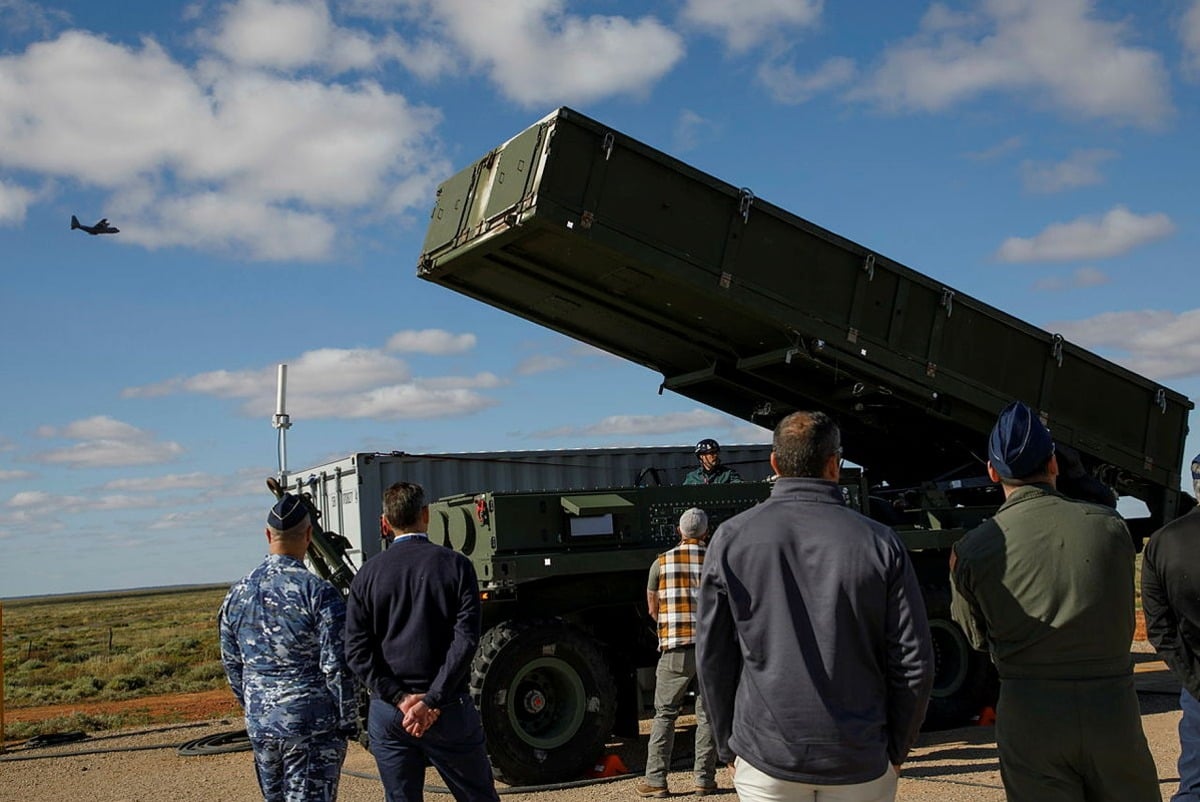
- Australia's Department of Defence announced on July 9, 2026 a live-fire test of a prototype ground-based air defense system conducted in June at Woomera Test Range.
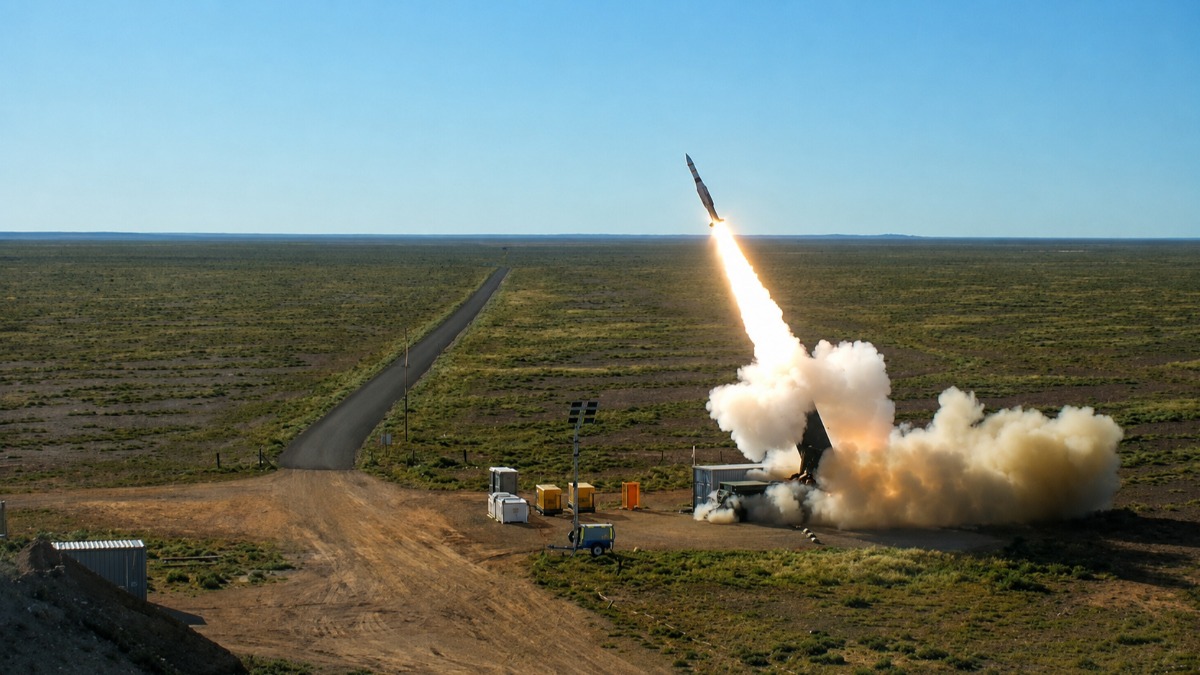
- The test used a CEA Technologies radar, a Virtualised Aegis Weapon System, and a Royal Australian Navy SM-2 missile to intercept a cruise missile target.
Australia has fired a live missile from a prototype ground-based air defense system for the first time, hitting a cruise missile target at the remote Woomera Test Range in South Australia and marking the debut pairing of an Australian-made radar with the U.S. Navy’s Aegis Combat System.
The Department of Defence in Canberra announced the test on July 9, 2026, though the actual firing happened the previous month during Exercise Taipan Strike 2026, known as TSTK26. The government kept the details under wraps until this week, and the timing of the disclosure was not incidental. Just days earlier, China’s navy test-fired a submarine-launched ballistic missile in the Pacific, a launch that renewed political pressure on Canberra over gaps in Australia’s air defenses and prompted opposition warnings that military bases sat dangerously exposed, according to The Nightly.
The system tested at Woomera used a Phased Array Antenna radar built by Canberra-based CEA Technologies to detect and track the incoming cruise missile target, then fed that tracking data into a Virtualised Aegis Weapon System, the software backbone of the same Aegis Combat System that equips U.S. Navy destroyers and Australia’s own Hobart-class ships. That system directed a Standard Missile-2 (SM-2), a Navy interceptor that has served as the backbone of Western fleet air defense for decades, fired from a trailer-mounted launcher called the Expeditionary Launch System, or Derringer, that can be towed into position on the ground rather than fired from a warship’s deck. The missile intercepted and destroyed the target, according to the Department of Defence.
What made the test notable was not just that it worked, but that the pieces involved had never been linked together before. Aegis has spent decades as a shipborne system, built to track dozens of targets simultaneously from a warship’s radar and steer interceptors toward the most dangerous ones first. Moving that same command-and-control software onto a mobile, land-based configuration and marrying it to an Australian radar and a wheeled launcher represents a genuine engineering leap, one the Department of Defence described as a first-of-type integration between a CEA radar and the Aegis Combat System.
Lockheed Martin, which builds and sustains Aegis for the U.S. Navy and a handful of allied fleets including Japan and South Korea, worked directly with CEA Technologies to complete the integration. The collaboration reflects a broader pattern in Australian defense procurement, where the government has pushed contractors to pair proven American systems with locally built components rather than importing complete foreign systems outright, a strategy meant to build domestic manufacturing capacity alongside military capability.
“This first-of-type live fire test is a practical demonstration of how the Australian Defence Force is working with its partners and local industry to deliver crucial defence capabilities, growing our sovereignty and helping to keep Australians safe,” said Deputy Prime Minister Richard Marles.
The exercise was sponsored by the Royal Australian Air Force and carried out with the Royal Australian Navy, the Capability Acquisition and Sustainment Group, and both American and Australian industry partners, according to the Department of Defence. That breadth of participation signals how seriously Canberra is treating the medium-range air defense gap. Australia currently relies heavily on shorter-range systems and naval assets for air and missile defense, and the country has no dedicated, fielded ground-based system capable of intercepting fast, low-flying cruise missiles at range, a shortfall that has drawn increasing attention as regional missile capabilities expand.
“Taipan Strike 26 is an Air Force-led Integrated Air and Missile Defence activity designed to explore medium range air defence capability options to inform capability acquisition decisions,” said Air Marshal Stephen Chappell, Chief of Air Force.
“The success of the Taipan Strike 26 live-fire event is further evidence of the strength of our partnerships, as well as our integral relationship with industry,” Chappell said.
Defence Industry Minister Pat Conroy tied the test directly to Australia’s 2026 National Defence Strategy, which identifies an increasingly complex regional security environment and calls for modernized capabilities to counter advanced threats. The Department of Defence has been explicit that the Woomera test was not a finished weapon system but a prototype meant to reduce technical risk and validate performance ahead of a future acquisition decision, meaning no contract, timeline, or funding commitment has been announced for turning this configuration into a fielded capability.
Still, the successful intercept gives Australian officials concrete evidence to point to as they weigh options for closing the gap. Ground-based medium-range air defense sits in an awkward space between short-range point defense systems, which protect a single base or unit, and long-range systems built to counter ballistic missiles across an entire region. Cruise missiles are precisely the threat that space is designed to counter, since they fly low and fast enough to slip under some radar coverage while lacking the predictable ballistic arc that missile defense radars are built to track.