

- Carahsoft of Reston, Virginia, was awarded a $12,000,000 maximum contract for ICBM industrial base and supply chain risk assessment software.
- The Air Force Nuclear Weapons Center at Hill Air Force Base, Utah, will oversee the contract, with work expected complete by July 2029.
The nuclear missiles sitting in underground silos across the American heartland run on hardware that is more than five decades old, and keeping the parts flowing to maintain them received a $12 million boost in software support.
Carahsoft, a government technology reseller based in Reston, Virginia, has been awarded a firm-fixed-price contract worth up to $12,000,000 to support the Intercontinental Ballistic Missile enterprise, according to the contract announcement. An intercontinental ballistic missile, or ICBM, is a land-based nuclear weapon capable of striking targets thousands of miles away, and it forms one leg of the American nuclear triad alongside submarine-launched missiles and bomber aircraft.
The contract funds software services designed to identify gaps and assess risks across the ICBM industrial base and its supply chains, meaning the sprawling network of manufacturers, subcontractors and parts suppliers the military depends on to keep the missile force operational and ready to launch on short notice.
The company operates as a value-added reseller, a middleman that connects federal agencies with commercial technology products and then manages the contracting, licensing and support that comes with deploying them, a business model that has made Carahsoft one of the largest technology suppliers to the U.S. government even though most Americans have never heard its name, according to background published on the company’s own website. That distinction matters here because the contract’s real purpose sits inside the software itself: giving Air Force officials a clearer, more current picture of which suppliers in the ICBM supply chain are at risk of falling behind, running out of critical parts or disappearing altogether, a problem that has grown more urgent as the equipment supporting America’s oldest nuclear missile fleet keeps aging.
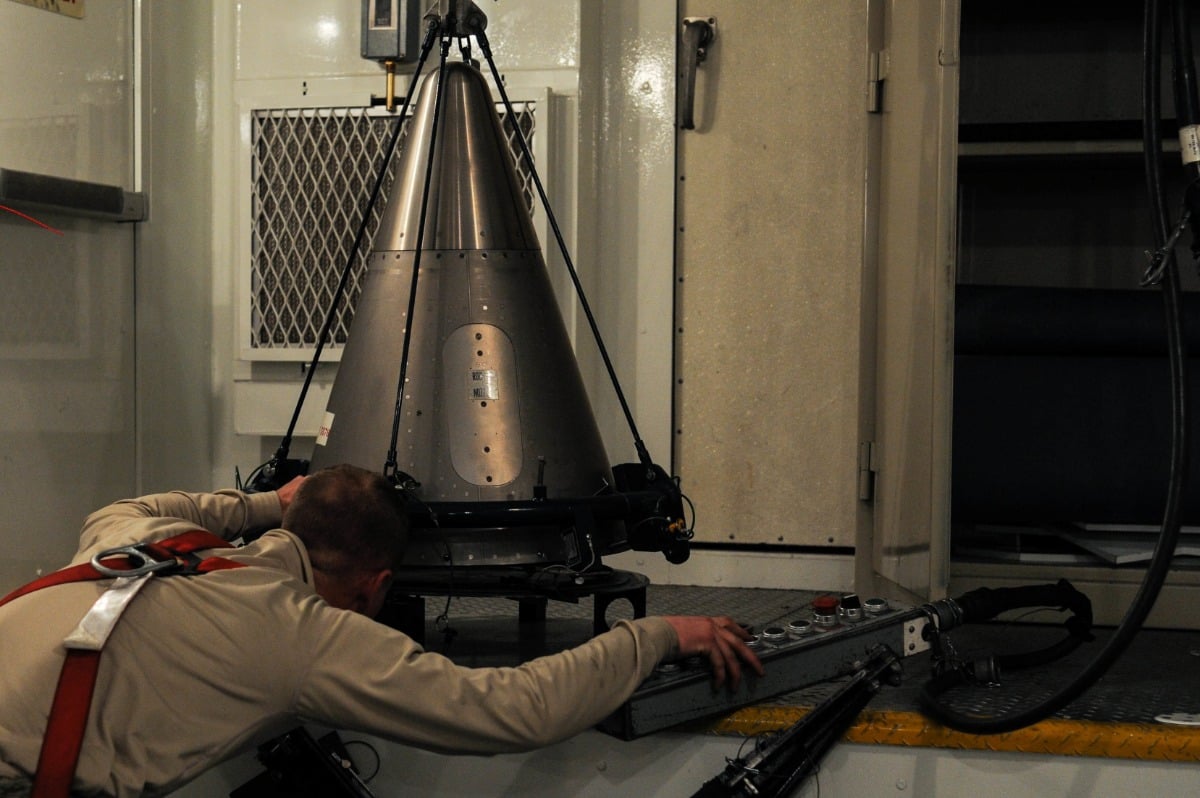
That missile fleet is the Minuteman III, the only ICBM currently in active U.S. service and a weapon system that has now been standing alert in silos across states including Montana, North Dakota and Wyoming for more than 50 years. Keeping a five-decade-old missile system combat-ready means constantly hunting for replacement parts that manufacturers may have stopped producing years or even decades ago, a challenge defense officials describe as mounting supply chain pressure that includes the possible discontinuation of critical components. The Air Force has been working to replace Minuteman III with a new missile called the LGM-35A Sentinel, previously known as the Ground Based Strategic Deterrent, under a development contract with Northrop Grumman potentially worth $13.3 billion, according to ExecutiveGov, but Sentinel is still years from full deployment, which means the aging Minuteman III force needs sustained industrial base support in the meantime.
This is not the first time the Air Force has bought software specifically to track that kind of risk. Just weeks before the Carahsoft award, the Air Force Nuclear Weapons Center gave a $31 million contract to Govini, a company that rebranded as AIR, for a nearly identical mission: an integrated software-as-a-service platform to identify current and future ICBM supply chain gaps and assess risk, also to be performed at Hill Air Force Base, Utah, according to reporting from ExecutiveBiz and OrangeSlices AI. That earlier deal, worth roughly two and a half times the size of the Carahsoft contract, extended a relationship AIR’s Enterprise Readiness platform began building with Air Force Global Strike Command in 2022. The two contracts appear to run on parallel tracks rather than compete directly, and the Air Force’s own contract notice for the Carahsoft award does not explain how the two efforts relate or whether Carahsoft is delivering a different software product to a different set of program offices within the same ICBM enterprise.
The financial details of the new Carahsoft contract show a structure common to large federal technology deals. The $12,000,000 figure represents a ceiling rather than a guaranteed payout, the maximum the government could spend under the agreement rather than money already committed. Only $731,250 in Fiscal Year 2026 research, development, test and evaluation funds is being obligated at the time of the award itself, with additional funding expected to follow as the Air Force issues specific task orders against the contract over its roughly three-year lifespan. The deal was competitively bid, with the Air Force receiving four offers before selecting Carahsoft, a level of competition that stands in contrast to sole-source defense awards and suggests multiple technology providers are now chasing contracts tied to nuclear modernization and sustainment work.
Work under the contract will be performed at Hill Air Force Base in Utah, home to the Air Force Nuclear Weapons Center, the organization responsible for managing the Air Force’s nuclear weapons programs including both the aging Minuteman III force and the incoming Sentinel replacement. The base has become enough of a hub for this mission that the Air Force Nuclear Weapons Center broke ground on a dedicated Software Mission Assurance Center there, a facility intended to bring government and contractor software developers together under one roof to build and maintain the digital backbone of the Sentinel program, according to ExecutiveGov’s coverage of the 2024 groundbreaking. The Carahsoft contract is scheduled to run through July 2029, putting its conclusion roughly in the same window the Air Force has targeted for major milestones in the broader Sentinel transition.
None of this software fixes a missile or replaces a single failing part on its own. What it does is give the people responsible for America’s land-based nuclear deterrent a better chance of seeing a supply chain crisis coming before a critical component simply stops being available, a quiet kind of insurance policy for a weapons system the country still depends on every single day, whether the public ever thinks about it or not.