

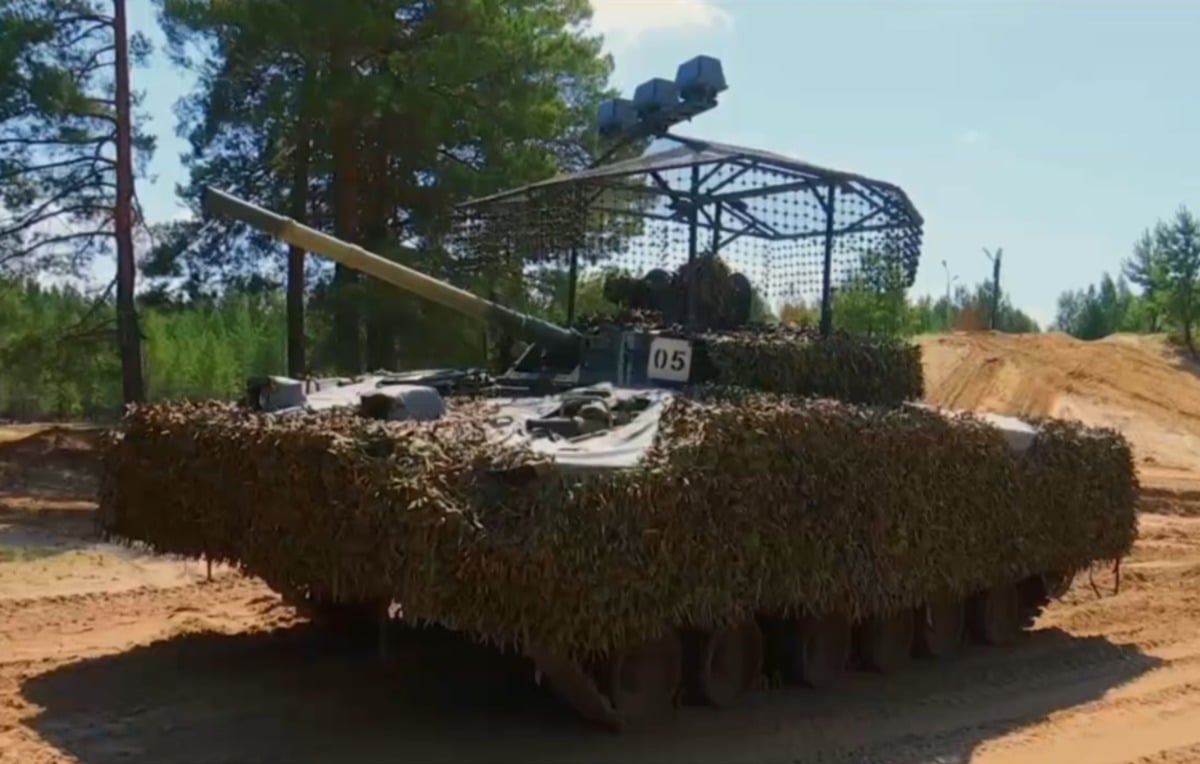
- Rostec's High Precision Systems division shipped a new batch of BMP-3 infantry fighting vehicles to the Russian army, claiming increased volume compared to prior months.
- Bekhan Ozdoev, Rostec's weapons cluster industrial director, said shipment volumes have tripled since the start of the war, citing new underbelly and armor upgrades.
Russia’s state defense conglomerate has delivered another batch of infantry fighting vehicles to its army, and according to the company that builds them, production has now tripled since the start of the full-scale invasion of Ukraine more than four years ago.
Rostec, Russia’s state-owned industrial and defense holding company, announced that its High Precision Systems division shipped a new consignment of BMP-3 infantry fighting vehicles to Russian forces, with the company claiming shipment volumes have grown again compared to previous months.
The BMP-3 is a tracked armored vehicle designed to carry infantry into combat while providing direct fire support, a role NATO military planners typically describe as an infantry fighting vehicle rather than a simple troop transport. Unlike a basic armored personnel carrier, which mainly shields soldiers from small arms fire and shrapnel while moving them around a battlefield, an infantry fighting vehicle like the BMP-3 carries its own significant firepower and is expected to fight alongside the troops it delivers, engaging enemy vehicles, fortified positions, and infantry directly. The BMP-3 traces its design back to the late Soviet era, first entering service in the late 1980s, and it has remained in continuous production and export for decades, making it one of the most widely fielded infantry fighting vehicles in the world alongside vehicles like the American Bradley and the Russian BMP-2 it eventually succeeded in Russian service.
Rostec said each vehicle in this latest batch comes equipped with additional protective measures covering the hull from all directions, including from above, a detail that speaks directly to lessons learned from more than four years of grinding warfare in Ukraine. Top-attack threats, meaning munitions and drones that strike a vehicle’s typically thinner upper armor rather than its heavily protected front and sides, have proven devastating against armored vehicles on both sides of the conflict, particularly as shoulder-fired anti-tank weapons and increasingly cheap first-person-view attack drones have become fixtures of the modern battlefield. Reinforcing overhead protection reflects an industry-wide shift among armored vehicle manufacturers responding to that threat, one that Western militaries have also grappled with in evaluating their own fleets.
According to Rostec, the modernized electronics and internal systems on the newest BMP-3 variants have noticeably improved the vehicle’s mobility and the effectiveness of its weapons systems, and all vehicles in the current batch are fitted with an upgraded electronic warfare system. Electronic warfare equipment on a modern armored vehicle typically works to jam or disrupt the radio signals and guidance systems that control incoming drones and remotely detonated explosives, a capability that has become increasingly critical as drones have transformed from a battlefield novelty into one of the primary threats facing armored vehicles in Ukraine, with both Russian and Ukrainian forces relying heavily on small first-person-view drones to strike vehicles that would otherwise be difficult to hit with traditional weapons.
The scale of the claimed production increase carries its own significance for understanding how deeply Russia’s defense industrial base has adapted to a prolonged war. Bekhan Ozdoev, industrial director of Rostec’s weapons cluster and a member of the bureau of Russia’s Union of Machine Builders, framed the growth as a direct response to sustained wartime demand.
“Since the start of the special military operation, the volume of products shipped by High Precision Systems has increased every year. Today it already exceeds previous figures threefold,” said Bekhan Ozdoev, industrial director of Rostec’s weapons cluster.
“At the same time, taking front-line experience into account, the design of combat vehicles is also changing. This year the BMP-3 received a number of important new improvements: reinforced protection of the hull bottom against mine blasts, as well as improved armor fragmentation resistance on the rear and front sections,” said Ozdoev.
Russian state defense manufacturers have periodically published production claims throughout the war that outside analysts have found difficult to confirm independently, given the closed nature of Russia’s defense industrial reporting and the strategic incentive to project strength regardless of actual battlefield conditions.
Underbelly mine protection has taken on particular importance in Ukraine, where buried anti-tank mines and improvised explosive devices have accounted for a significant share of destroyed and damaged armored vehicles on both sides, since a vehicle’s underside is typically its most vulnerable surface and one of the hardest areas to armor without adding crippling weight. Strengthening that protection, alongside the added fragmentation resistance on the hull’s front and rear sections, points to a vehicle design increasingly shaped by specific combat losses documented over the course of the war rather than by peacetime engineering assumptions.
None of Rostec’s claims in this announcement include a specific number of vehicles delivered in the latest batch, an exact timeline for the stated production increase, or independently verifiable figures confirming the threefold growth the company describes. Those gaps make it difficult to assess the real scale of Russia’s BMP-3 output beyond the company’s own characterization of steady, wartime-driven growth.
For a vehicle first designed during the final years of the Soviet Union, the BMP-3’s continued evolution, top armor, mine-resistant floors, and jamming equipment bolted onto a decades-old chassis, illustrates a broader pattern playing out across Russia’s defense industry: old platforms surviving not because they remain cutting edge, but because a prolonged war has forced constant, incremental adaptation onto hardware that was never designed for the threats it now faces.
Oryx, a Netherlands-based open-source intelligence group that documents equipment losses using verified photos and video, has confirmed approximately 819 BMP-3 losses on the battlefield since 2022. Because Oryx counts only losses backed by visual evidence, the group itself notes the real total is almost certainly higher.