

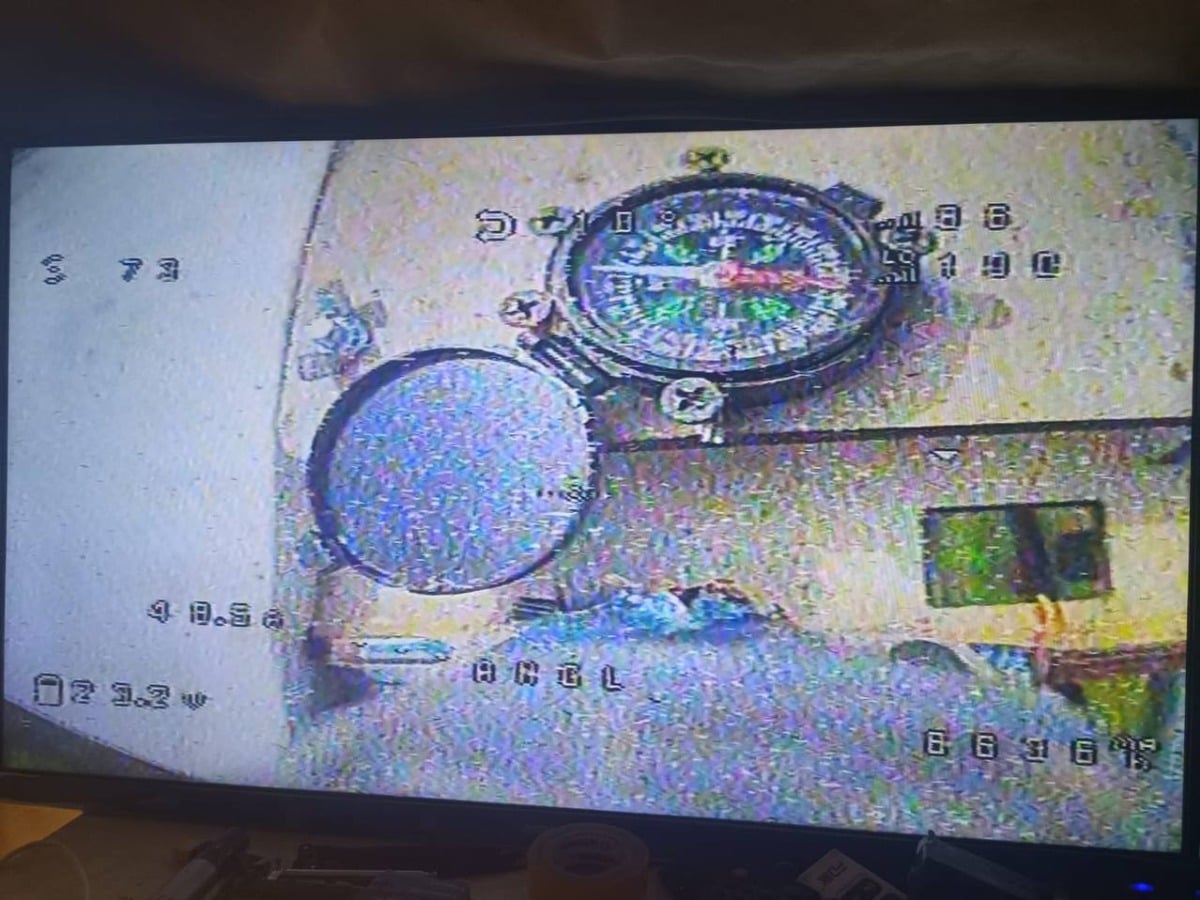
- Ukrainian defense advisor Serhii Beskrestnov said Russia fitted Molniya attack drones with a magnetic compass read periodically by an onboard camera.
- The modification is designed to help the drone hold its course when satellite navigation signals are jammed or unavailable.
Somewhere in a Russian drone factory, an engineer looked at a satellite-jamming crisis that has cost the Kremlin countless drones and countless rubles, and solved it with the same tool Boy Scouts use to find their way out of the woods.
A Ukrainian radio technology specialist says Russia has started bolting a basic magnetic compass onto its cheap Molniya attack drones, with an onboard camera that periodically tilts down to read it, giving the drone a way to hold its bearings even when every satellite signal it depends on has been jammed into static.
Serhii “Flash” Beskrestnov, an advisor to Ukraine’s Minister of Defense and the man Ukrainian soldiers turn to when they find a weird new piece of Russian drone hardware in a field, broke the news on his Telegram channel with the kind of deadpan delivery that made it instantly quotable.
“Skolkovo technologies continue to develop. A compass was installed on the Molniya drone, and the camera periodically tilts down to look at it,” Beskrestnov wrote.
That reference to Skolkovo, the glossy, Kremlin-funded innovation hub Russia has spent years marketing as its answer to Silicon Valley, is doing a lot of comedic work in that sentence, and Beskrestnov knew exactly what he was doing when he wrote it. Skolkovo exists to produce headlines about artificial intelligence, quantum computing, and next-generation semiconductors. What it apparently also now produces, at least by association, is a drone whose answer to a multibillion-dollar electronic warfare arms race is a compass needle and a camera that glances at it every so often, the same basic navigation trick a person could improvise with a magnet and a smartphone.
Most drones lean on GPS or Russia’s own GLONASS satellite network to hold a course, and both Ukrainian and Russian electronic warfare units have spent the war jamming and spoofing exactly those signals to knock enemy drones off target. A magnetic compass cannot be jammed by any radio system on Earth, because it isn’t listening to a signal at all, it’s just reading the planet’s own magnetic field, which makes this cardboard-and-plywood attack drone accidentally immune to an entire category of expensive countermeasure that Ukraine has poured serious money and engineering effort into building.
Russian forces have already fielded versions running on fiber-optic control cables, immune to jamming because a physical wire simply cannot be interfered with wirelessly, though the cable’s weight limits range and payload. Beskrestnov also reported earlier this month that a Molniya struck a Ukrainian facility with no control antenna whatsoever, relying purely on an onboard camera and computer to navigate and pick its own target, a step he linked to Russia training autonomous targeting software on an earlier drone platform before rolling it out to the cheaper, more disposable Molniya fleet. Add a compass to that resume and the drone starts to resemble less a cutting-edge weapon and more a scrappy garage project that keeps outsmarting people with much bigger budgets.
Beskrestnov has estimated Russia can build 10 to 15 Molniya drones for the price of a single Supercam reconnaissance drone, a pricier Russian platform that can run close to $100,000 a unit, and that math is exactly why Russian engineers keep bolting duct-tape-simple fixes onto an airframe made largely of plywood and aluminum tubing rather than starting over with something sleeker and more expensive.
Russian military analyst Ian Matveev, who has spent the war tracking exactly this kind of battlefield improvisation, could not resist the obvious punchline once Beskrestnov’s post started circulating.
“I’m sure in the documents it says: Navigation equipment based on the principles of Earth’s magnetism,” Matveev said.
It is, technically, a completely accurate line item, and that’s what makes it funny. Somewhere in a Russian defense procurement filing, in among references to advanced avionics and precision-guided systems, sits a component whose actual job description is “points at magnetic north,” bolted to a drone built to be cheap enough that losing a few dozen of them barely registers as a rounding error.
None of this makes the Molniya harmless, and a compass-guided drone flying toward a Ukrainian position is still a genuine threat regardless of how low-tech its backup navigation looks on paper.