

- The U.S. awarded Lockheed Martin roughly $439 million for ATACMS missile production funded by Taiwan's Foreign Military Sales program.
- The contract's total value is expected to reach nearly $900 million, with work in Grand Prairie, Texas, completing by February 2031.
The U.S. Army handed Lockheed Martin roughly $439 million to begin building the Army Tactical Missile System, known as ATACMS, along with the launcher hardware needed to fire it, and once the two sides finish hammering out the final terms, the full agreement is expected to grow to nearly $900 million.
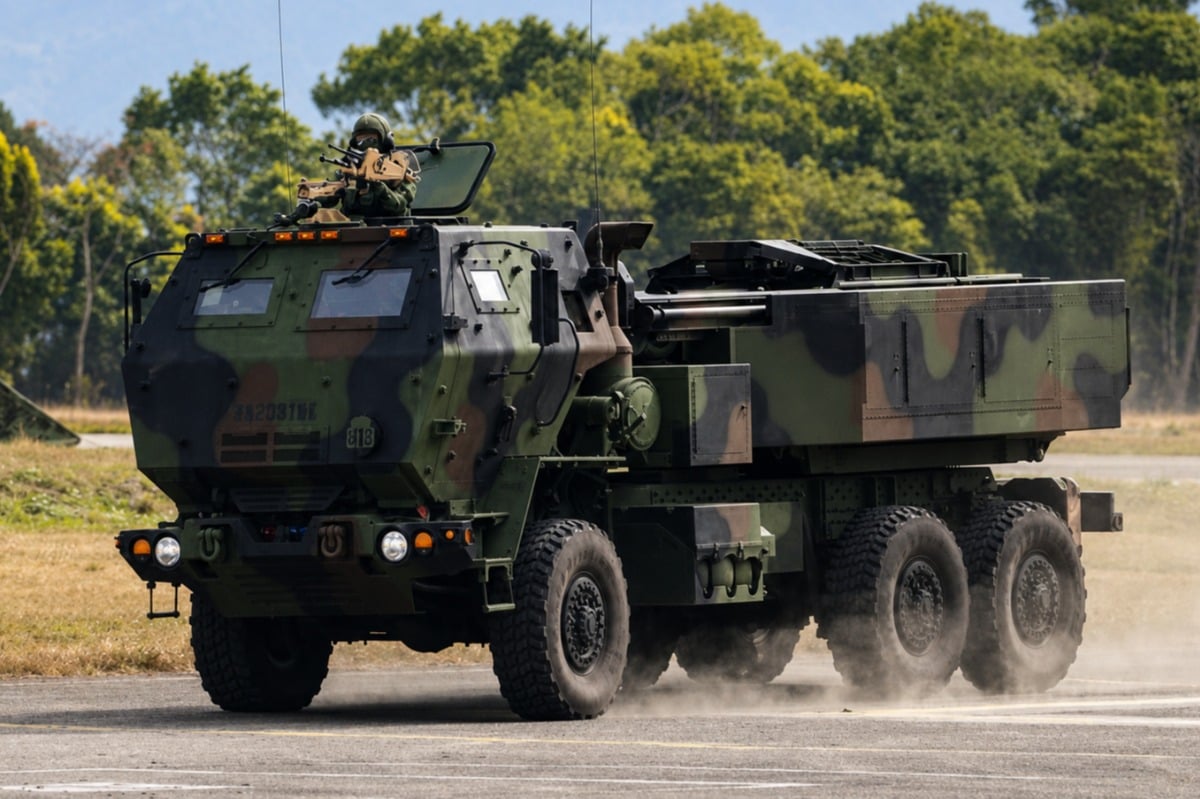
ATACMS is a surface-to-surface ballistic missile the Army fires from the same HIMARS launcher trucks that have become a household name since Ukraine started using them to strike Russian ammunition depots and command posts far behind the front line. Unlike the shorter-range guided rockets HIMARS more commonly fires, ATACMS travels on a ballistic trajectory, launching in a steep arc before coming back down on its target, and the missile’s range depends on which version a customer buys, with older variants reaching roughly 300 kilometers (186 miles) and newer M57 variants extending closer to 500 kilometers (311 miles), according to a source familiar with Taiwan-U.S. military cooperation cited by the Liberty Times.
The Pentagon structured this deal as what the government calls an undefinitized contract action, a type of agreement that lets a contractor start manufacturing immediately while the two sides continue negotiating the final, fully agreed-upon price, a common approach when a customer needs production moving quickly rather than waiting months for every contract detail to be settled first. Lockheed Martin will carry out the work at its facility in Grand Prairie, Texas, the same plant responsible for manufacturing HIMARS launchers and a range of other Army missile systems, and the contract sets an estimated completion date of February 2031, a timeline that reflects how long it actually takes to scale up production of a sophisticated guided missile rather than simply increasing an assembly line’s speed. Notably, the government solicited only one bid and received one bid in return, underscoring that Lockheed Martin remains the sole domestic manufacturer capable of building ATACMS, leaving the Pentagon with no competitive alternative regardless of price.
The Army obligated the initial payment using this year’s Foreign Military Sales funds designated for Taiwan, the formal U.S. government mechanism that lets allied nations purchase American-made weapons with Washington’s direct oversight, meaning Taipei is footing the bill for this production run itself. Army Contracting Command at Redstone Arsenal in Alabama is managing the contract on the government’s behalf as the designated contracting activity.
This contract traces back to a much larger deal announced in December 2025, when the Trump administration approved the largest single U.S. weapons package Taiwan has ever received, an arms sale package valued at more than $11 billion. That package included 420 M57 ATACMS missiles, some of them the newer, longer-range variant, along with 82 additional HIMARS launcher systems and more than 1,200 precision-guided rockets, expanding Taiwan’s ATACMS arsenal more than fivefold compared to the smaller batch the island had already acquired in an earlier phase of the same long-range missile program. That earlier phase, which also included 29 HIMARS launchers and hundreds of precision-guided rockets, has already been substantially delivered, giving Taiwan a working baseline capability that this new production contract is now set to expand dramatically.
The People’s Liberation Army staged large-scale military exercises around Taiwan at the end of December, and Chinese state broadcaster CCTV specifically highlighted Taiwan’s HIMARS systems during that drill, with a soldier shown confirming target information on the launchers before simulating a strike sequence, according to a report reviewed by Taiwan’s Central News Agency.
Military analysts told the agency that Beijing views the expanded HIMARS and ATACMS arsenal as a genuine threat because the missiles could conduct what researchers call deep counterstrikes against Chinese rocket forces and logistics hubs, with one researcher at Taiwan’s Institute for National Defense and Security Research noting that an ATACMS fired from Taiwan’s outlying islands in the strait could threaten much of China’s Fujian Province and reach a target in roughly the same seven minutes it would take a Chinese long-range rocket to strike Taiwan in return.