

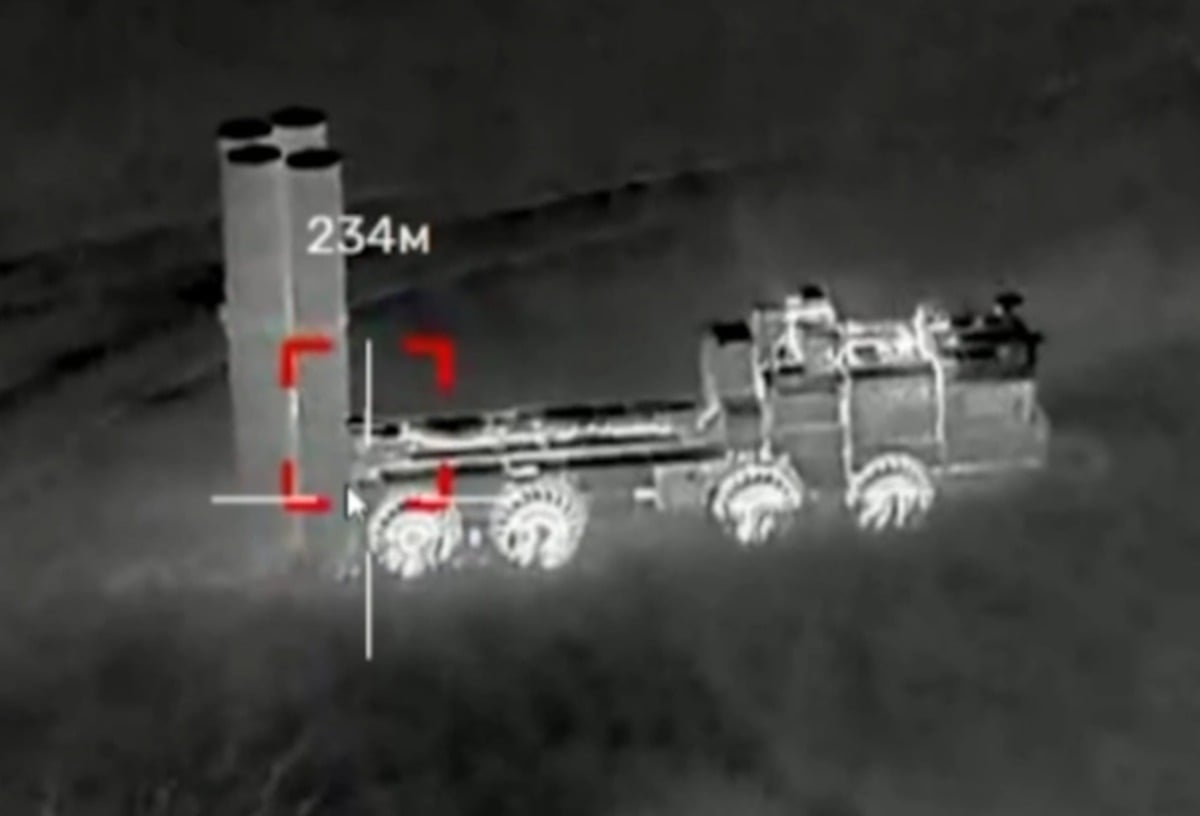
- Ukraine's Unmanned Systems Forces destroyed two Russian S-400 launchers on July 6, one in Bryansk and one hidden in Crimea.
- Commander Robert Brovdi said his forces also struck a Nebo-U radar in Crimea and hit 47 total military targets that night.
Robert Brovdi, the Ukrainian commander known by his call sign Madyar who leads the country’s Unmanned Systems Forces, said on social media that his units destroyed two launchers belonging to Russia’s S-400 Triumf long-range air defense system, along with a Nebo-U early-warning radar.
It is worth noting that one of the S-400 launchers was destroyed directly at its firing position in Russia’s Bryansk region by Ukraine’s Unmanned Systems Forces during the attack on Kyiv. These launchers are used to fire 48N6-series missiles at Kyiv, employed in a ballistic trajectory alongside 9M723 missiles from the Iskander system.
Russia first used the 48N6-series missile to strike ground targets in Ukraine in 2023, according to Defense Express, converting what was essentially expired training hardware into what analysts have described as an erzatz ballistic missile, and Ukraine’s own military intelligence directorate had already confirmed in December 2025 that Russia held a stockpile exceeding 400 of these converted missiles specifically earmarked for ground attack use.
Brovdi framed this week’s strikes as part of a much larger campaign his forces have run against Russian air defense infrastructure specifically, describing the night’s results directly.
“On the night of July 6, USF’s Birds successfully worked over 47 legitimate military targets in enemy rear areas and in the operational depth of the enemy. Among the most sensitive targets of the night, besides the blackout the occupiers declared in Crimea, were as many as six premium targets,” Brovdi said.
That single night’s tally fits a pattern Brovdi’s command has sustained for months under what he has publicly called an air defense reduction campaign, a Ukrainian term the commander has rendered in English roughly as targeting the systems that let Russia see and shoot down Ukrainian aircraft and drones before they reach their targets. Wikipedia’s own compiled record of Unmanned Systems Forces operations shows the unit destroyed 54 Russian air defense assets over the winter of 2025 into 2026, including 39 surface-to-air missile systems and 15 radar complexes, followed by another 41 units in March 2026 and 38 additional air defense assets in April 2026 alone, a running tally that has specifically included prior strikes on components of the same S-400 system, including its 92N6E radar, valued in that April operation alone at roughly $1.1 billion in destroyed Russian equipment.
The Unmanned Systems Forces, established as its own branch of Ukraine’s military on June 3, 2025, with Brovdi appointed its first commander, has grown from Brovdi’s original volunteer drone unit, founded with just 26 personnel in the desperate early months of the 2022 invasion, into a force that Brovdi’s own tracking systems credit with delivering more than 35 percent of Ukraine’s verified strikes against Russian forces while making up only 2.2 percent of the country’s total military personnel. That efficiency stems from the force’s ability to conduct precision strikes 1,500 to 2,000 kilometers (930 to 1,240 miles) into Russian territory, reaching targets that conventional artillery or shorter-range systems simply cannot touch, and it has made Brovdi’s command central to Ukraine’s broader strategy of degrading Russian military capability at its source rather than only along the immediate front line.
This week’s strikes arrived directly on the heels of one of the largest combined Russian assaults of the year, an overnight barrage on July 6 that saw Russia launch 419 separate weapons at Ukraine, including 23 Iskander-M ballistic missiles alongside cruise missiles and attack drones, an attack during which Ukraine’s air force failed to intercept a single ballistic missile due to an acute shortage of interceptors for its Patriot air defense system.
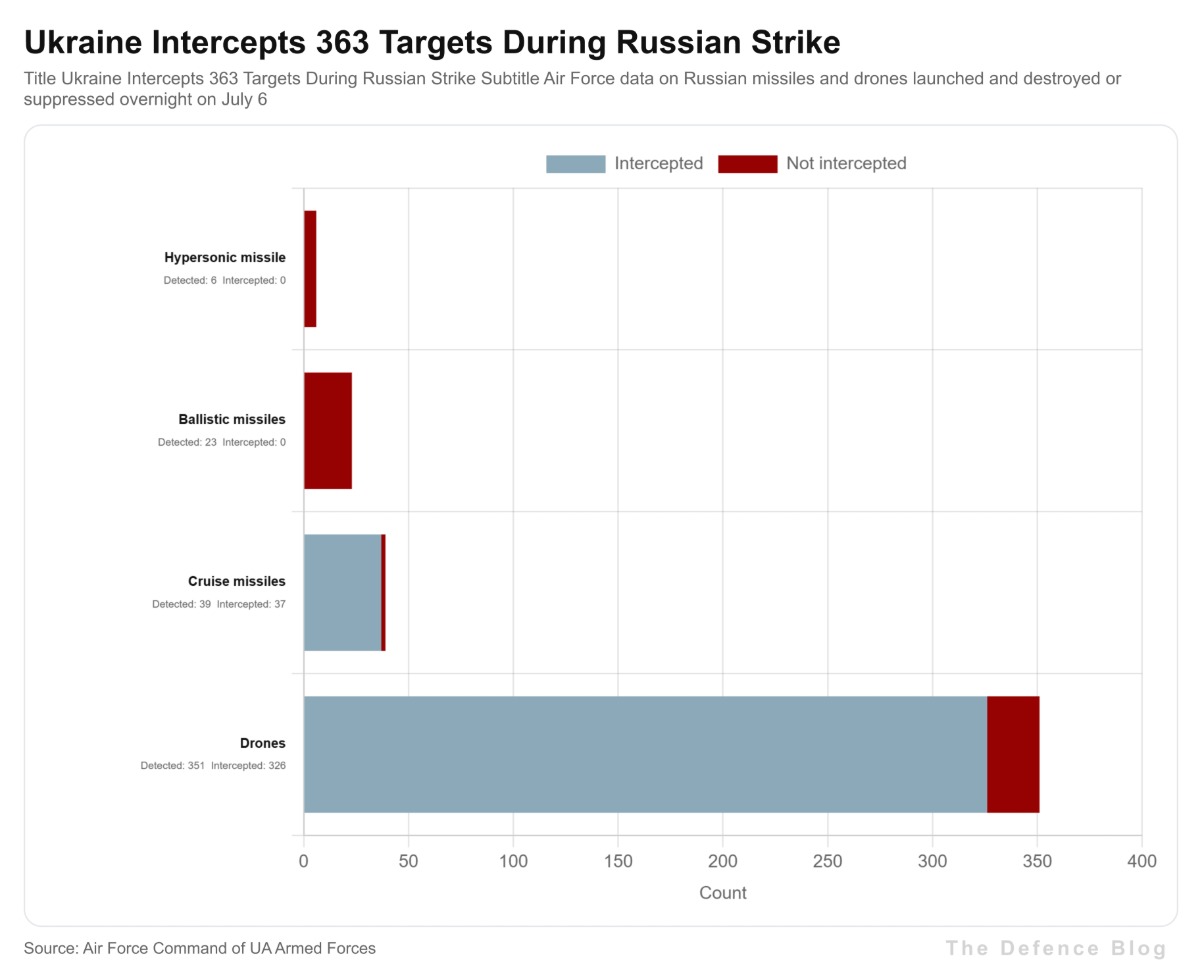
Hunting down the specific launchers responsible for firing ballistic-style weapons at Kyiv represents one concrete way Ukraine can respond to that interceptor shortage without waiting for new Patriot missiles to arrive, since a destroyed launcher cannot fire another missile regardless of how many interceptors Ukraine has left to shoot one down.