

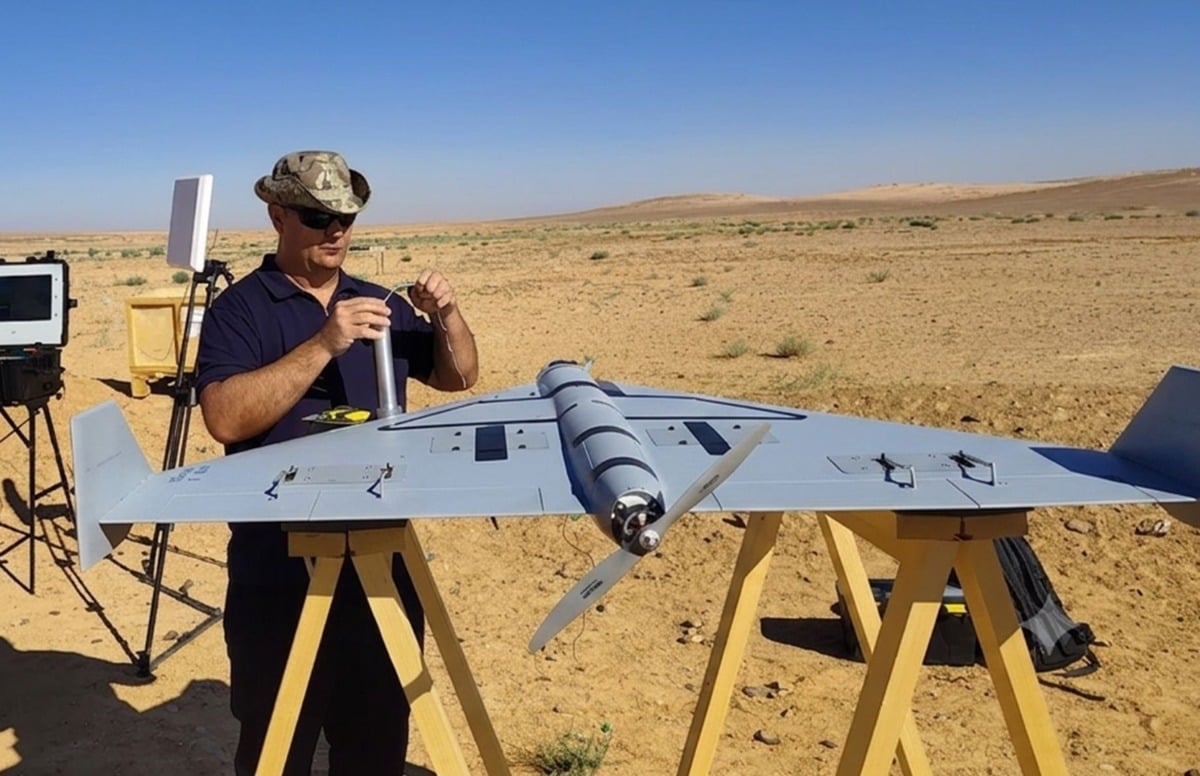
- Samel-90 conducted a live-fire test of its SAMJET one-way attack drone for a potential Middle Eastern customer, per Fabio Desolei.
- The drone launched from a ground launcher, using a rocket booster, and destroyed a designated target with a live warhead.
A small Bulgarian company that spent six decades building radios and radar jammers has proved its new attack drone can actually kill something, detonating a live warhead against a marked target in front of a potential Middle Eastern buyer.
Bulgarian defense manufacturer Samel-90 recently conducted a live-fire field demonstration of its SAMJET one-way attack drone, launching the weapon from a ground-based launcher and destroying a designated target, according to company representative Fabio Desolei, who said the test was carried out specifically to showcase the system for a potential customer in the Middle East.
A one-way attack drone, sometimes called a loitering munition or kamikaze drone, is designed to fly directly into its target and detonate on impact rather than returning to base, a category of weapon that has become one of the defining tools of modern warfare after Russia’s extensive use of Iranian-designed Shahed-136 drones throughout its invasion of Ukraine.
Samel-90 is not a startup chasing a trend, even though the SAMJET only entered its product lineup in 2024. Based in the town of Samokov, the company has operated in Bulgaria’s defense industry since 1964, originally established to supply the Bulgarian Army with specialized electronics during the Cold War, and it built its reputation over the following decades on radar systems, communications equipment, and electronic warfare technology rather than aircraft of any kind.
That history changed when Samel-90 unveiled the SAMJET’s design at the HEMUS International Defence Exhibition in Sofia in June 2024, developed in partnership with Swiss drone specialist ALIDRONE SAGL, and the company moved quickly from concept to manufacturing, announcing the start of full-scale production just two months later in August 2024, a pace that reflected how aggressively global demand for loitering munitions had grown as the war in Ukraine demonstrated their battlefield value.
The SAMJET’s design bears an unmistakable resemblance to the Shahed-136, sharing the same delta-wing configuration that gives both drones a compact, aerodynamic profile suited to high-speed flight and reduced radar visibility. The Bulgarian drone launches with an autonomous takeoff assisted by a rocket booster rather than requiring a runway, reaches typical cruising speeds around 120 kilometers per hour (75 mph) with a maximum speed of roughly 250 kilometers per hour (155 mph), and can fly out to a range Samel-90 has described as several hundred kilometers depending on the specific mission profile. A forward-facing camera stabilized on three axes lets an operator zoom in and visually confirm a target during the final phase of an attack, while the drone’s real-time position and camera feed display on a map at a shared ground control station capable of operating multiple SAMJET units, a setup designed to let a single crew manage several drones without needing separate control equipment for each one.
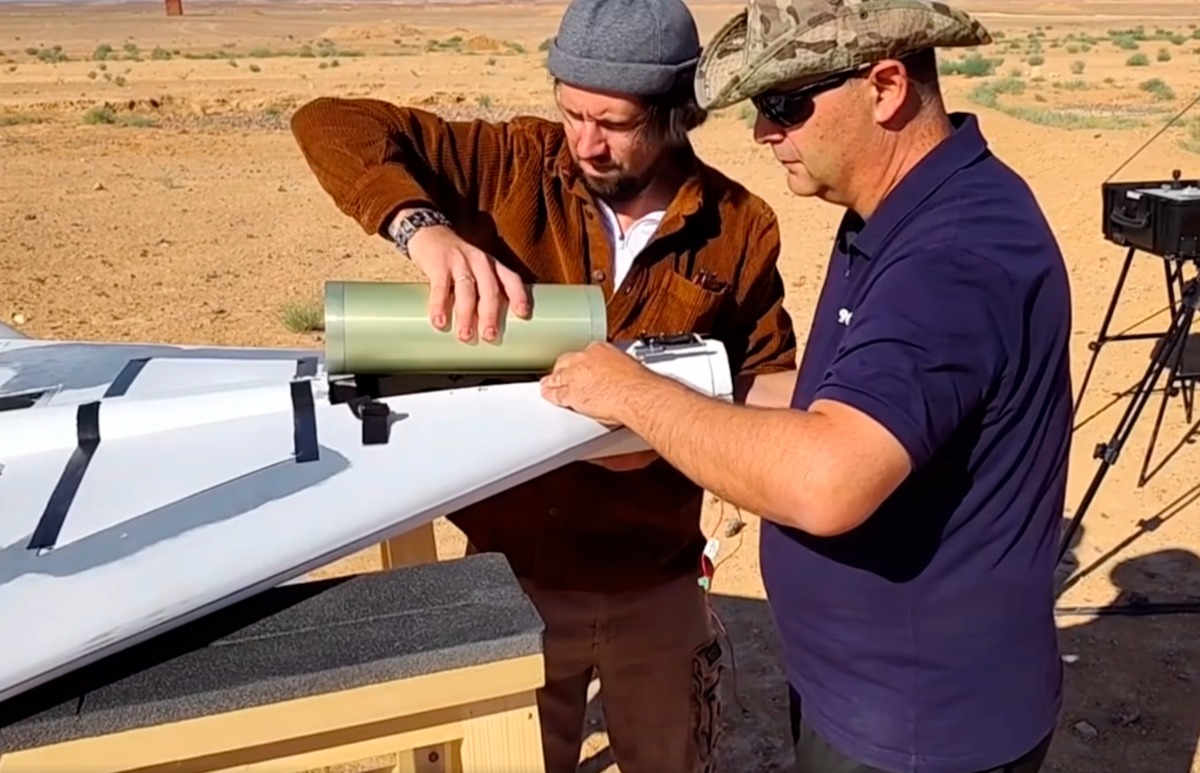
Middle Eastern buyers represent a logical target market for a weapon like this, since Gulf states and other regional militaries have spent the past several years actively diversifying their weapons suppliers beyond traditional American and European providers, seeking cost-effective strike capabilities that do not carry the same political strings or export restrictions attached to purchases from larger defense powers. Samel-90 has already built commercial relationships in the region well before SAMJET existed, including a 2018 deal to supply Egypt with electronic jamming stations and a 2023 partnership agreement with UAE-based Edge Group covering broader defense collaboration, connections that could smooth the path for a Middle Eastern customer considering the loitering munition now that the company has demonstrated it works with a live charge rather than just in flight tests.
Samel-90 has claimed since shortly after SAMJET entered production that the drone is already in service with at least one foreign operator, though the company has not disclosed which country or countries have acquired it, leaving that specific claim unverified by any independent source reviewed for this report. That pattern of limited disclosure is common across the loitering munition market, where manufacturers often confirm a sale has happened without naming the buyer, either for competitive reasons or because the customer itself prefers to keep the acquisition quiet, and it means SAMJET’s actual operational footprint beyond Bulgaria remains considerably murkier than its technical specifications or this latest demonstration might suggest.
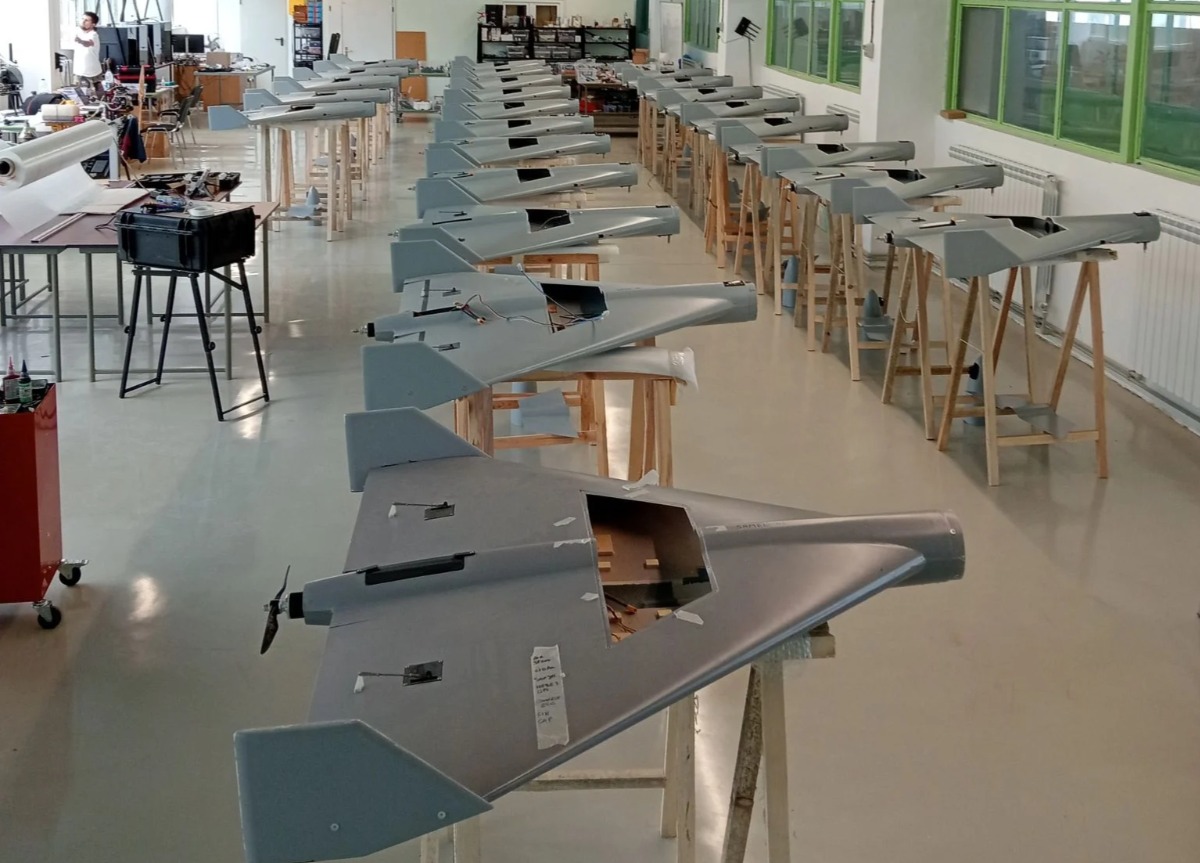
The broader loitering munition market SAMJET competes in has grown crowded quickly, with Iran’s original Shahed-136 spawning not just Russian domestic production but a wave of visually similar designs from multiple countries eager to field a cheap, effective strike weapon without the years of development a more sophisticated missile system would require. Samel-90’s approach leans on borrowing a proven aerodynamic formula while building the electronics, guidance, and production process in-house, a strategy that lets the company compete on price and delivery speed against both the original Iranian design and rival copies emerging from other manufacturers chasing the same demand.