

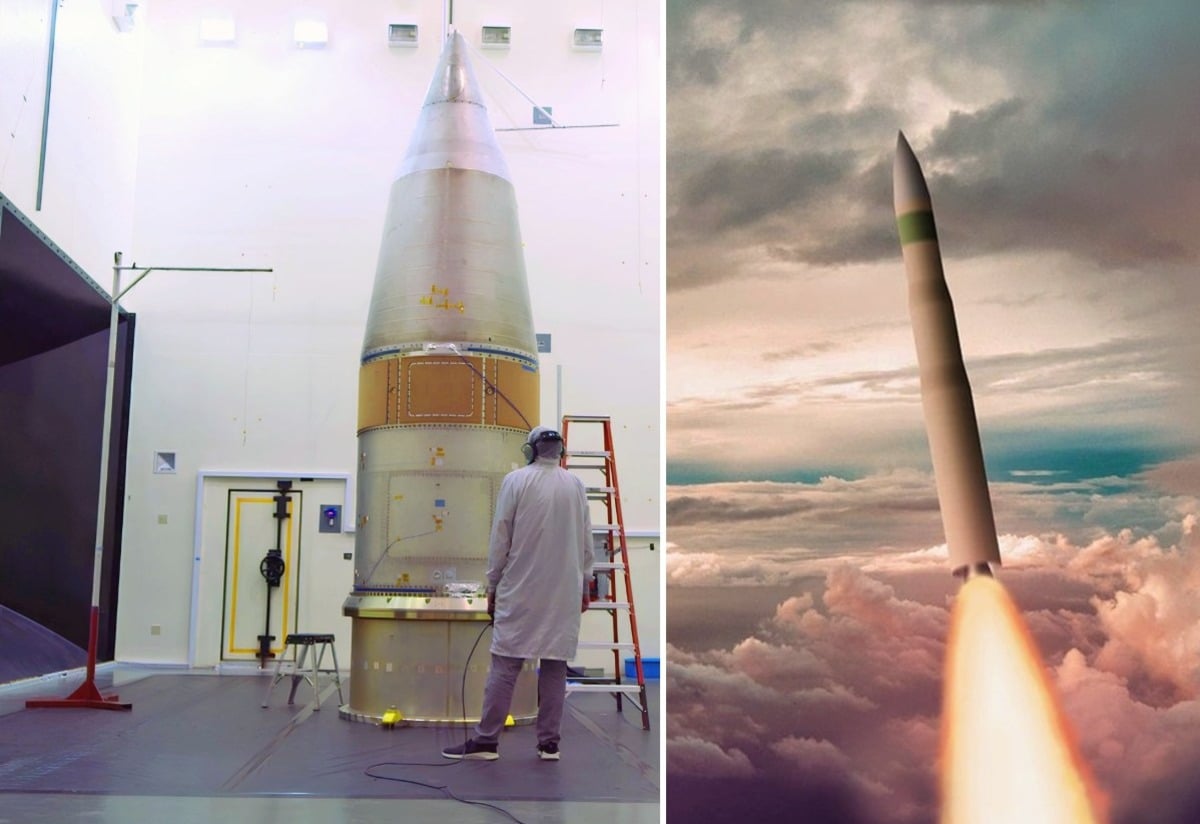
- Northrop Grumman completed an acoustic test of the Sentinel ICBM's front end at its Large Acoustic Test Facility in Redondo Beach, California, with Lawrence Livermore National Laboratory.
- The test validated the missile's guidance and reentry structures against silo-launch vibration loads, ahead of the program's first flight test planned for 2027.
For the first time, photographs of the Sentinel intercontinental ballistic missile have appeared in public, showing the nose section of America’s future nuclear deterrent sitting on the floor of a test chamber in Redondo Beach, California, after completing a structural validation milestone that clears one of the last major engineering hurdles before the missile’s first flight in 2027.
Northrop Grumman posted the images alongside a brief statement confirming the testing campaign continues on schedule, and the photographs themselves tell most of the story: a towering metal cone sitting in a high-bay industrial space, an engineer in a clean suit nearby, the hardware looking every bit as large and serious as the mission it was built to carry.
Sentinel rarely makes headlines outside defense circles, yet it is the weapon on which the entire ground-based leg of America’s nuclear deterrent will depend for the next half-century, because this is the missile that replaces the Minuteman III, the intercontinental ballistic missile that has been sitting on alert in underground silos across Montana, North Dakota, Wyoming, Colorado, and Nebraska since 1970, making it the oldest continuously deployed strategic nuclear weapon the United States has ever operated.
The Minuteman III has been patched, upgraded, and life-extended so many times across five decades that the Air Force eventually concluded there was simply nothing left to extend, and the only viable path forward was a complete rebuild of everything: new missile, new silos, new launch control centers, new command networks connecting them all, starting from scratch with modern technology and modern manufacturing methods. Sentinel is that rebuild, and the images Northrop Grumman published this week are the first public confirmation that the hardware being built to carry that burden actually exists in physical form and has survived its first major test.
What the photographs show is the part of the missile Northrop Grumman calls the integrated front end, a structure that contains the payload reentry system and the post-boost attitude control module housing the guidance and navigation package, which functions as the brain of the entire weapon. After the Sentinel’s rocket boosters burn out and fall away in the minutes following launch, this assembly takes sole control of the trajectory, using onboard sensors, computers, and small maneuvering thrusters to steer the reentry vehicle through the upper atmosphere toward its target, making corrections as it descends before the warhead separates and completes its terminal phase. Getting that guidance assembly through the physical violence of a silo launch without damage is a serious engineering challenge, because when a missile fires out of an underground silo, the rocket motor’s nozzle generates intense sound waves that travel back up the concrete tube and create vibrations capable of damaging sensitive electronics and mechanical systems if the design does not adequately account for them.
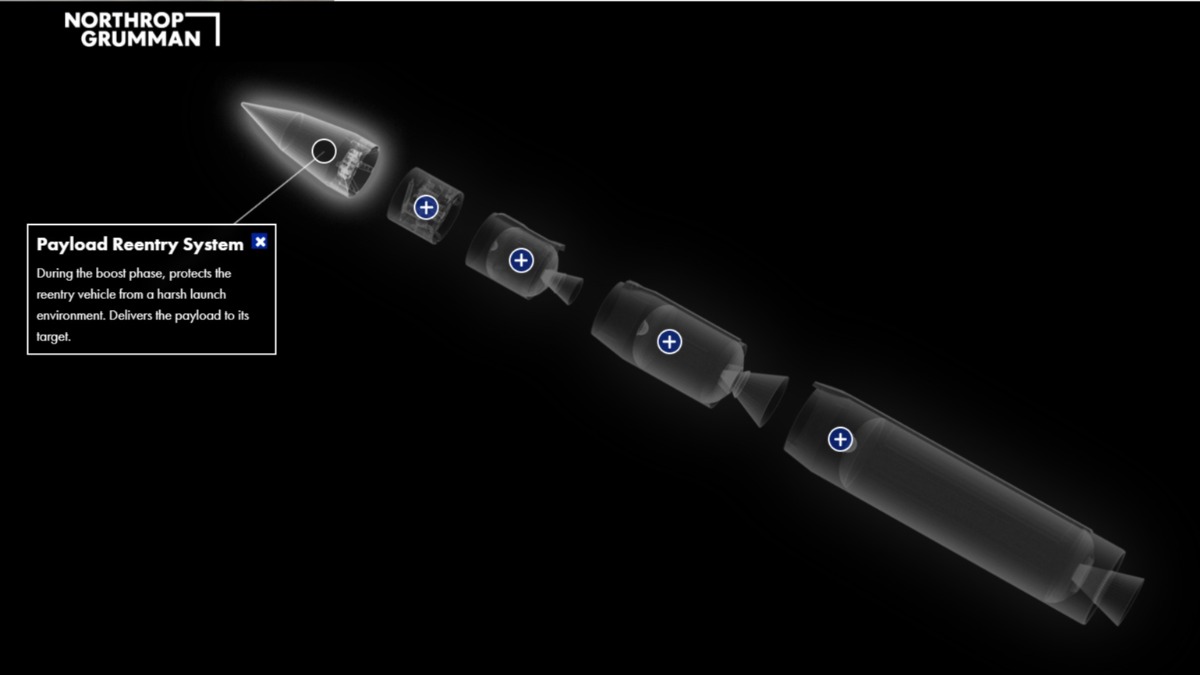
The acoustic test completed at Northrop Grumman’s Large Acoustic Test Facility in Redondo Beach replicated those launch conditions as precisely as current technology allows, surrounding the nose section with an array of microphones tuned to generate the same acoustic environment the missile will experience during an actual silo firing, with the front end sitting on the test chamber floor throughout the entire test sequence. Lawrence Livermore National Laboratory, one of the two U.S. national laboratories responsible for designing and certifying American nuclear weapons, collaborated with Northrop Grumman on the test parameters, and that involvement carries significant weight because Livermore’s specific responsibility in the Sentinel program covers the reentry vehicle and the physics package inside it, meaning the test was run to nuclear weapon qualification standards rather than conventional aerospace engineering criteria.
The Sentinel program has had a genuinely difficult few years leading up to this milestone, and the new photographs cannot erase that history even as they confirm progress. A 2023 Nunn-McCurdy cost breach, the statutory mechanism that forces mandatory congressional notification when a major defense program’s costs grow more than 25 percent above its original baseline, required the Air Force to conduct a formal review of whether Sentinel should be continued or cancelled outright, a review that attracted significant public attention and generated real uncertainty about the program’s future. The Air Force certified in July 2023 that no affordable alternative path existed and that maintaining the ground-based leg of the nuclear triad required continuing with Sentinel, but the Congressional Budget Office subsequently projected the full program, including the reconstruction of hundreds of underground launch silos across five states, could ultimately cost more than $140 billion over its lifetime, a figure both the Air Force and Northrop Grumman actively dispute.
The test facility in Redondo Beach that hosted the Sentinel acoustic test has its own remarkable history worth noting, having previously certified some of the most demanding aerospace hardware ever built, including the James Webb Space Telescope, which required acoustic validation before launch to confirm its delicate mirrors and scientific instruments could survive the vibration environment of a rocket, as well as national security and commercial satellites with similarly unforgiving requirements. Northrop Grumman recently invested more than $1 million converting the facility from analog to digital control systems, a change that gives engineers significantly greater precision in generating acoustic profiles and capturing test data, and the same chamber that validated instruments now imaging the earliest galaxies has now validated the guidance package of the missile that will carry American nuclear deterrence through the second half of this century.
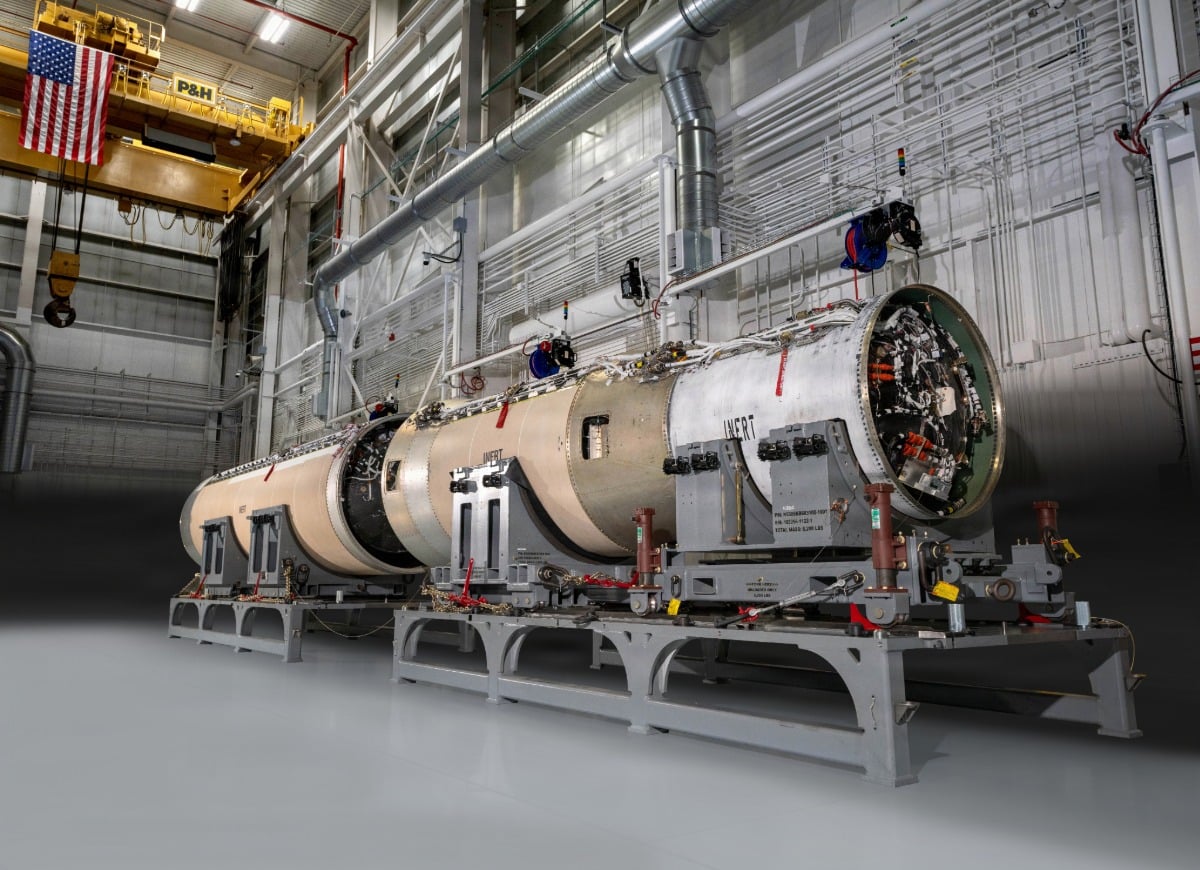
Once fielded, approximately 400 Sentinel missiles will replace the Minuteman III force across the same five-state network of underground launch silos, which are themselves being rebuilt as an integral part of the broader program, since the existing silos were designed around the specific physical dimensions and electrical interfaces of the old missile and cannot simply be adapted to accept a different weapon. That infrastructure reconstruction effort, involving the rebuilding of hundreds of hardened underground facilities scattered across the American Great Plains while maintaining an uninterrupted nuclear alert posture throughout the process, represents a logistical undertaking without modern precedent in the American military establishment.