

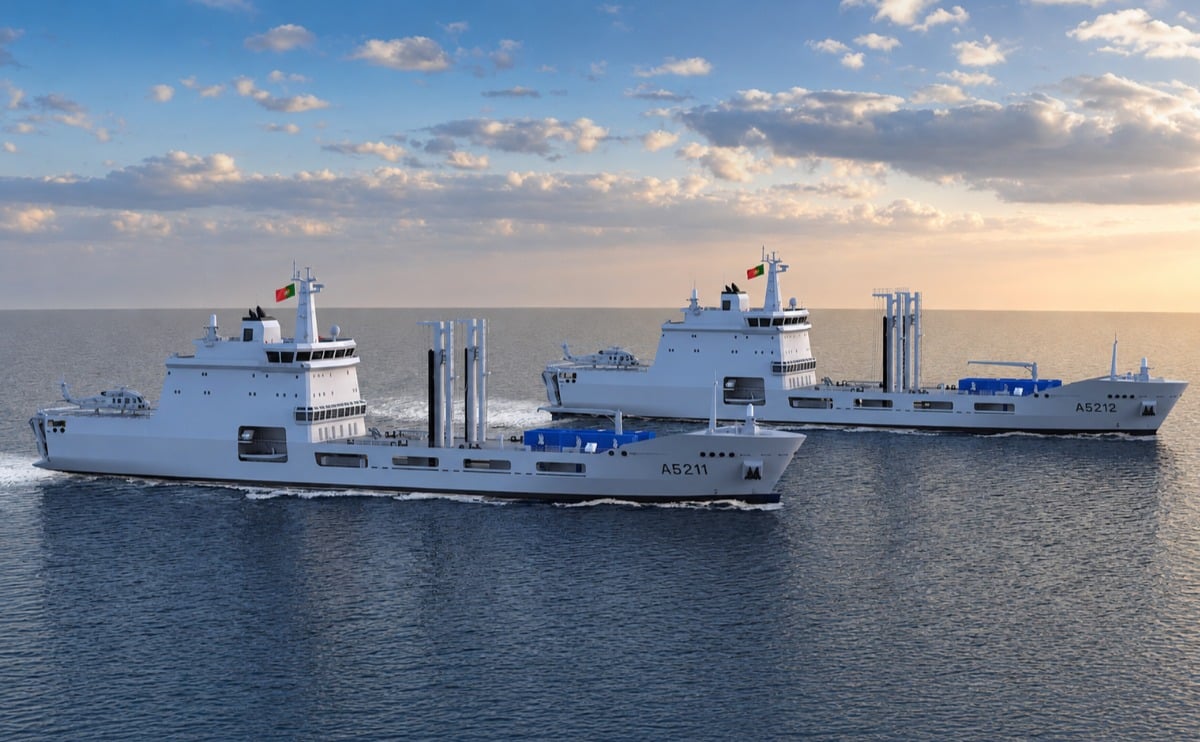
- STM began construction of a second logistics support ship for the Portuguese Navy after the first vessel was laid down in 2026 following construction start in 2025.
- Each ship measures 137 meters long, displaces 11,000 tonnes, carries 4,000 cubic meters of naval fuel, and can exceed 18 knots maximum speed.
Turkey has begun construction of a second naval replenishment and logistics support ship for the Portuguese Navy, marking a significant expansion of Ankara’s defense export portfolio into NATO’s maritime domain, Ulusavunma reported.
STM, Savunma Teknolojileri Mühendislik, the Ankara-based state-affiliated Turkish defense technology company that serves as the prime contractor for the program, started construction of the second vessel after the first ship in the two-platform order was laid down in 2026, having begun construction in 2025. The contract covers two Auxiliary Oiler Replenishment vessels, the naval designation for ships designed to resupply warships at sea with fuel, ammunition, water, and general cargo without requiring them to return to port, a capability that extends a fleet’s operational range and endurance dramatically compared to forces dependent on shore-based logistics.
The two vessels are being built to identical specifications, with each ship stretching 137 meters (449 feet) in length and displacing 11,000 tonnes (approximately 12,125 short tons) at full load, placing them in the medium auxiliary oiler category that sits between the smaller replenishment vessels operated by many NATO navies and the large fleet oilers fielded by major maritime powers. Each platform is designed to achieve a maximum speed exceeding 18 knots, roughly 33 kilometers per hour (21 miles per hour), a performance figure that allows the ship to keep pace with most surface task groups and conduct replenishment operations at sea without requiring the receiving warships to slow significantly below their operational cruising speed.
The cargo capacity built into each vessel covers the full spectrum of underway replenishment requirements that a modern naval task force generates during sustained operations. Each ship carries 4,000 cubic meters of F-76 naval diesel fuel, the standard distillate fuel used by most Western naval surface combatants, along with 350 cubic meters of F-44 aviation fuel for helicopter operations, 650 cubic meters of fresh water, and 700 cubic meters of general cargo capacity. The platforms can also transport six 6.1-meter (20-foot) standard shipping containers and deploy up to 20 light tactical vehicles, a combination of cargo types that gives the Portuguese Navy considerable flexibility in how it uses the ships across different operational scenarios, from sustained task group support to humanitarian assistance and disaster relief missions where water and general cargo capacity matter as much as fuel.
Portugal, a founding member of NATO and a nation with a long maritime tradition stretching back to the Age of Discovery, has been working to modernize its naval logistics capabilities as part of the broader NATO drive to improve alliance sustainability and endurance in the event of a major conflict. The Portuguese Navy, known as the Marinha Portuguesa, operates a modest but capable surface fleet that includes frigates, patrol vessels, and submarine support assets, and the addition of two purpose-built replenishment ships significantly enhances the fleet’s ability to operate independently at extended range without relying on shore facilities or allied replenishment ships for fuel and supplies.
STM’s design approach for the Portuguese program emphasizes what the company describes as network-centric operational integration, meaning the ships are built from the outset to share tactical data and coordinate logistics support functions within a connected naval task group rather than operating as standalone support platforms with limited interoperability. That design philosophy reflects the direction NATO naval doctrine has taken over the past two decades, where the ability to share sensor data, targeting information, and logistics status across a task group in real time has become as important as the physical capacity of individual vessels.
For self-defense against the threats that a logistics ship operating in a contested maritime environment might face, each vessel carries a single close-in weapons system, an automated rapid-fire cannon designed to intercept incoming anti-ship missiles, aircraft, and fast attack craft at short range during the final seconds before impact, providing a last-ditch defensive layer against threats that other task group assets have not already neutralized. The ships also mount 12.7 mm (0.50 caliber) remotely operated weapon stations, crewed from inside the ship rather than from exposed deck positions, to handle lower-intensity threats including small boats, unmanned surface vehicles, and close-range harassment from lightly armed adversaries.
The Turkish defense export relationship with Portugal represents a notable development in NATO’s internal defense industrial landscape, where Turkey, a member of the alliance since 1952, has emerged as a significant supplier of military platforms and systems to fellow NATO members despite the political tensions that have periodically complicated Ankara’s relationships within the alliance over the past decade. STM has been expanding its naval export portfolio across multiple programs, and the Portuguese replenishment ship contract demonstrates the company’s ability to compete for and execute complex naval construction programs for European customers who could alternatively have sourced similar platforms from established Western European shipbuilders.